


1963 to 1976
Article Index
The Jackson Five was the first group whose four songs in a row became number one. Regardless of the sweet sound and excitement in Michael’s behavior, his special childish charm made him beloved by the hearts of the people who wanted to hold him. The busy days of the Jackson Five’s big tour began in the fall of 1970. In 1971, when the song “Never Can Say Goodbye” had become very popular among the public, the group held concerts in forty-five cities over the course of ninety days of summer. This means that Michael and his brothers, on average, performed in a concert every other day. In that same year, the figure increased to ninety-five cities.

[Tour] During these trips, their private tutor, Rose Fine, also traveled with them to make sure they reached their lessons. Michael’s first solo single, titled “Got To Be There,” was released in the fall of 1971. That same year, the cartoon show “The Jackson 5’s Saturday Morning” aired on television networks.

[The Jackson Five cartoon show] When Michael was only thirteen years old, he received a Golden Globe award for his performances, and later, for the first time, he was nominated for an Academy Award. Michael was growing day by day. He said about it: ”When I turned fourteen, my appearance changed completely... Changing my skin was an experience that left effects in my subconscious without me even realizing it. I became very shy. I was embarrassed to meet people. Because my appearance had gotten so bad. It really seemed to me that the more I stared at the mirror, the more pimples appeared on my face. My appearance really upset me. But in the end everything changed. I no longer felt different about myself. I had learned how to change the way I think and feel better about myself. Most importantly, I changed my diet. And that was the key to solving the problem.“ In 1972, by reading the song from the film Ben, Michael entered the world of filmmaking seriously for the first time. The song became number one and is still one of Michael’s favorite songs. When “Ben” was released, the Jackson brothers knew they would travel all over the world. In 1972, they experienced their first overseas tour by traveling to England.

[Meeting the Queen of England] Michael: ”When we were on tour in Europe for the first time, we had already gone through three years of success. And to satisfy the kids who followed our music, as well as the Queen of England whom we met during a royal performance, we had gained enough experience. England was a launching platform for us. It was different from anywhere else we had been. The farther we got from home, the more interesting and strange the world became. We saw the wonderful museums of Paris and the beautiful mountains of Switzerland. Traveling to Europe taught us lessons that introduced us to the roots of Western culture. And at the same time, it was a kind of preparation for seeing Asian countries that had more spirituality.” Australia and New Zealand were the next stops for the Jackson brothers. The people of these countries spoke English. But some of them still lived in tribal fashion in areas far from the cities. Michael: ”They visited us like their own brothers and welcomed us, even though they didn’t understand our language. If by that time I needed proof that all human beings are brothers, then I certainly got that proof during the tour in those regions.” The Jackson Five released “Dancing Machine” following the songs of that era that were playing in discos. Michael: ”When this song was released in 1974, I was determined to choreograph a dance that would raise the value of the song and make the performance more exciting. And I hoped that watching it would be even more thrilling for others. So when we performed “Dancing Machine” at the Soul Train ceremony, which was broadcast on television; I did a street dance model called Robot. This performance taught me a lesson about the impact that television can have on public thinking. “Dancing Machine” climbed to the top of the charts overnight, and within a few days it seemed that all the children in the United States were doing the same Robot dance. I had never seen anything like it.”
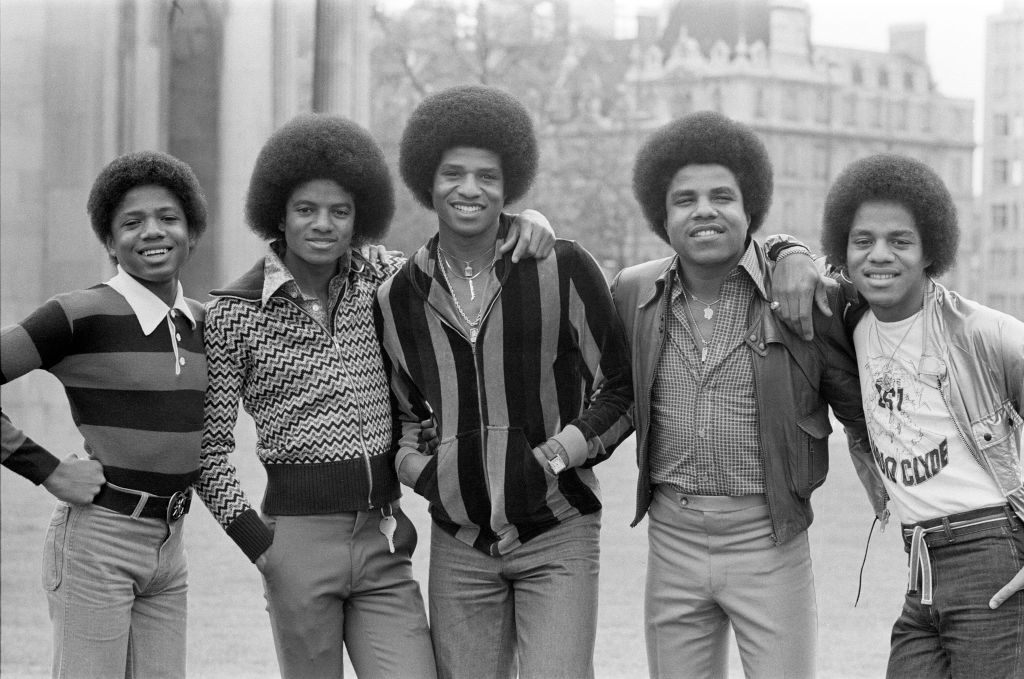
[Late 70s] Their problems with Motown began around 1974. When the Jackson brothers told Motown that they wanted to write and produce their own songs, because they didn’t like the musical style Motown produced for them. Michael: ”It was 1972, when I was fourteen. They asked me to sing in a particular way, and I knew they were wrong. No matter how old you are, if you know you have something to say, people should listen to you.” Motown not only didn’t fulfill their request, but also forbade the brothers from even making such a request. Michael: ”I was really discouraged and I came to resent everything Motown produced for us. When I feel something isn’t right, I have to say it very clearly and openly to everyone. I know that many people don’t see me as a strong, determined person, and that’s only because they don’t know me. Eventually, a time came when my brothers and I felt very bad about Motown, but none of us said anything. My father didn’t say anything either. So the responsibility of arranging a meeting with Berry Gurdy and talking to him was put on me. My mission was to tell Berry Gurdy: ‘We — the Jackson Five — have decided to leave Motown.’ I went to see him. We faced each other. And this was one of the most difficult things I had done up to that point. If I had been the only person in the group who felt dissatisfied, I might never have said anything about it. But everyone was dissatisfied, and we had talked about it at home so much that it made me go to him and tell him how we felt. I told him I was dissatisfied. I knew the time to change things had come. We followed our instincts, and when we decided to start our work with another company, we succeeded.” On May 28, 1975, the Jackson Five signed a contract with Epic (Epic _ CBS). The contract came to fruition in March 1976. Jermaine, who had become Berry Gurdy’s son-in-law, decided to stay with Motown because his position was more complicated than the others. When Jermaine left the group, Marlon got the chance to fill his place in the group. Randy officially took Michael’s previous spot, as the banjo player, and became the youngest member of the group. When the group’s contract with Motown ended, Motown told them that the group name belonged to the company, and that if they left Motown they couldn’t use that name. And that was a shock for them. So from then on, they changed the group name to the Jacksons.

[Randy’s first appearance in the Jacksons]