ネルソン・マンデラを追悼:マイケル・ジャクソンとマンデラの友情と財団の声明を考察する
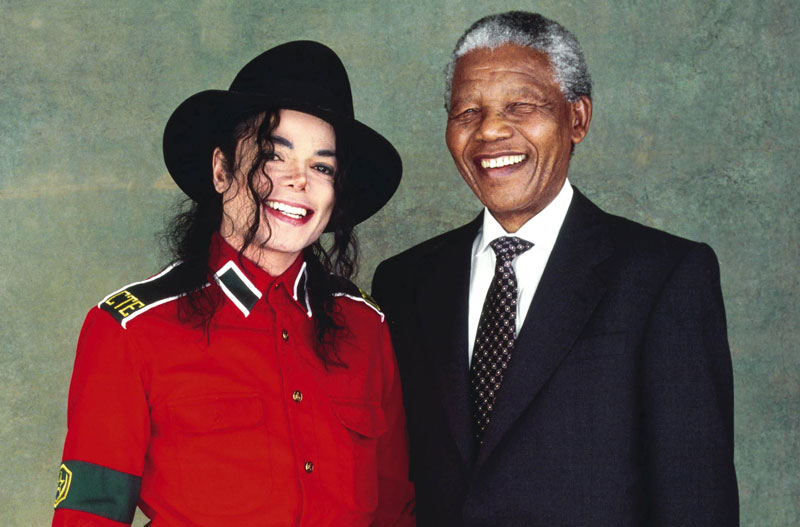
南アフリカ初の黒人大統領であり、同国の人種差別政権に対する闘争の指導者であり、世界中の人種差別との戦いで最も著名で愛されている人物の一人であるネルソン・マンデラが、本日95歳で死去した。
ネルソン・マンデラとマイケル・ジャクソンは長年の友人であり、常にお互いをサポートしていました。マイケルは彼のことを「おじいちゃん」と呼んでおり、彼の強さ、不屈の精神、そして人類のために奮闘する姿からインスピレーションを得ました。マンデラもマイケルを家族の親しい一員とみなし、彼をインスピレーションの源と呼び、彼の毅然とした態度の力を称賛し、世界中の子供たちへの援助に感謝した。
マンデラ氏は、根拠のない性的虐待疑惑で世界がマイケル氏に非難の目を向けていた時期に、マイケル氏を支持した。彼は、祖国のアパルトヘイト政権の刑務所で27年間投獄されていた間、戦い、自分の道を続ける力を与えてくれたインスピレーションの源であると述べた。マンデラ氏は、もし黒人の子供が貧困と人種差別を乗り越えて成功と名声を獲得し、困難なキャリアをスタートできれば、彼も長年の投獄を乗り越えることができる、と考えていると語った。
マンデラは、2005年3月30日のデンマークの雑誌との対談で、刑務所にいる間にマイケル・ジャクソンに強さを見出したと語った。
「自由の望みがまったくなく刑務所に閉じ込められているときは、できる限りの力を見つけなければなりません。私は個人的にマイケル・ジャクソンに強さを感じました。(子供の頃に)ジャクソン5グループを離れてソロのキャリアに転向するのは、とても勇気がいることです。彼がそのようなことをする勇気を持っているなら、私も旅を続ける意志を持たなければならないと思いました。」
マンデラ氏はマイケルのことを「絶え間ないインスピレーションの源」とも評した。
This quote appears in the book The Visual Documentary by Adrienne Grant.
Mandela also had a reciprocal impact on Michael. In 1999, after meeting Nelson Mandela, Michael wrote the song “What More Can I Give.” He said about it himself:
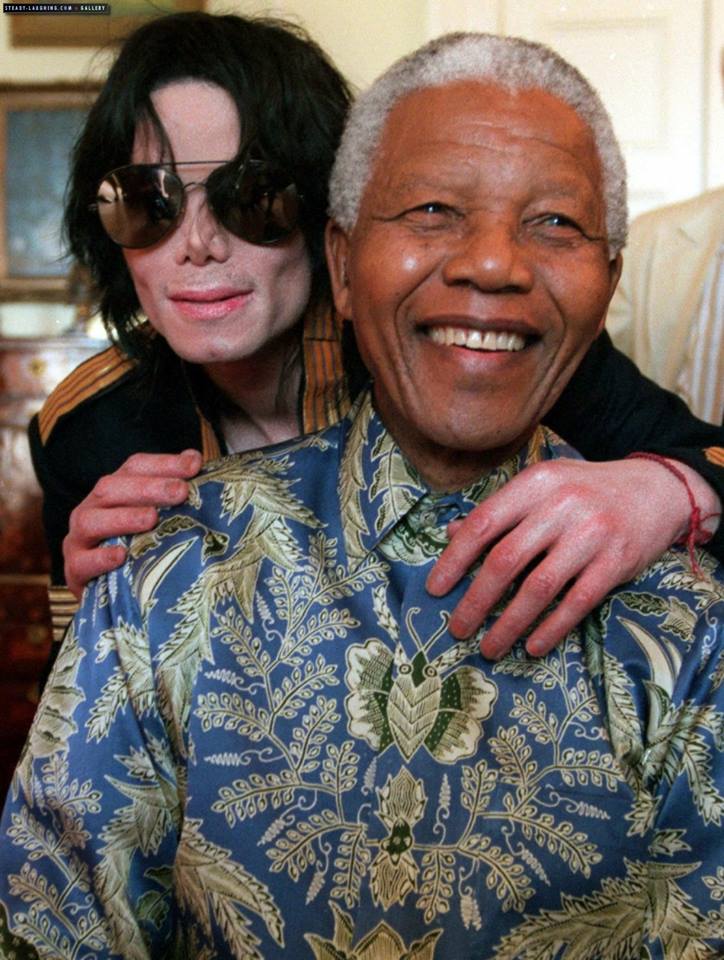
“In a conversation I had this year with President Mandela, we discussed the concept of giving. As a result, the phrase ‘What More Can I Give’ came to mind. We all must offer what we can, to root out pain and suffering that should not exist.”
In June 1999, Michael arranged two charity concerts in Germany and South Korea and intended to perform “What More Can I Give” at them, but that didn’t happen. Instead, the title of these concerts—“マイケル・ジャクソン and Friends: What More Can I Give”—said it all. Michael donated part of the proceeds from the concerts to Nelson Mandela’s children’s fund.
(It is worth noting that after the tragic events of September 11 in New York, Michael rewrote the song and performed it at a charity concert held to help the victims’ survivors and in memory of those who lost their lives. Description)
Michael’s inspiration from Mandela stemmed from a reciprocal power that this old fighter gave him. In 2005, Michael was dealing with an extremely difficult situation. His dignity and honor depended on winning a court case that many later described as a “circus show.” In that same year, in an interview, Michael was asked:
- “Now your honor is under attack. How do you deal with this?”
- Michael: “By using people who were involved in such matters in the past. The story of Mandela and what he went through gives me a lot of strength… Hitler created deep hatred in the world, while Mandela did the opposite. He was calm and dignified in prison—there was no bitterness in him. Even today, at eighty years old, and with his youth gone—because he spent a long time in prison—he doesn’t regret anything. He is lovable and like children… He loves children. When I went to see him, I had children with me, and people said the kids should stay and not come with me. I said I’m sure Mr. Mandela won’t be upset to see the children. I said if the children don’t go, then I won’t go either. I remember that his representatives looked at me with this expression [imitating their grim and suspicious faces], and then they said that we all could go. (After arriving) the first thing Mandela did was run toward the children, pick them up, and hug them. I knew he had that quality and that he loves children. He talked with them, and then he shook my hand. I knew I wasn’t wrong.”

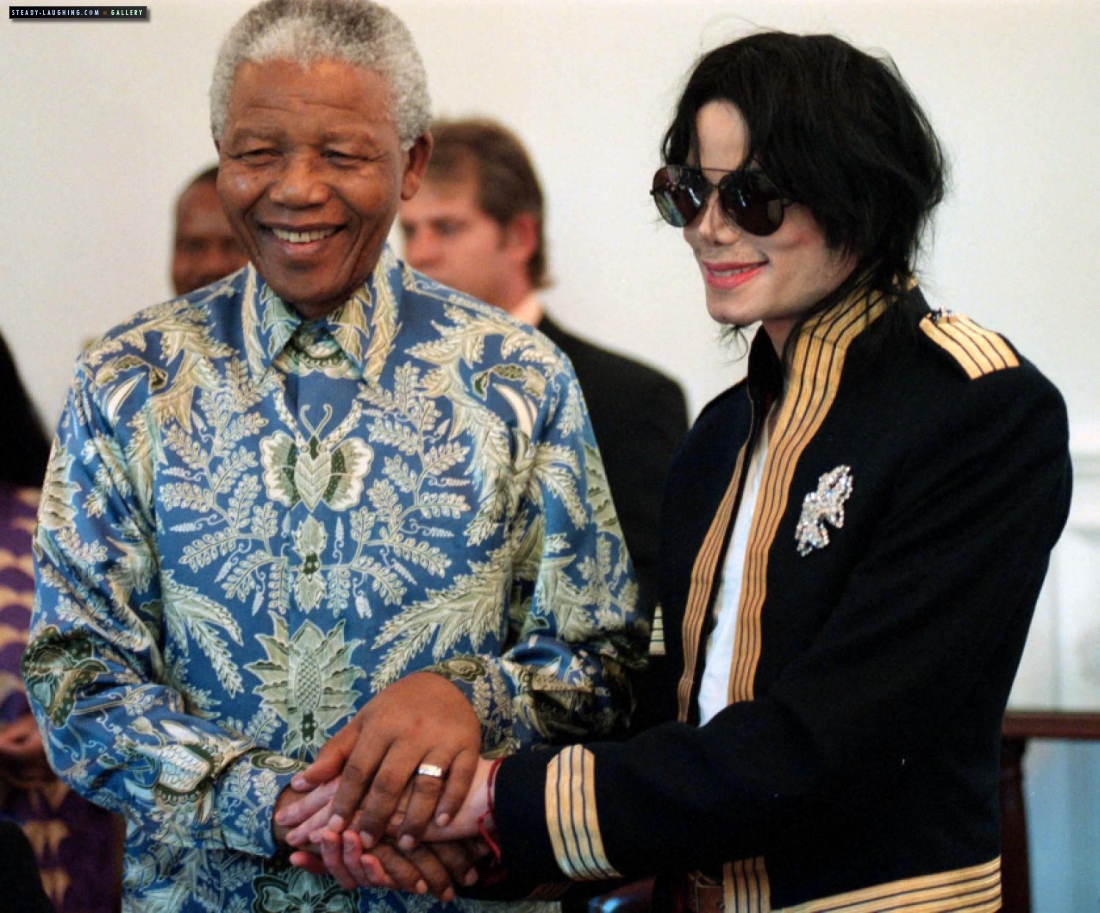
Michael and Nelson Mandela had met and talked with each other in different circumstances. For example, in 1996, Mandela invited Michael to attend his private birthday celebration in Johannesburg. A video of that event—dated July 18 of that year—is available on YouTube.

Two days later, before leaving South Africa, Michael spent some time with him at Mandela’s residence in Pretoria.

Michael even made the news of the two charity concerts—mentioned earlier—known to the world when, on March 23, he walked side by side with Nelson Mandela in Cape Town in front of reporters.
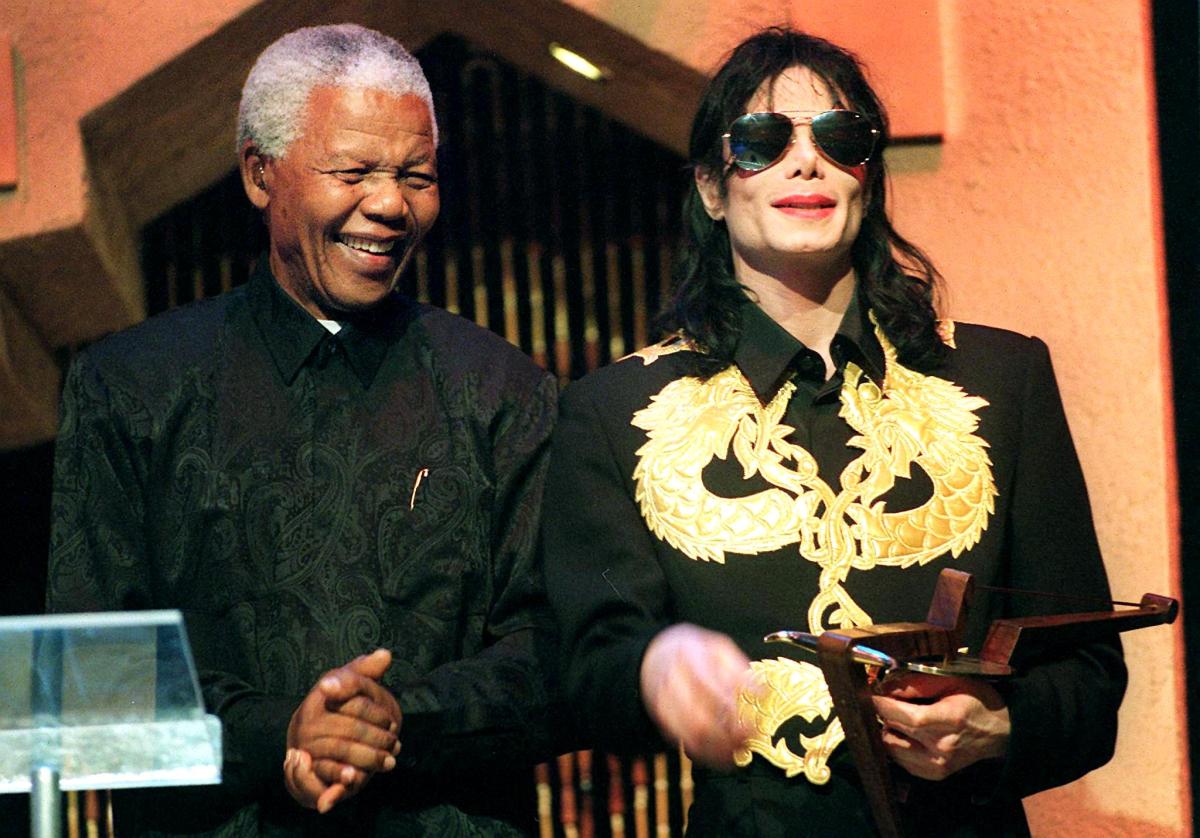
Michael also appeared on stage alongside Nelson Mandela at the Africa Music Awards on September 4, 1999, to receive an award for a lifetime of artistic achievement. At the same event, Nelson Mandela expressed hope that people—not only in Africa but around the world—would help children by taking マイケル・ジャクソン as an example. At this event, Michael presented a check for one million dollars—money raised from the two concerts in Korea and Germany—to Nelson Mandela’s children’s charity.
After Michael’s death in 2009, Nelson Mandela sent a message of condolence that was read at his memorial. The text of the statement was as follows:
“The untimely death of マイケル・ジャクソン has caused us great sadness and sorrow. After Michael came to South Africa and performed here, he drew close to us. We became attached to him, and he became a close member of our family. We admired his talent and ability to overcome the hardships that came upon him in different situations. Michael was a giant and a legend in music. Along with millions of fans around the world, we mourn the loss of our dear friend. Our hearts ache for him, and his memory will be cherished for a very long time. I, my wife, our family, and our friends offer you our condolences in this time of mourning. Be strong.”

A fascinating memory of Michael and Nelson Mandela
Patrick Treacy, one of Michael’s well-known doctors and one of his advocates, shared the following memory today on news24.com:

“One day, we were at Michael’s clinic in Dublin, and we were talking about a concert that was going to be arranged in Africa. Nelson Mandela called Michael on his mobile phone. At first, I thought it was a concert organizer in South Africa calling, and I continued with him for about five to ten minutes of ordinary, boring talk about life in Cape Town, and then I handed the phone back to Michael.
Michael then laughed and said: ‘Hey, Patrick, I’m really surprised by what you said to my grandfather, Madiba, when you had the chance. You talk about him a lot.’”
From the Persian Wikipedia: In South Africa, Mandela is often known as “Madiba.” This honorary title was given to him by elders of the Mandela family. This title is no longer synonymous only with the name Nelson Mandela. Many people in South Africa also call him Mkhulu (grandfather) as a sign of respect.
マイケル・ジャクソン Foundation statement on Nelson Mandela’s passing
Today, the マイケル・ジャクソン Foundation released a statement on the death of the beloved leader of South Africa on the official website of the King of Pop. The statement said:
“Michael was proud to call Nelson Mandela his friend. Michael, like millions of his admirers around the world, was inspired by President Mandela’s courage, his struggle for human dignity, and his commitment to peace. During his trips to South Africa, he often met with President Mandela, whom Michael called ‘one of the close members of the family.’ We express our condolences in this endless grief to President Mandela’s family and to the dear people of his country.
Trustees of the マイケル・ジャクソン Foundation, John Branca and John McClain.”
Who was Nelson Mandela?
From the Persian Wikipedia: Nelson Rolihlahla Mandela (born July 18, 1918 — died December 5, 2013) was the first President of South Africa elected in a general democratic election. Before becoming president, he was one of the prominent opponents of apartheid in South Africa and the leader of the African National Congress. He was tried and imprisoned for his involvement in secret armed resistance activities. For Mandela, armed struggle was the last resort; he was always committed to non-violence. During his 27 years in prison—most of it in a cell on Robben Island—he became the most famous figure in the struggle against apartheid in South Africa. Although the apartheid regime and the nations supporting it considered him and the African National Congress to be communists and terrorists, armed struggle was an inseparable part of the fight against apartheid. After his release from prison in 1990, Mandela adopted a policy of reconciliation and peace, which helped facilitate South Africa’s transition toward a democracy that would represent all segments of the population.
Nelson Mandela was released from prison after 27 years in 1990. He was President of South Africa from 1994 to June 1999. In 1999, he retired and stepped away from politics.
From Nelson Mandela’s words: “Throughout my life, I have devoted myself to the people of Africa. I fought against the domination of white people, and I fought against the domination of Black people as well. I have pursued the ideal of a free and democratic society in which everyone can live in balance and with equal opportunities. That is my ideal, and I hope to live by it and achieve it. But if it becomes necessary, I am prepared to die for this ideal.”
Many leaders and prominent people around the world have offered condolences for Nelson Mandela’s loss.
Nelson Mandela will always be remembered as one of the most influential leaders in the fight against racism in the world. May his soul rest in peace, and his memory be honored.
Source: eMJey.com
関連記事
同じテーマやアーカイブの記事をもっと読む。
- マイケル・ジャクソンの不滅のツアーがドバイにやって来ます 記事を読む
- 「A Place With No Name」のフルバージョンがオンラインに流出 記事を読む
- ラトーヤ・ジャクソンが結婚 記事を読む
- AEGの陪審員らの評決に対する遺憾の意 記事を読む
- 実際に世界で最も稼いだミュージシャン 記事を読む
- A Place With No Name のフルバージョンを聴く 記事を読む
- マイケル・ジャクソンに関する新しいドキュメンタリー: マイケルを偲んで 記事を読む
- AEG、キャサリン・ジャクソンに訴訟費用を請求 記事を読む
- キャサリン・ジャクソン、新作ドキュメンタリーの募金活動を停止 記事を読む
- ラ・トーヤ・ジャクソン、結婚報道を否定 記事を読む
- マイケル・ジャクソンのアルバムジャケットが過去5年間で最優秀ポップアルバムジャケットに選ばれる 記事を読む
- アンソニー・ジャクソン、マイケルの子供たちの後見人を求める 記事を読む