The painting Sylvester Stallone drew of Michael Jackson
You may not know that a star of Hollywood’s tough, action-packed films can also have a hand in painting—and even less expected, that before stepping into the world of cinema, he once dreamed of becoming a painter in his imagination.
The person in question is someone who made the whole world recognize him under the name Rocky, turning overnight into the new Marlon Brando of cinema for critics.
In May this year, the Musée d'Art Moderne et d'Art Contemporaine (Museum of Modern and Contemporary Art) in Nice, France, hosted paintings by American movie star Rocky—Sylvester Stallone.
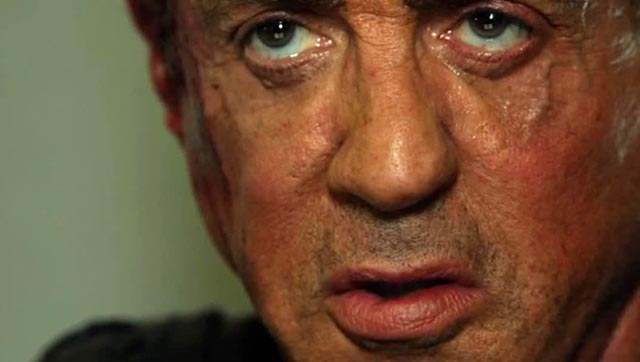
This actor, director, writer, and producer, this time presented—within the role of a painter—paintings he had created over more than fifty years. Stallone was present on the gallery’s opening day, May 16, at the venue, to share his analysis of the paintings hung on the walls.
Stallone believes we have two faces:
"One is public and the other is private. That’s what art is—an intermingling of feelings. And when you can transfer that onto a canvas, you get an astonishing sensation."
Stallone’s recent works feature large roads in black, white, and his favorite blood-red color—produced by throwing paint onto the canvas. They have a bigger, more sorrowful, and more abstract atmosphere.
Alongside depictions of film characters played by Stallone, there is also a portrait of James Dean, the young Hollywood star who died too soon, and a painting of Bridget Nielsen, Sylvester’s former wife. One of the paintings is of Michael Jackson.
Stallone’s paintings had previously been introduced in 2013 at an exhibition in Russia. In the video below, you can see him analyzing a painting he created in 2010—one year after Michael Jackson’s death.
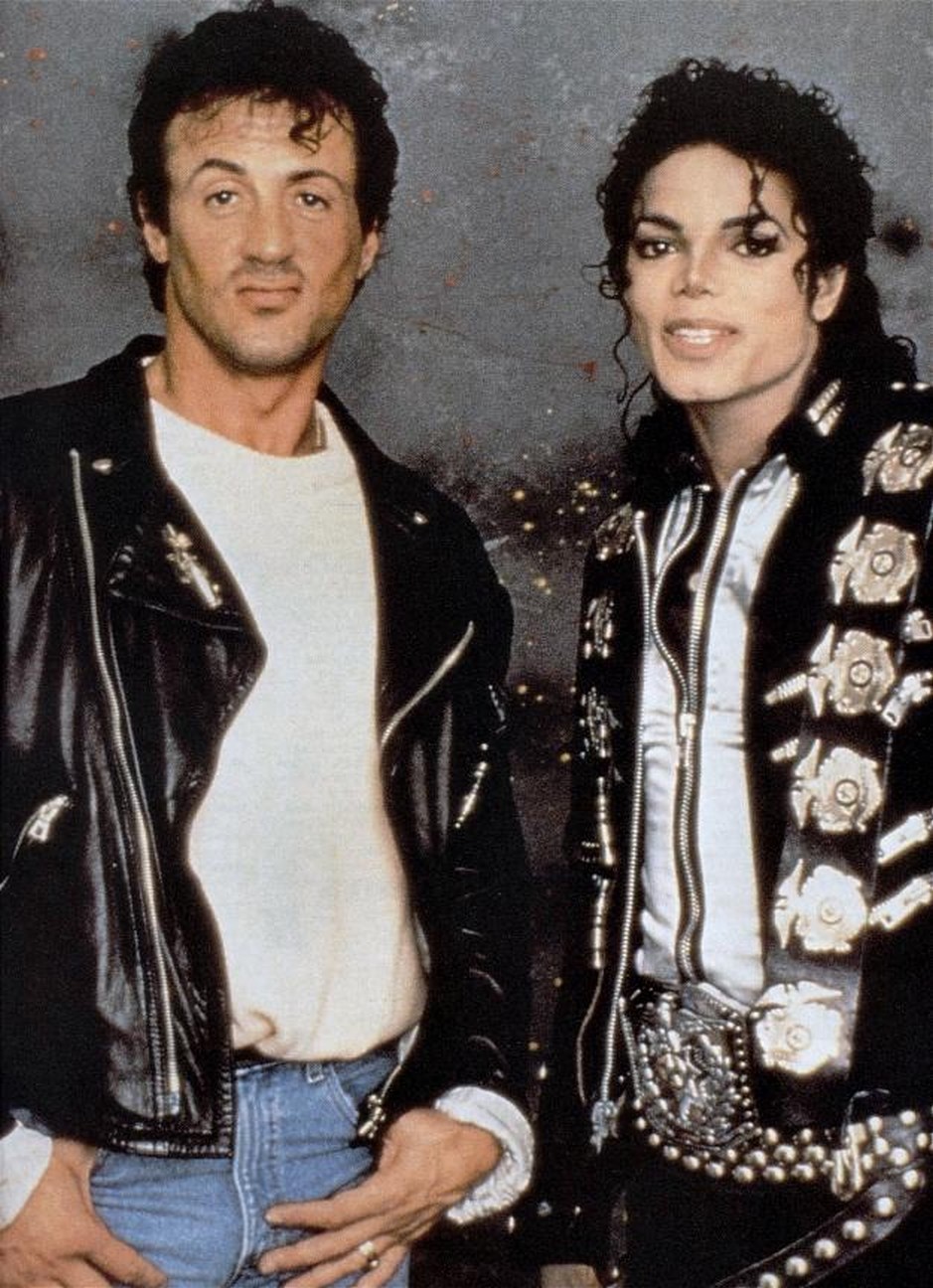
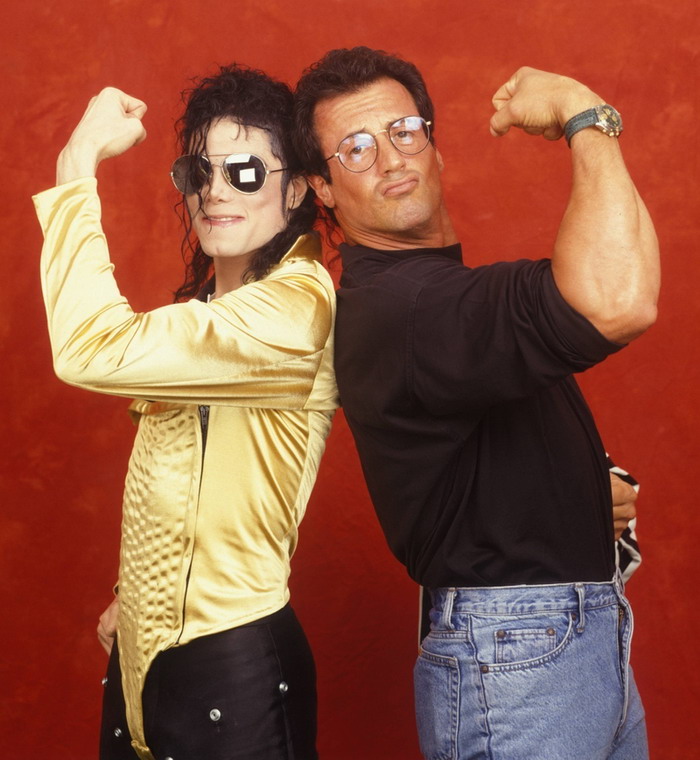
Sylvester Stallone and Michael Jackson had friendly relations in the 1980s. Stallone invited Michael to his home for dinner, and Michael invited Stallone to watch the BAD tour.
Using symbols and color combinations in the painting he drew of Michael Jackson, Stallone tried to show his own interpretation of the man’s character and inner world. He says he was inspired by Michael Jackson in his film career. He considers Michael to have a complex, dual personality, and says Michael represents many artists who possess such a trait. Stallone refers to it as a mask on the face—and it reminds us of Robin Williams, a comedian who is always smiling and making everyone laugh, but who suffers from depression in private and suddenly ends his own life.
Stallone says that Michael turned himself into someone else—and this brings to mind the manifesto that Michael wrote in 1979 at the age of 21:
"My name will be MJ (MJ). I am no longer Michael Jackson. I want a completely new character. A completely new look. I have to become a completely different person—someone who will shock the world. I will become magic."
MJ is not the same as Michael Jackson. MJ is his artistic character, brought to life through inspirations he received from the world of children. But the Michael Jackson introduced in the book by Zak O’Malley is far from this childish persona. In the book, which focuses on his commercial genius and examines his character in this arena, Michael Jackson is described as an emotionless, fox-like, cunning person.
Barry Gordy—the man who hired Michael when he was a child—writes in the introduction to his biography that Michael Jackson had two completely distinct personalities.
Michael always said he wanted to give people around the world an escape from reality through his art. After World War II, this goal was shared by many artists, including Fred Astaire—Michael’s favorite artist—creating a sense of escape from reality and getting lost in dreams for people who were tired of everyday hardships. Michael created a character to instill this feeling of escape and enjoyment of art in front of people. But having grown up in the music industry since childhood, he also knew very well that this industry is extremely dark and mischievous and would not show mercy to anyone. Michael himself said that "a bunch of stupid jerks" interfered in his work and tried to stab him in the back. To confront these devils, Michael needed something that Stallone calls beautiful, theatrical evil. He acted with great shrewdness, alertness, and fearlessness toward the music industry. And of course, this was his hidden persona. The Michael Jackson who appeared in the media and became accepted by the public was a naive man—not very intelligent.
In this video, Sylvester Stallone talks about the King of Pop:
"Michael Jackson has always been presented as a great entertainer, but I also think his legacy injects an incredible vision into the world—entertainment, the world of magic."
"I always felt that Michael Jackson was one of the greatest dualities. More than being a singer, he was a trickster and a magician. He created a character that even he wasn’t anymore. He became something else. He tried to express this character through his clothes and changes in his appearance."
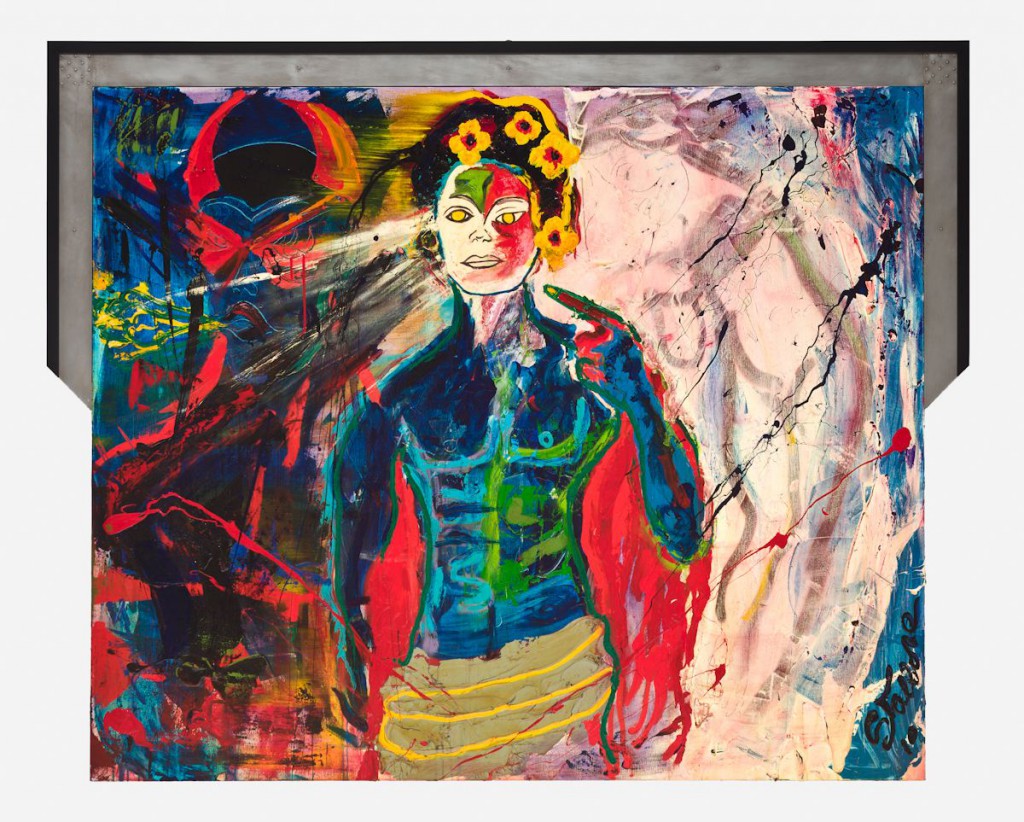
"But most importantly, I always felt that his brain was pulled in two different directions. On one side, he was influenced by the innocence of young people—or by images and childish perceptions—and he was drawn toward that. At the same time, there was a wicked aspect. And that wicked person is even beautiful—he isn’t a black villain. It’s theatrical evil. And I think he wore that mask skillfully, because with the effort he made to look simple and raw—like a child—he distracted people. That’s why I drew flowers on his head. People would say that a man like that (Stallone points to the flowers) could never be like that (he places his hand over the dark, harsh colors surrounding the image of Michael). But in truth, deep inside, under the clothes (referring to the dark colors used for Michael’s body), he sees himself as a controversial person. Contrary to the idea that he’s a passive character, Michael Jackson was a generator of energy."
"He was also a collection of contradictions and chaos; genius, without a doubt—but at a huge cost. It’s painful, but we play characters that we ourselves create. We create someone else who ultimately disappears and is gone, and you’re left there, seeing yourself in the future. Most of them don’t like what they see and start destroying themselves. That’s why I hate watching biographical films about singers—in the first part they say, once upon a time he had kids, he became rich... and then, when the commercial messages end, in the next part we witness their decline and fall. A few manage to survive. I always say that an artist dies twice. The second time is physically—the simple part of the story. The professional death is the day he has to take off his mask—that is the day of his death. On that day, everyone says, 'Oh, you’re just like us—you’re not special at all.'"
Stallone goes on to say that actors live in a similar world, and since he has been caught up in the same process, he tried to show his feelings in the form of his works in front of people.
In the end, he points to the painting of Michael and says: "I understand this."
Source: eMJey.com / artnet