Debbie Rowe, Michael Jackson’s ex-wife, testifies in AEG trial: Doctors competed to give Michael painkillers (disturbing content)
Michael held three world tours, and he knew exactly how eager his fans were to see him perform on stage. But before the AEG trial, none of us ever imagined what kind of suffering Michael might have endured in order to carry out those concerts. Even though Michael had no interest in revealing this information, understanding it helps us grasp the situation he faced. These details also address the baseless accusations that people and the media kept throwing at him.
What you’re about to read will give you more information about Michael’s illnesses and physical pains. For the first time, we’ll also talk about the reason behind his plastic surgeries (his nose). With this note: the content of this piece is sometimes disturbing.
Debbie Rowe, 54, Michael Jackson’s former wife, appeared in court on Wednesday for the AEG trial. She was called to the stand by Marvin Putnam, the attorney for AEG, but the satisfied smile on Brian Panish’s face—Katherine Jackson’s lawyer—showed that her testimony benefited them.
At the start of the session, Debbie introduced herself by saying she was born in Spokane, Washington. Her father was an Air Force pilot. When she was eleven, her parents divorced and Debbie moved to Los Angeles. Debbie has worked for ten years producing and raising American horses. She attended Hollywood High School and graduated in 1977. She studied for one year at a college in Los Angeles and became a nursing technician. She also trained in medical emergency technician studies and, before becoming an assistant to Arnold Klein in the late 1970s—either 1978 or 1979—she worked with an emergency ambulance. One of Debbie’s fellow students, who worked at the contracted insurance services company for Dr. Klein’s office, told her that Klein was looking for an assistant. Klein was a dermatologist; he began with skin diseases and later specialized in Botox and collagen injections—work he is best known for.

At the clinic, Debbie would guide patients to the room, create files, note their histories, ask why they were coming in, explain treatment methods, answer the doctor’s phone calls, prepare biopsy reports, and schedule appointments.
Many stars visited Klein’s office, and Debbie says: “In her mind, she considered herself an icon. Her clients were very important people.”
In 1996, Debbie became the wife of Klein’s most important patient: Michael Jackson. Michael encouraged her to return to university to continue her education, so Debbie ended her work for Klein in 1997.
Debbie studied for two and a half years at the University of Antioch in Los Angeles and became a psychologist. Michael and Debbie’s marriage ended after three years, in 1999. Debbie gave up custody of her two children. She then left the city of Los Angeles and in 2002 moved to Palmdale, where she bought a horse farm and still lives there. She said her home is 96 kilometers away from the courthouse.
Putnam: “How are you feeling?”Debbie: “It’s a little warm here. I was stuck in traffic for 20 minutes! 20 minutes! How can you people do it?”
Of course, Debbie’s jokes didn’t stop there. When Putnam asked whether she had done anything special to prepare to give testimony, she said: “I took a shower.” That answer made the audience laugh. And after returning from lunch, when Putnam asked how he was doing, she said: “I missed you.” Once again, the audience laughed.
Debbie always had a casual, informal way of speaking—even in court. Once, from the witness stand, she pointed her finger toward Jessica Bina, the company’s attorney, and said: “She’s angry… why???” The judge replied that lawyers sometimes need to consult with each other.
Debbie said she had not read her deposition text—or other documents that witnesses usually read to prepare for court. Debbie said she didn’t remember dates well, but facts don’t leave her mind.

Debbie first met Michael in the early 1980s at the office of dermatologist Dr. Arnold Klein. Michael had come for acne treatment, and Debbie worked as an assistant for Klein.
Dr. Klein had many Hollywood clients who, to prevent chaos and commotion, would meet with them on weekends and after office hours—but that didn’t satisfy Debbie. On a weekend holiday, Klein called Debbie in, even though she had been preparing to spend time with her nieces and nephews. Debbie tried hard to refuse, but couldn’t. When Debbie opened the office door, she saw Michael Jackson in the room. Debbie then told Michael that he should come to the office at more appropriate times in the future.
Debbie: “I introduced myself and said that nobody can do your job better than you. Nobody. You’re amazing. And nobody can do my job better than I can. I’m amazing. And if we can do these amazing things at the usual times, I’d appreciate it.”
Michael then laughed, and their friendship began right away—followed by phone conversations, making plans, and going out.
Debbie never behaved like a strict, serious nurse. She was always down-to-earth and witty, and she says Michael was influenced by her personality.
Debbie: “In Dr. Klein’s view, I was his least professional assistant.”
Debbie says she was a great “jack-of-all-trades” for patients, and Michael appreciated the services she did for him. Debbie says they stayed in touch and talked regularly until they divorced in 1999.
Debbie is the mother of Prince and Paris, who were born in 1997 and 1998, respectively. Debbie gave Michael custody of the children and does not currently have guardianship. The children are cared for by their grandmother, who is the complainant in the AEG case. Since the divorce, Debbie hasn’t done many interviews with Michael and has lived a quiet life on her horse-breeding farm. She bought that farm with money Michael gave her.
Debbie previously testified in Michael’s favor in the 2005 trial. In that trial, Michael was acquitted of all child abuse charges.
Today, Debbie gave an emotional testimony. She broke down in tears on the stand and spoke about Michael’s great trust in doctors and his fear of pain. Her words made it clear she was one of the few people who cared about Michael’s health.
Before answering questions, Debbie asked the judge whether it was a problem to discuss a patient’s medical information. The judge then told her to answer the questions.
According to Debbie Rowe, several of Michael’s doctors—plastic surgeon Steven Hoefflin and dermatologist Arnold Klein—were competing over injecting Michael with pain medications. Each one tried to get closer to him by injecting more of their own drugs. Debbie was present at the clinic while Michael was being treated by these doctors. Debbie said that Arnold Klein took control of treating Michael’s pain, and then Steven Hoefflin would call Michael and say he had better medications in his arsenal.

Debbie: “Michael had a lot of respect for doctors. He said they went to university, studied, and didn’t harm people.”
“He was very afraid of suffering pain. I think the doctors took advantage of him in the same way. Unfortunately, when Michael was in pain, some doctors decided to compete with each other and see who could inject him with the best painkiller. Those idiots kept doing it all the time. They didn’t care about him.”
Debbie said Michael was treated for many conditions, including lupus, vitiligo (a disease that destroys skin color), and wounds and burn scars on his scalp (caused by the Pepsi incident).
Katherine Jackson leaned forward as Debbie testified and listened carefully.
Sixteen weeks earlier, Marvin Putnam, in his opening statement before the trial began, had told the jury: “The lady will tell you that she saw Mr. Jackson being given propofol on tours. She saw many doctors who, during the tours, injected propofol into Mr. Jackson to put him to sleep in the hotel room in the cities of Munich, London, and Paris. The lady always insisted on being present during these injections to ensure that this very dangerous act was carried out by an anesthesiology specialist.”
Starting treatment with Arnold KleinDebbie testified that Michael first came to Klein’s office in the early 1980s to treat acne. Klein injected collagen into him to repair acne scars on his face. (Debbie said 1982 or 1984—most likely 1982.)
During the first two collagen injections, Michael did not receive pain medication. But in later appointments, before the injections, Klein would sedate Michael with Demerol to numb the pain. Michael would fall asleep from the drug, which usually took about an hour. Debbie said Klein also had five or six other patients, and he would put them to sleep during the procedure as well. In later visits, Michael also came to Klein for treatment of skin diseases like lupus and vitiligo.
Debbie says Michael only came for collagen injections and acne treatment when he needed to attend an event or perform.
With each collagen injection, they first injected 100 milligrams of Demerol into Michael’s body through the muscle. Debbie performed the injection.
(See session 44 of the trial! Dr. Finkelstein: “I tried to inject the intramuscular Demerol into him, but his buttocks were so swollen from so many previous injections that the needle was almost bent. I thought it wouldn’t be a safe injection.”)
Debbie said Michael was Klein’s patient from the 1980s until he died.
Lupus and plastic surgery on Michael’s noseA witness said the number of times Michael visited Klein’s office increased after he was diagnosed with lupus in 1993 (wrong! likely a reporter’s typo and 1983 is correct).
(Sources state that Klein diagnosed Michael with lupus in the early 1980s. The disease worsened vitiligo, a condition that destroys skin pigment.)

Debbie said that sometimes the large sores inside Michael’s nose made it difficult for him to breathe, and he needed painful steroid injections into his nose to eliminate the swelling.
(The swelling inside the nose was likely caused by lupus. After Michael’s death, Dr. Richard Strick—who had diagnosed lupus and vitiligo while examining his naked body in 1993 amid sexual allegations—said lupus damaged his nose and medical necessity required reconstructive surgeries to be performed on Michael’s nose. This doctor said part of the skin on Michael’s nose had been destroyed by lupus (necrosis). Based on what can be inferred from the photos released of Michael, he had undergone surgeries on his nose in the late 1990s and early 2000s for that reason.
Before that, according to his biographer J. Randy Taraborrelli, Michael had had four nose surgeries by 1986. His first surgery happened in 1979 after his nose broke during dance practice. The surgery was not successful and was forced to be repeated in 1981. But in his autobiography Moonwalk, published in 1988, Michael wrote that he freely admits to having had two nose surgeries. According to Taraborrelli’s book, two other surgeries took place in 1984 and 1986. That means Michael claimed he had two nose surgeries, which were likely cosmetic, and if Taraborrelli’s information is correct, the remaining surgeries had medical reasons and necessity.
Michael was criticized and blamed worldwide for having nose surgery, while millions of people around the world do plastic surgery every day. And, as Michael said, if all the residents of Los Angeles who had cosmetic surgery left the city, the area would be empty. Now, with Debbie Rowe’s testimony, Dr. Richard Strick’s claim that lupus destroyed Michael’s nose is being confirmed.
It is also said that the autoimmune disease lupus worsens during emotional crises, and Michael experienced severe stress due to sexual allegations in 1993 and again from 2003 to 2005. This disease can also cause severe joint pain or damage other parts of the body. Michael had cutaneous lupus, though the disease could progress toward systemic lupus. This isn’t stated anywhere, but assuming Michael had pain in his joints due to lupus, enduring that pain as a dancer—and in circumstances where he was forced to go on stage—would be extremely unbearable. In any case, even setting that aside, Michael had sufficient reason to use painkillers according to the testimony of many people, but his trusted doctors betrayed him and caused him harm.)
Debbie: “I can’t imagine anything more painful than an injection into the inside of the nose.”
Michael trusted Debbie, and Debbie accompanied him during all of his treatment sessions with Dr. Hoefflin. Debbie became like Michael’s assistant and felt committed to him.

Twice, when Michael complained about painful sores in his nose and went to Hoefflin’s office to receive collagen, the doctor put him to sleep with propofol—but did nothing to improve the sores and only put tape on his nose to pretend that the injection had been done. Hoefflin told Debbie that he couldn’t find the sores that Michael thought were in his nose.
Each time Michael was sedated at Hoefflin’s office, it lasted four to six hours.
At the time, Debbie didn’t know anything about propofol and only recognized the drug by its brand name, Diprivan. Until the time of questioning, she didn’t know that Diprivan was the same as propofol.
Debbie said that over the years she had witnessed at least 10 times Hoefflin injecting Diprivan into Michael. Before injecting collagen with this drug, Hoefflin would sedate Michael.
In court, it was said that attempts to contact Dr. Klein were unsuccessful. An email sent to Hoefflin’s office also received the response that this doctor had retired five years earlier and was no longer working.
The Pepsi incident and the first scalp surgery by Steven HoefflinThe Pepsi fire incident occurred in January 1984 while filming a commercial, and Michael was taken to Brotman Hospital in Los Angeles, where Hoefflin worked. (Read more about this incident: here and here.)

In 1984, the first surgery to treat the burn wounds on Michael’s scalp was carried out by Hoefflin. Debbie described the surgery as extremely painful and said Hoefflin prescribed strong painkillers to fight that pain. After that, Hoefflin worked as Michael’s doctor.
Pepsi paid $1.5 million in damages for an incident that affected Michael’s life for the rest of his life. Michael used that money to set up a special burn-accident center at Brotman Hospital, which was named after him.

In the early 1990s, Michael still visited Klein’s office, but not as often. And Debbie also saw Hoefflin every six months or sooner.
The Dangerous TourThe Dangerous Tour began in June 1992, and before that, Michael was treated in preparation for the tour due to acne, vitiligo, and lupus discomfort, and he received collagen injections.
Treatments at Dr. Klein’s office continued during the tour, and Debbie went with him. She was there in the late part of the tour, the Dangerous Tour, and the History Tour.
On the Dangerous Tour, only acne treatment was done. On the History Tour, acne treatment, lupus treatment, vitiligo treatment, and—again—collagen injections were also carried out.
Putnam, the company’s attorney, asked Debbie: “What about Botox?”Debbie: “I don’t think Botox was approved for use at that time.”Putnam: “How did you carry collagen with you on the trip?”Debbie: “Just like we transfer a horse’s sperm into an insulated container.” (Audience laughter)
Putnam: “Did you believe he had pain?”Debbie: “Klein injected him in the lower eyelid. Yes, I believed it.”
At first, they injected collagen into the side of Michael’s nose, but Michael had sores in his nose, and that caused severe pain and bruising on his nose. This problem happened when Michael lost weight as a result of rehearsals or performances. Debbie said each performance meant losing about 3.5 to 4 kilograms of water from his body. That’s why after that, they did the injections in his eyes or around the eye areas.
Debbie: “It’s really painful.”
After that, they also did injections in the face area.
The second scalp surgeryAs a result of the Pepsi fire incident, Michael developed thick, painful keloids on his scalp, and he decided to have surgery on his scalp before the start of the third leg of the Dangerous Tour in 1993. He could no longer use artificial hair, and doctors wanted to restore conditions for his hair to grow again. During this procedure, performed by Dr. Sasak i, extra skin was cut away and an expanding balloon was implanted under his scalp skin to stretch the healthy skin toward the areas that had been lost. Debbie said the doctor injected medications into the balloon weekly, and the entire process was extremely exhausting for Michael and caused intense, agonizing pain.
“He was very afraid of pain because the pain was unbelievably severe. I was with him in every session until the process was over.”
(Keloid is extra flesh that forms after a wound area heals and is more common in Black people. You can search for Keloid on Google to see horrifying images of keloids!)
Dr. Sasaki prescribed Percodan and Vicodin (a class of narcotic painkillers) for Michael.
Debbie was worried about Michael taking the medications prescribed for him.
“His pain would either get worse and worse, or it wouldn’t get better.”
Debbie, who had by then become close to Michael, said: “At that sensitive time, his sensitivity to pain was much higher than normal.”
Debbie visited Michael twice a day. Michael asked her to be by his side to make sure everything was going well.
Debbie said that after the surgery ended, his pain problem became even more severe, and even his fear of pain turned into a bigger issue. Michael hadn’t had this problem before, and the Demerol he was receiving had been enough to relieve his pain—but now Demerol was no longer sufficient.
Debbie said that at this time Dr. Sasaki had left the process, and Klein and Hoefflin were competing with each other to inject Michael with medication. Because of the drugs, Michael sometimes couldn’t pronounce words properly.
Attempt to break medication dependence and Dr. MetzgerDebbie was concerned that despite the strong medications Klein and Hoefflin prescribed, Michael still wasn’t getting better.
“Klein wasn’t doing what would help Michael.”

Debbie warned another one of Michael’s doctors, named Alan Metzger, that the two doctors were injecting him with too much medication. While fighting back tears, she said:
“The only doctor who did anything— the only doctor who cared about Michael—was Alan Metzger.”
The reason Debbie informed Metzger was that he was a friend of Michael and his general practitioner, and he treated Michael’s lupus. Metzger remained Michael’s main doctor for years.
Putnam asked whether Metzger had been treating Michael until his death.Debbie: “I don’t know, because Conrad Murray arrived and killed him.”
After the surgery, Michael was heading to the third leg of the Dangerous Tour and had to stop taking painkillers. Debbie tried to help Michael break his dependence on strong painkillers.
Debbie: “I think he had to train for the tour.”
Dr. Metzger put together a varied medication plan for Michael so that before the tour, his dependence on Demerol and narcotic painkillers would be reduced toward non-narcotic painkillers. During this time, Debbie lived with Michael for three weeks to make sure the plan was being carried out and to help Michael cope with the pain of the surgery.
“I was the one giving him the medication during that time. We weren’t friends anymore—he wasn’t a patient to me.”
Debbie says Michael knew he couldn’t use painkillers forever, but he needed a strong force to stop him from doing it.
Debbie: “I told him, ‘You’re overdoing it. You can’t take medication forever.’ I’m probably one of the few people who told him ‘no.’”
Debbie compared the drug competition between Klein and Hoefflin to a “urine-throwing contest”! They would send drugs to Michael and try to outdo each other.
During this time, Michael stayed at the Sheraton Hotel in Los Angeles. He met Hoefflin once, and this doctor gave him medication. Michael took the medication and then called Dr. Klein. Michael’s words on the phone weren’t clear, so Debbie went to visit him and stayed with him in the Sheraton Hotel.
As soon as Debbie entered Michael’s room, she realized he was under the influence of drugs heavily. She found a container of hydromorphone pills—a very strong morphine-based painkiller prescribed by Hoefflin—on the bathroom counter. She put it in her bag and told Michael not to take it. She also unplugged Michael’s room phone so he wouldn’t make calls to other people.
Putnam: “Did you tell him to take the pills away?”Debbie: “Yes.”Putnam: “What did you tell him?”Debbie (saying the exact words she had used, and apologizing): “I said, ‘I’m taking this away, you ***.’ I’m sorry.”Putnam: “What did he say?”Debbie: “He said ‘okay,’ and then I asked how he was feeling. Then I unplugged all the phones. He wanted to talk on the phone. His words weren’t understandable. I didn’t want him to call other people and embarrass himself. I was there all night.”
Debbie said that the next morning Michael was fine and didn’t need medication. She confiscated Hoefflin’s drugs and also took with her the medications Klein had sent for Michael.
Dr. Metzger told Debbie that he was talking with Klein and Hoefflin about Michael’s medication withdrawal plan. Debbie heard Metzger and Klein talking on the phone. After that, Klein used Vistaril for Michael, which was much weaker than Demerol.
This witness said that as the tour start date got closer and closer, Michael’s visits to Klein became more and more frequent. Debbie was worried about Demerol use—Michael still hadn’t fully treated his dependence, but he was getting close to it.
Debbie: “To get Michael to that stage, we had to fight, because he was afraid that without Demerol his pain would start again. He was doing really well. I didn’t want anything to ruin this situation.”
Another action Debbie took was reducing the dose of Demerol injections for Michael out of Dr. Klein’s sight. At first, Klein injected 50 milligrams of Demerol into Michael, which he later increased to 100. After Metzger’s intervention, Klein changed the drug combination to 100 milligrams of Demerol and 50 milligrams of Vistaril. Debbie said adding Vistaril (hydroxyzine) was to use less Demerol. Sometimes, out of Klein’s sight, Debbie would reduce Michael’s Demerol dose and add more Vistaril, because she didn’t think Michael needed that much Demerol, since the desired result could be achieved with a lower Demerol dose as well. She never told Klein what she was doing.
Putnam: “Did MJ take pride in himself?”Debbie: “Michael wasn’t a proud person.”Putnam: “Did you take pride in him for being able to get clean from drugs for those three weeks?”Debbie: “I felt relieved that he was using less and that he wasn’t feeling the pain he had after the surgery anymore.”Putnam: “Were those three weeks hard on you?”Debbie: “It was because of Michael. Because of the pain he had, he was restless.”
Beginning the tourDebbie said this method was working, and then Michael suddenly left Los Angeles and went on tour.
Debbie went to Michael’s home one day and realized everything had been moved and the house was empty. Michael’s assistant told Debbie that he was going on tour. Michael had gone to Bangkok, Thailand.
Debbie had been told: “They took him with them. There’s nothing we can do.”
Debbie: “I didn’t know he was leaving. I called Dr. Metzger and told him how worried I was.”
Dr. Metzger told Debbie to hand over Michael’s prescribed medications and medication plan to Dr. Furcst, who was going on tour as Michael’s doctor and was staying at the Peninsula Hotel in Beverly Hills.
Debbie broke down in tears: “I met Dr. Furcst in the Peninsula lobby. I offered to go over the plan with him and explain it. He just grabbed the bag and left. He said, ‘I know what to do.’”
That meeting lasted less than five minutes.

Debbie explained that Metzger had described the treatment process in notes, and he had also written his phone number and Klein’s. Those notes were placed in the bag along with Demerol and Toradol.
“Our job (the medication plan) wasn’t finished yet, and that’s why I was so upset. Dr. Furcst wasn’t listening to Metzger. He didn’t know anything about what had happened in the past few months, but he took control and acted like a very arrogant person.”
Debbie said Furcst didn’t take her explanations about Michael’s medication treatment seriously. She then realized that the first thing Furcst did after joining the tour was to inject 100 milligrams of Demerol into Michael. Debbie said Furcst completely wasted the efforts of her and Metzger and created even bigger problems for Michael.
(Additional information! See session 44.—Dr. Finkelstein said that in Bangkok, the Demerol drug prescribed by Metzger was delivered to him for injection into Michael by Karen Faye. According to Debbie Rowe’s testimony, the prescribed drugs were transferred from Metzger to Furcst with the idea that they would be used correctly. Another point: after Michael’s first concert from the third leg on August 24 in Bangkok, he broke down due to the pressure of sexual allegation accusations. That night, Michael was treated with morphine by Finkelstein. Also, Karen Faye said shocking things about Furcst in the session of 8 in court: “I wrapped my hands around Michael and told Furcst that you can’t take him. He said, ‘Yes, I can.’ He pressed me against the wall, squeezed his hand around my neck, and said, ‘You don’t know what you’re doing.’ I almost passed out, and he took Michael with him.”)
Tour cancellation and restarting medication dependence withdrawalIn November 1993, Michael finished the Dangerous Tour in Mexico City. Debbie said that in Mexico City she was worried Michael was using too much Demerol. The tour was supposed to go to Puerto Rico after Mexico and end in India, but due to Michael’s worsening condition, the tour ended in Mexico. Michael voluntarily went to a drug rehabilitation program in London.
Debbie says that six weeks after their last meeting in Los Angeles, she saw Michael in Mexico City. (Wrong! It seemed like 9 weeks was correct.) While crying in the witness stand, she recalled the encounter with Michael in Mexico City:
“I went to Mexico City and saw that Michael was completely a different person. He was totally wrecked. He was depressed. He had taken something, but I didn’t know exactly what or where he got it. I thought he had started taking Demerol again. I went into his room. His room had never been messy, but this time it was. He never looked lost or confused, but this time he did. He wasn’t making eye contact, he wasn’t speaking, and even when he did speak, his words didn’t make sense. He said his problems had returned. We argued, and when we argued, it became a storm. I get angry quickly. Suddenly I was furious. I didn’t want to lose my friend because of this. I took the criticism of Furcst personally. I was angry that Furcst had cut off Metzger’s treatment plan and made what we had done ineffective. I thought Furcst was harming him instead of helping him. (Furcst) was arrogant. I told him that going to Puerto Rico was like going to the United States. (Puerto Rico is under the political sovereignty of the United States.) You can’t go there with such an appearance and behavior. You have to stand tall and face everything head-on. We’ll get through it together. I can’t improve everything as much as I want—you have to do it. This too shall pass. You haven’t done anything wrong. You just have to be strong.”

At that time, Michael was under global pressure due to sexual allegations.
“He knew he had messed up. He knew he had a problem. He felt like he had disappointed me. I told him I wasn’t hopeless and that I blamed Furcst. Furcst was another doctor who didn’t prioritize Michael as a patient, as a human being. The management staff didn’t allow me to see him. Michael was foolishly trusting many people and didn’t see who was harming him. (Katherine Jackson nodded her head in approval.) Furcst knew I wanted to get rid of ***. I asked the guards to talk to the doctor, and they told me I had to understand the situation and turned me away.”
Debbie’s argument with Michael continued for two or three days. Debbie told Michael he shouldn’t continue the tour. At that time, Debbie told him she had found a medication problem. During the drug withdrawal period in Los Angeles, she still didn’t consider what had happened as a real problem.
“I told him he needed to go somewhere so he could get better, otherwise these things wouldn’t help. He went to a place in England to withdraw from drugs.”
(On November 12, Michael released a statement ending the tour and went to England. On December 10, he returned to the United States. In 1995, a story titled “Interview with Steve Tarl ing,” the British bodyguard of Michael Jackson during his stay in England, written by Rob McGibbon in the Chicago Tribune, was published. You can read this story in four parts at here, here, here, and here.)
Debbie says Michael had completed the drug withdrawal program. After that, Michael’s condition improved greatly. Debbie had met him, and he looked great. Debbie didn’t ask him anything about the period he had gone through. After that, Debbie wasn’t worried about Michael taking Demerol like before; he was doing well and wasn’t taking drugs.
“At that time, he was extremely busy recording the album History. He needed a driver because he was talking on the phone the whole time. Debbie would take him from Klein’s office to the studio. Michael sometimes received Demerol at the office, because unfortunately his scalp surgery hadn’t been successful and Michael’s pain had started.”
Debbie met Michael on the set of the Ghosts film recording in 1996 and says: “He looked great.”
Debbie worked at Klein’s office until 1997, and by then the number of times Michael visited wasn’t unusual.
Propofol for sleepThe History Tour began in September 1996 and ended on October 1, 1997. Michael and Debbie married on November 16, 1996 in Sydney, Australia. Debbie was seven months pregnant with Michael’s first child, Prince. Prince was born on February 13, 1997 in Los Angeles.

Debbie: “When we got married and I no longer worked for Dr. Klein, I felt like I had a completely different role in his life. I couldn’t go to Klein’s office anymore and read the files—that was illegal. I felt that if Michael wanted me there, he would tell me himself. He needed someone to be by his side—someone who didn’t look at him like a money bag.”
Debbie said that during the History Tour in Germany, Michael used propofol for sleep twice. There were no surgeries; Michael just slept. Debbie said Prince was still very small, and she didn’t know the exact timing. (July 4 and July 6, 1997 are correct.) Debbie said propofol wasn’t used in London and Paris. (Contrary to Marvin Putnam’s claim in the first trial session.)
Putnam: “Two nights in a row?”Debbie: “You people didn’t even watch one of his concerts! There was no way he could perform two nights in a row. His performances were very powerful. Usually there was one or two nights between them.”
They stayed in Munich for several nights. Day one: propofol—Day two: concert—Day three: rest—Day four: propofol—Day five: concert. (According to Debbie, there were two days between Michael’s performances in Munich, but one day is correct.)
They stayed in Munich at a hotel. On the second night, two anesthesiologists with their equipment came into the room and set up the machines. The room looked like a surgical ward. Debbie says she thinks these people had been hired by Dr. Metzger. Debbie didn’t know that this injection was going to happen, and she also didn’t expect a second injection. Debbie said Michael contacted Metzger and said he couldn’t sleep. Of course, the first propofol injection wasn’t Metzger’s only solution. Michael had taken sleeping pills, but they didn’t work. Debbie told Michael and Metzger about her concern regarding this.
Putnam: “Why didn’t he take a sleeping pill?”Debbie: “He tried the pills and they didn’t work. If he couldn’t sleep, he couldn’t perform. He said he couldn’t tolerate this situation anymore and didn’t know what to do.”Putnam: “Did he tell you he had done this before?”Debbie: “No.”Putnam: “Was he afraid of doing it?”Debbie: “He didn’t seem to be. He was only worried about not sleeping.”
“We sat down with the doctors and talked about all the risks and concerns. They said this was the same medication used in America. They warned him that any anesthetic is dangerous.”
Putnam: “Did you tell him you were worried he might die?”Debbie: “No. I told him what would happen if you die. He said he had had many surgeries with Dr. Hoefflin and I don’t think he was worried about that.”
Debbie said she was impressed by the performance of the German doctors and felt Michael was safe in their hands, because before they started, they examined Michael. Michael’s anesthesia lasted eight hours. Debbie said that during that time she was going back and forth between little Prince and Michael and checking on both.
“I wasn’t sure what condition Michael would be in after he got up. We stayed in different places in the hotel because fans were loud and woke the baby up, and I enjoyed my sleep.”

Debbie: “Eight hours was hard for me. It ended.”
After Michael got up, he felt better. On the phone, he warmed up his voice with a vocal coach and then went to the stadium to perform. Debbie said that on the days he had shows, Michael didn’t talk and rested his voice. But when he went to the stadium, he did normal talking and then was made up by Karen Faye.
Michael hadn’t been able to sleep the night after the first concert, and Debbie called Metzger again. The second injection was done the night before the second performance. Dr. Stoll and his team handled the second injection. The conditions were the same as the first night, with one difference: this time Michael was explicitly told there would be no third injection. Debbie wrote down the doctors’ procedure and asked them to report to her in a letter to Metzger.
Debbie said Michael always had trouble sleeping, but she didn’t know why it had become so severe.
Putnam: “After the second injection at the hotel, were you worried this would happen again?”Debbie: “It wasn’t supposed to happen. We didn’t want to repeat it. You don’t give people propofol to make them sleep—that’s wrong. He never did it when I was there. It would never happen.”Putnam: “And if he had done it again later, would it have been in your presence?”Debbie: “No, because if I was there, it wouldn’t happen.”Putnam: “Did security officers or a babysitter see him being sedated?”Debbie: “Did they come in while he was asleep? No. When he was asleep, I wouldn’t let anyone in. That would be insulting.”Putnam: “So when Mr. Jackson was sedated, except you and the doctors, nobody else was in the room?”Debbie: “Maybe the babysitter. Maybe.”Putnam: “So you don’t remember?”Debbie: “Do you let people come into your bedroom? That’s strange.”
Debbie also said that when she returned to America, she would tell the babysitter that if Michael wasn’t feeling well, she shouldn’t leave him alone with the baby. The European tour continued, and Debbie went to Europe every few weeks to see her son Prince. Debbie also said that she and Michael were thinking about having another child during that time.
Debbie: “We were working on fixing Paris.”
Paris was born on April 3, 1998.
Debbie stated that at the end of the tour she suggested that Michael use biofeedback to treat his insomnia and address his insomnia medically. Debbie wasn’t with Michael at this stage, but Dr. Metzger was.
Putnam then played part of Debbie’s deposition video in court.
Putnam: “Did you know that MJ was asking doctors for help so he could sleep in the doctor’s office?”Debbie: “No, not until we became friends.”Putnam: “Did he ever talk to you about it?”Debbie: “Only when I was there.”Putnam: “Did he sleep in the doctor’s office?”Debbie: “Sometimes.”Putnam: “Does that include those three times he was out of the country?”Debbie: “Yes.”Putnam: “Why did you insist on being there?”Debbie (crying): “I wanted to make sure he would come to his senses.”
Putnam: “In your deposition, did you say that Michael went to doctors’ offices to get medication and sleep?”Debbie: “No. It was like this: he would sleep after medical treatments.”Putnam: “So it wasn’t that he received those medications just because he wanted to sleep?”Debbie: “No, I didn’t understand your question well during the deposition.”
Debbie: “Michael would come to Klein’s office and sleep.”Putnam: “With Diprivan (propofol)?”Debbie: “No, he would just sleep.”Debbie: “At Hoefflin’s office, during medical treatments he would fall asleep, and then he would sleep afterward too. That was the only place where I saw Michael being put to sleep with propofol.”
She also explained that in Germany, immediately after propofol injections were stopped, Michael would come to his senses, and after an hour he could walk and talk. But at Dr. Hoefflin’s office, he would sleep in recovery for hours. Debbie didn’t know what the difference was between Michael’s anesthesia in these two situations.
Putnam: “Did that worry you?”Debbie: “The way you talk, it’s like that’s what he always did. But that’s not the case. We’re talking about a twelve-year period.”
Divorce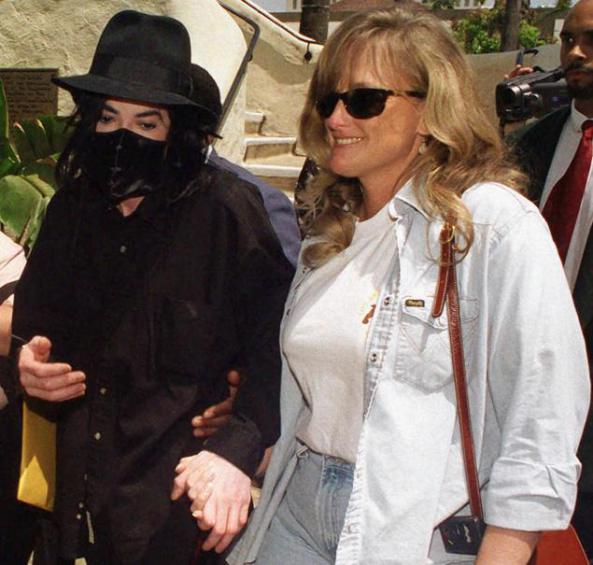
Michael and Debbie divorced on October 8, 1999.
“After Michael and I decided to separate, Michael took charge of the ‘doctors.’ For me, it was more important that Metzger was there, because Metzger treated him as a human being and wanted the best for him. Michael would stubbornly resist for up to ten minutes, and then he would become reasonable and always respected Metzger.”
Debbie says she last saw Michael in 2003, when their daughter Paris was four years old.
Putnam asked her what reaction she had when she learned in 2009 that Michael had died due to a drug injection.
Debbie: “I called Dr. Klein and said, ‘What did you do? You killed him.’”
Debbie had seen TMZ’s report and assumed Klein was involved in Michael’s death. At that time, there was nothing in the news about Dr. Murray.
Putnam ended his questions, and Debora Cheng, the Jacksons’ attorney, continued.
Cheng greeted Debbie. Debbie said: “I’m dying from a headache. I’m tired.”
Debbie said she came because of a subpoena from the company’s lawyers to testify and that she hadn’t volunteered. She said she cut off the phone on Katherine Jackson’s assistant because she didn’t want to talk to Jackson’s lawyer and to testify for either side in this case.
Katherine Jackson’s lawyers had argued with the company’s lawyers about Debbie in session 47 of the trial. The dispute began when the company’s attorney, Katherine Kahan, referred to Debbie as the mother of the children, and three of Katherine’s lawyers objected.
Debora Cheng: “Now the jury thinks everything is fine and as it should be because the children have Debbie. So what’s the problem? She’s the mother of the children. What am I supposed to do? Should I tell the jury that Debbie has no real relationship with the children? That’s difficult for me. The jury should be told that the company’s attorneys’ statements shouldn’t affect their judgment. Her relationship with the children is very complicated, and legally she has relinquished their guardianship rights.”
Kevin Boyle: “The problem is that she isn’t the mother of the children. You heard the lawyer say Debbie is the mother, but Debbie isn’t the mother.”
Brian Panish: “He (Kahan) said, ‘Their mother, Debbie.’”
Debora Cheng: “She said, ‘The mother of the children, Debbie.’”
Katherine Kahan: “I said the mother is Prince and Paris.” (Debbie is not the biological mother.)
Debora Cheng: “But Prince has no relationship with her—she rejects Debbie. They traveled a lot; they were in the Middle East for three years. Blanket was seven years old (at the time of Michael’s death) and didn’t know their aunts and uncles and their children. They had no relationship with their mother. And now the company’s attorney has created the wrong impression in the jury that the children have a mother and that she has reconnected with them. That is completely wrong. Prince hasn’t met her and won’t meet her.”
Today, Debora Cheng asked Debbie whether it was true that she had spent little time with Prince and Paris before this year. Debbie agreed and said that this year she resumed her relationship with Paris. She never discussed the case with the children.
Cheng: “Do you confirm that you and MJ were close friends for twenty years?”Debbie: “Yes, more than twenty years.”And even after the divorce: “It wasn’t like we hated each other.”Cheng: “But your relationship became complicated because of the divorce lawyers?”Debbie: “The divorce lawyers and personal assistants were exhausting.”
Cheng: “Apart from the thinking you have about Dr. Klein today, was he a respected doctor in the past?”Debbie: “Yes, he was very skilled. He taught at UCLA and Stanford.”
At the end of the session, Cheng intended to show the jury a picture of someone with vitiligo, but it was met with objections from the company’s attorney, and another round of discussions began. The rest of the argument was postponed to the next session.
Source: eMJey.com / Reuters & Yahoo & CBC News & CNN & Daily News & Washington Post