Day 66 of the AEG trial: Randy Jackson says Michael’s drug use and family interventions involved more than just a couple of conversations (disturbing content)

Today, footage of the interrogation of Randy Jackson, Michael’s younger brother, was shown in court by the company’s lawyers.
His mother, Katherine, had previously testified that she had spoken with Michael only twice at the request of her children about the use of painkiller medication. But during his interrogation, Randy Jackson said that the number of family interventions to help Michael stop taking the drugs was more than that—something like about ten times. Katherine had said that Michael took medication because of the severity of his pain, and that she knew about it, but she never imagined that her son had become addicted to or dependent on painkillers. In this interrogation, Randy Jackson dismissed his brother’s pain and called him an addict. Randy also challenged his mother Katherine’s testimony and sometimes contradicted her.
Randy said that many of his sisters and brothers were involved in the interventions and that they brought doctors with them to help. Jante and Rebbie had always stood by Randy and supported him. Their father, Joe, was also supportive; Tito and Marlon were sometimes present, and their mother had joined them once.
Randy said about his mother Katherine: "She didn’t want to accept that Michael was an addict and she denied it—she didn’t want to believe."
In court, Katherine had said that Michael was worried about her, respected her, and didn’t want his mother to be hurt and anxious about the medication use.
During the interrogation, Randy said that his brother Michael knew very well how to flatter their mother.
He said these interventions began in the mid-1990s in the country of Taiwan, where Michael was holding tours; and then continued in various places, including a hotel in New York in 2000, four to five times in Neverland during 2004 and 2005, as well as Michael’s home in Las Vegas shortly after the end of the 2005 trial, and Michael’s final home in Carowood in 2009.
Randy said he had heard things, and for that reason he went to Taiwan with his sister Rebbie. He said it was their first intervention. Randy said they wanted to love Michael as a family so he would feel at ease and stay away from drugs.
Once, Randy wrote a letter to all family members, including his mother, saying they had to help Michael stop taking painkillers. He didn’t send emails because not all members used that service. Jante, Rebbie, and their father had replied to him. Randy says everyone was shocked, and their mother didn’t believe anything.
"I wrote everyone’s name in it. Everyone. To make sure they all knew. I was saying that he (Michael) was an addict, and that addicts don’t take responsibility for their actions."
In earlier court sessions, a doctor had testified that, in his view, Michael had developed dependence on pain-relief drugs during periods of his life, and also that dependence is different from addiction. (News)
Randy said Michael always rejected their request for intervention and had distanced himself from his family in recent years. In the last five years of his life, Michael didn’t speak with Randy.
Randy explains the reason from his own perspective: "Michael didn’t want his family to see him in this condition, so he didn’t socialize with the family very much. He would hide from me."
Randy said Michael didn’t want anyone to hear his voice because he had taken drugs and couldn’t speak properly.
Last summer, after a family commotion and Randy’s involvement, Jante, Rebbie, and Germain in the affairs of the Michael Jackson Foundation and Michael’s children, Paris—Michael’s daughter—wrote on Twitter that she now understood why her father had distanced himself from the family. Paris had threatened that these people would pay for their actions. They had kept Katherine away from Paris, Prince, and Blanket so, according to some claims, they could force her to take action against the Michael Jackson Foundation. Prince also accused these people of lying and deception, and said his father had warned him about them.
During his interrogation, Randy Jackson said that every time he had decided to intervene, it was the result of a phone call he received from Grace Rouwamba, the nurse of Michael’s children, in which he had heard that Michael was using too many drugs.
Once, in early to mid-2000, Grace had called Randy and informed him. Michael was staying in New York. Randy went to Michael’s place with Jante, Rebbie, and Tito.
Randy: "Grace said you have to come here—you didn’t need to say anything more."

In New York, Randy asked Michael to go to a drug addiction treatment center, but Michael refused. Randy couldn’t remember whether Michael had accepted the medication or denied it.
Randy hadn’t informed their parents about the issue so they wouldn’t worry.
In later rounds, Randy went to Neverland with a number of his sisters and brothers, and once Jante had brought a doctor with him.
The first intervention at Neverland in 2002 took place with their mother present. Katherine had previously testified about this. Michael was feeling fine, and the matter was dropped. Katherine had said she felt ashamed about participating in that intervention.
In later rounds, Katherine didn’t accompany them, but Randy said Jante and Rebbie always went with him and supported him. He said their father was also supportive. All these interventions happened before the 2005 trial.
Once, when Randy, Rebbie, and Jante arrived at Neverland, Michael wasn’t there. Randy claimed that Michael’s employees were afraid of him and had secretly informed Michael of Randy’s presence, and Michael had left the place so Randy wouldn’t see him.
Randy: "My presence was bad news for them. They were saying, ‘Randy is back again—he’s come to stir things up.’"
Another time, Grace called Randy from Neverland. Randy said that the other sisters and brothers might have also spoken with Grace—maybe Jackie, Rebbie, Tito, or Jante—and perhaps the conversation had been a group one.
Even though they weren’t allowed in and Michael didn’t want to see them, they passed through the gates of Neverland and went to see Michael. One of the brothers had gone toward the gate and opened it because the guards hadn’t opened the door.
Randy says, laughing while looking at the camera and wearing his glasses on his head: "I told him I wanted to take him to a drug rehab center, and he said he wasn’t coming. I asked why—he said, ‘No, I’m not coming.’"

Michael hadn’t said anything about taking drugs or denied anything. He hadn’t said he wasn’t taking drugs or that there was no problem. During the two hours they were there, Michael had only said: "Don’t worry, I’m fine, I’m not going anywhere."
When asked whether Michael was truly feeling well, Randy answered yes, but said he thought Michael had a drug problem.
Randy blamed Grace for Michael’s drug dependence and, in a contradictory statement, claimed that Grace—who was worried about Michael and called Randy to help—was the one providing him with the drugs. Randy said he thinks it was hard for Grace to say “no” to Michael.
Randy: "I wasn’t afraid to tell him ‘no.’ That’s why he would fight with me. But he only weighed about 40 kilos and there wasn’t much he could do."
Randy says this with laughter.
Randy Jackson said that later, in a pharmacy, he saw Grace buying medication for his brother, and that’s why he fired his brother’s children’s nurse because, according to him, Michael had asked for it. Randy said that seeing Grace get drugs for his brother and then asking him to step forward to solve the problem upset him, so he followed Grace into pharmacies to catch her. That firing happened in 2004 or 2005.
Randy claimed that by firing Grace, he managed to stop Michael from taking the drugs. This intervention happened right before the start of the trial, and Randy says Michael succeeded in preparing himself for court. But Grace returned. Randy had told Rebbie not to leave Michael, because Randy didn’t trust Grace, and he fired her again.
"I noticed a pattern. Whenever Grace was there, Michael would get worse. So I fired Grace."
(After the 2005 trial ended, Grace accompanied Michael and his children around the world and continued to be their nurse.)
Katherine Jackson’s lawyers are looking for Grace to find her and bring her to court to contradict Randy’s statements. Randy Jackson’s testimony would benefit the company’s lawyers. The company has tried to portray Michael in court as an addict whose image had been damaged by the accusations and who couldn’t generate large income. In contrast, Katherine’s lawyers have tried to refute that claim.
Regarding the 2005 criminal trial against Michael, Randy said his brother was very frightened before the trial began, and once, in Randy’s view, while under the influence of medication, he had been forced to take his brother to the hospital and then to court.
During the 2005 trial, Michael suffered severe spasms in his lower back and was receiving pain medication due to the intense pain. While Michael’s mother, colleagues, and doctors had said his back pain was serious and real, Randy denied it today. This one day of back pain was enough to send Michael to the hospital, and he attended the court session in sweatpants because he was going straight from the hospital to court. Because they went to the hospital, they were delayed, and the judge had threatened to jail Michael if he didn’t attend the session. Randy claimed the reason for Michael’s delay wasn’t his back pain, but his fear of being in court.
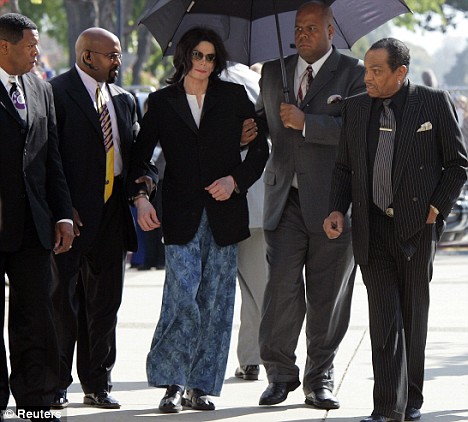
Randy claimed that through the news, he learned about Michael’s delay and was very upset. He went to the hospital, and Michael told him he wouldn’t go to court. When the lawyer asked Randy whether Michael had gone to the hospital because of medication use, he said no—he went to the hospital because he didn’t want to go to court.
Randy also said: "Michael couldn’t trust any of the people around him, because they were lying to him in order to secure their position with him."
Randy recalled another incident after the 2005 trial ended. It happened at a house in Beverly Hills referred to as Shadow Wood. Randy says the house was fifty thousand square feet and he hated it because it was too big.
Randy claims that Grace’s nurse called him and said that Michael had taken a large amount of prescription medication that had been issued in Michael’s name. Randy says Grace had told him that Michael was unable to speak clearly because he was under the influence of drugs. At that time, Michael’s children and guests were in the house. After returning home, guided by Grace, Randy collected all the medications he could find and went downstairs to eat something after hearing that Michael had passed out. Randy said that after he picked Michael up from the floor and put him in bed, he called a doctor. The doctor administered a medication injection to counteract the painkillers’ effects and asked them not to leave Michael’s side. Randy said he couldn’t remember the exact words he said to Michael, but he had told him that the family loved him and wanted to help him.
Randy: "The doctor said someone had to sleep next to him, watch that he didn’t vomit and choke."
Randy asked one of the Cassio family’s sons to stay with Michael. He himself stayed in the house that night. The next day, Michael woke up late. Randy asked whether he remembered anything from the night before. MJ said: "No, no—I just heard things."
Michael had told Randy that he had taken medication so he could sleep, that he had made a mistake, and that he was sorry.
Randy said that after the Vegas intervention, Grace told him that Michael had quit and was clean.
"I tried to help him, but I couldn’t get that many people with me."
Randy said Michael’s physical condition in 2006 to 2007 or 2008 in Ireland was favorable.

In September 2007, the Jackson family had sent a statement to People magazine denying rumors of Michael’s addiction and family interventions. The letter was signed by Katherine, Latoya, Jackie, Marlon, Tito, and Germain. Previously, Katherine had testified about this in court and again denied the rumors. On that day, the company’s lawyer asked Katherine whether Michael had asked her to sign the letter. Katherine had refused.
Today, Randy said that when these rumors were published in 2007, Grace Rouwamba and Raymond Ben—Michael’s spokesperson—had told him that Randy was behind it and had given information to the press. During his interrogation, Randy claimed that this had nothing to do with him, and that Grace and Raymond Ben had said it because Randy had fired both of them.
(The accusation of leaking family news to the media is a charge that fans widely level at Randy today. TJ and Taj Jackson, Randy’s nephews, had previously defended Grace in their testimony and called her a truthful person. TJ also said that after Michael’s death, Grace returned to Michael’s children, but after the intervention of several family members—now believed to be Randy, Rebbie, and Jante—she was removed from her job again, and thus the children’s situation was violated.)
Randy said Michael had asked family members to sign the statement and publish it in People magazine. Randy, Rebbie, Jante, and their father did not sign the letter. Randy said the publication of the statement was Michael’s idea.
When Michael went to Carowood in 2009, Randy and his father tried to go to the house, but they weren’t allowed in and couldn’t contact Michael. Randy said the guards wouldn’t let them in and told them Michael wasn’t there.
Randy: "He had a drug problem. He wasn’t eating well. Many things were going on, and a lot of psychological pressure was being put on him."
Randy couldn’t remember when the last time he had spoken with Michael was. He couldn’t remember seeing Michael in 2009. The last time Michael met with his family was at a celebration on May 14.
In 2009, after Teme Teme was fired, it was reported that Leonard Rowe had become Michael’s program manager. Then a letter attributed to Michael was published saying that his father had appointed Leonard without his permission and that Leonard had no right to interfere in affairs.
Randy, however, said Leonard was very active and was reporting to Randy that Michael’s condition wasn’t good. At that time, Randy had been considering a treatment center in San Francisco for Michael so he could break his drug dependence there.
Randy said he had spoken to his parents about this, and they were worried that Michael wasn’t getting any help. This was in contrast to what Katherine had testified earlier—that nobody had told her and her father anything about Michael’s problem, and if they had, they would have intervened and saved Michael.
Frank Dileo was Michael’s last program manager in 2009. Randy had known him for 20 to 30 years. He said he was a good manager. Frank Dileo died in 2011 after open-heart surgery. Randy said that when Dileo was in a coma, he had visited him in the hospital.

Randy said he had never seen Michael drink alcohol, and that his drug problem hadn’t been continuous throughout the years 2000 or 2009.
Randy said Michael had talked to him about the burn on his scalp and said it was extremely painful.
Randy had never seen Michael taking drugs, but over the years he had noticed only twice that his brother couldn’t speak well. He said he had never heard about propofol until after his brother’s death. He also said Michael never used illegal drugs or narcotics, and that their interventions were only because of excessive use of painkillers prescribed by doctors. Randy also corrected his own statements and said he didn’t know whether he could label his brother as an addict, because he wasn’t a doctor and couldn’t diagnose.
Randy said he had tried to contact Michael’s doctors—one in Vegas and another in Florida—to ask about his brother’s drug use, but they weren’t responsive. Protecting the privacy of doctors and patients is a law in the United States. Randy didn’t remember the doctors’ names.
Randy also said, in response to a question from the interrogator, that Michael didn’t have sleep problems on his tours and slept well. This statement contradicts all the information provided by witnesses in court. Randy also said Michael enjoyed touring. Michael had personally said years ago that he didn’t have any interest in touring, but he did it for his fans and to raise money for charities.
In this interrogation, Randy again lashed out at the caretakers of his brother’s foundation. He said that after Michael’s death, everyone was shocked. They still hadn’t buried Michael when John Branca submitted Michael’s will to the court.
Randy: "I was unhappy with everything that was happening in court and with Branca and Weitzman’s actions. We were still trying to find a way to mourn, and these people are in court, and the will and all this nonsense... I still hadn’t buried my brother."
In the will, no portion of Michael’s wealth was allocated to his brothers and sisters, and all the wealth went to Michael’s three children, his mother, and charitable organizations.
Randy said that only a few days after Michael’s death, he set everything aside and got involved with AEG and Kenny Ortega in preparing Michael’s memorial, which was held on July 7, 2009 at the Staples Center. Randy said he slept on-site at night so the show could be ready.
Lawyer: "Was working with AEG a positive experience?"
Randy: "It was awful! (laughs) No, I’m kidding. They were good people—really good."
Lawyer: "Do you remember telling Randy Phillips that Michael was lucky to have them by his side for their return to the stage?"
Randy: "I don’t remember saying that, but it doesn’t mean I didn’t say it. I felt that way at the time."
Randy claimed that among his sisters and brothers, he was closest to Michael because they had a smaller age gap (three years). Of course, Michael’s age gap with his other brother Marlon is one year. Years ago, Michael had said that he was closest to Jante.
Randy also said that Michael enjoyed being around the kids a lot and cooked for them.
Source: eMJey.com / AP & CNN & LA Times