A.G. Court Hearing 68: More Details on Michael Jackson’s Head Surgery, as Told by Dr. Sasaki
In today’s hearing, a video of the interrogation of Dr. Gordon Hiroshi Sasaki was shown. He also served in Vietnam.
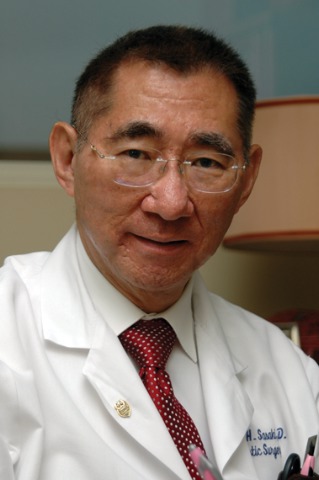
Sasaki performed two surgeries on Michael’s head. He had been introduced to Michael by Dr. Stephen Haufelin. The first surgery took place on March 16, 1993, and the second on October 31, 1997. The purpose of the procedures was to reduce the keloids that had formed on his scalp and the bald area.
Dr. Sasaki says that, of his own will, he assigned post-operative care and pain management to two of Michael’s doctors: Klein and Haufelin. Dr. Metzger would sometimes join them as well. Michael’s view was that they were the best options because they knew him, and they were aware of his treatment history.
The 1993 surgery lasted nearly half an hour. Sasaki placed one metal piece on one side of the incision and another metal piece on the other side, pulled them toward each other so they sat alongside one another, and then stitched from one side of the metal to the other. The incision was located at the center of the head. Sasaki says this method usually results in about a 30% expansion of the skin.
He also implanted a balloon under the scalp to create even more expansion, covering the healthy skin over the scar. During the surgery, Haufelin was his first assistant.
Sasaki recalls that Haufelin had told him that Michael has a low pain threshold and that it would be better for Sasaki to hand over post-surgical medical care and the management of anti-pain medications to him, because he knew the patient better than Sasaki did. He says that sometimes doctors want to maintain control over their famous patients. For Sasaki, it was unusual to operate on the patient and then hand over responsibility for his care to someone else. However, when he meets the patient only rarely, he prefers not to provide care.
Sasaki did not discuss painkillers with Michael, and he did not see Michael for two or three months after the surgery.
On June 30, he examined Michael for the first time after the surgery at Dr. Klein’s office. Michael was busy rehearsing for the tour, and his workouts were powerful and intense, so he was enduring a lot of pain. Part of Michael’s head had become bald due to a fire and its consequences, and Michael used artificial hair. This artificial hair covered the area that had been operated on.
Sasaki told Debbie that the surgical wound needs fresh air to heal and should not be covered. Debbie was an assistant to Dr. Klein.
Several months after the surgery, on July 3, 1993, Dr. Klein suggested that Sasaki prescribe Percocet for Michael. At that time, Klein was saying that he had taken over the management of Michael’s pain treatment. This was the first time Sasaki prescribed a pain medication for Michael. On July 20, another request for Percocet was made. At that time, Michael was involved in intense physical training for the tour.
On August 10, Sasaki received a call from Dr. Klein saying that M.J. had severe pain and requested Percocet again. Sasaki said that when Michael and Dr. Klein had requested Percocet three times within a month—from July to August 1993—he became dissatisfied with prescribing the drug and said he would not prescribe Percocet anymore. Each time, he prescribed 45 tablets for Michael, but he was concerned about the increase in how often it was being requested.
Sasaki says that in such surgeries, pain usually lasts four to six weeks.
On August 15, 1993, Sasaki met Michael again. Debbie was with him. Sasaki injected 100 milligrams of Demerol into Michael because Michael said the severe pain had been unbearable. Sasaki suggested to Dr. Klein and Michael that they consult a specialist in pain treatment. The medication had been prescribed under the alias “Arnold.” Sasaki says this was the only time he gave Demerol to the patient, because this drug can affect a person’s life and lead to changes.
At the same time, Dr. Klein had expressed his concerns to Dr. Sasaki about Michael being on a worldwide tour.
(In 1984, Michael’s head caught fire. He had lupus. His burn wounds healed, but at the site of healing, extra flesh formed (keloids). Michael underwent surgeries to cut out the keloids and form healthy skin, so that conditions would be created for hair to grow back in the bald area. According to Dr. Klein, his lupus prevented the process from succeeding. Dr. Arnold Klein said that the many surgeries on his head were not successful, and in the end he decided to prevent further surgeries. Also, due to lupus, necrosis—dead tissue—formed in Michael’s nose, which required him to undergo reconstructive nose surgeries. Michael’s nose skin had been destroyed by necrosis. He also suffered from swelling in his nose.)
Sasaki had visited Neverland, Michael’s ranch, twice.
Sasaki: “He was so kind that he invited me and my family to Neverland. We went there; he wasn’t present himself, though it wasn’t necessary. His employees hosted us, brought us lunch, and showed us around.”
The second trip to Neverland took place in May 1998; it was a medical visit. Michael had called and asked that Dr. Sasaki go to Neverland to examine his head. This was the last time the two met, and during it…
Sasaki: “Instead of talking about him, we talked about the Bible.”
Source: eMJey.com / AP & CNN