Day 4 of the trial: Michael Jackson had a chance to live
On Friday, one of the paramedics who had gone to Michael’s home on the day he died testified that Dr. Conrad Murray had not told them anything about the anesthetic propofol.
Richard Senneff stated that Murray had said he had used only the sedative lorazepam for Michael, and that as soon as the paramedics arrived, he had told them Michael had no particular problem—while he was dead.
This doctor said that if they had arrived sooner, there was a good chance Michael would have survived.
 Martin Blount, the ambulance driver who transported Michael to the hospital, told prosecutor Deborah Brazil in response that he also had seen no signs of life in Michael.
Blount said Murray claimed that Michael had lost consciousness only one minute before the paramedics arrived.
He also said he saw that before they carried Michael out of the room on a gurney, Murray picked up some lidocaine from the floor and put it into a bag.
Martin Blount, the ambulance driver who transported Michael to the hospital, told prosecutor Deborah Brazil in response that he also had seen no signs of life in Michael.
Blount said Murray claimed that Michael had lost consciousness only one minute before the paramedics arrived.
He also said he saw that before they carried Michael out of the room on a gurney, Murray picked up some lidocaine from the floor and put it into a bag.
 Bob Johnson, executive director of Nannin Medical, the maker of a finger pulse oximeter, was another witness for the prosecution.
Dr. Murray had attached this pulse oximeter to his finger to monitor Michael’s heart rate. Johnson said that this $275 device wasn’t sufficient to monitor a patient’s vital signs because its alarm beep wasn’t working well, and if something went wrong with the patient, the doctor wouldn’t be informed.
Johnson said Murray would have been better off spending $1,200 and buying the proper device.
The prosecutor says Conrad Murray is guilty for failing to provide adequate equipment and facilities to care for Michael.
Bob Johnson, executive director of Nannin Medical, the maker of a finger pulse oximeter, was another witness for the prosecution.
Dr. Murray had attached this pulse oximeter to his finger to monitor Michael’s heart rate. Johnson said that this $275 device wasn’t sufficient to monitor a patient’s vital signs because its alarm beep wasn’t working well, and if something went wrong with the patient, the doctor wouldn’t be informed.
Johnson said Murray would have been better off spending $1,200 and buying the proper device.
The prosecutor says Conrad Murray is guilty for failing to provide adequate equipment and facilities to care for Michael.
 Robert Russell, one of Conrad Murray’s former patients, was called to the stand by the prosecution yesterday.
He praised Murray’s medical care, but said that since Murray was hired by Michael, access to him had become very difficult. Russell said that a few weeks before Michael died, Murray saved his life after he had a heart attack.
Russell called Murray’s office on the day Michael died and left a message for him. That same day at 11:49, Murray left him a voicemail.
The prosecutor says that while Michael was dying, Murray was busy using his mobile phone.
Russell says Murray’s message was strange because it said he was on vacation, even though a few months earlier he had told them he worked for Michael Jackson.
The prosecutor used Russell to show how Murray had a habit of leaving his patients alone.
Russell said: "I was scared. I was confused. I felt like I was left alone and didn’t have any help with me."
Robert Russell, one of Conrad Murray’s former patients, was called to the stand by the prosecution yesterday.
He praised Murray’s medical care, but said that since Murray was hired by Michael, access to him had become very difficult. Russell said that a few weeks before Michael died, Murray saved his life after he had a heart attack.
Russell called Murray’s office on the day Michael died and left a message for him. That same day at 11:49, Murray left him a voicemail.
The prosecutor says that while Michael was dying, Murray was busy using his mobile phone.
Russell says Murray’s message was strange because it said he was on vacation, even though a few months earlier he had told them he worked for Michael Jackson.
The prosecutor used Russell to show how Murray had a habit of leaving his patients alone.
Russell said: "I was scared. I was confused. I felt like I was left alone and didn’t have any help with me."
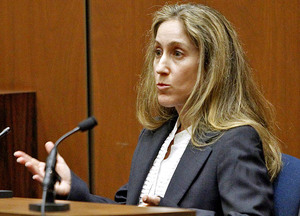 Richelle Cooper was the last witness of the first week of the trial. This doctor, who had confirmed Michael’s death at UCLA Hospital, testified that Michael was already dead when he arrived at the hospital.
"From a medical standpoint, he was dead. His heart wasn’t beating."
Murray had told Dr. Cooper that he had witnessed Michael’s respiratory and cardiac arrest. Meanwhile, the prosecution says Murray was outside the room at that moment.
Cooper stated that Murray told her he had used only lorazepam for Michael and didn’t mention propofol.
After the weekend break, the court will resume on Monday.
Source: eMJey.com / BBC / AP / CNN / LA Times / NY Post
Richelle Cooper was the last witness of the first week of the trial. This doctor, who had confirmed Michael’s death at UCLA Hospital, testified that Michael was already dead when he arrived at the hospital.
"From a medical standpoint, he was dead. His heart wasn’t beating."
Murray had told Dr. Cooper that he had witnessed Michael’s respiratory and cardiac arrest. Meanwhile, the prosecution says Murray was outside the room at that moment.
Cooper stated that Murray told her he had used only lorazepam for Michael and didn’t mention propofol.
After the weekend break, the court will resume on Monday.
Source: eMJey.com / BBC / AP / CNN / LA Times / NY Post
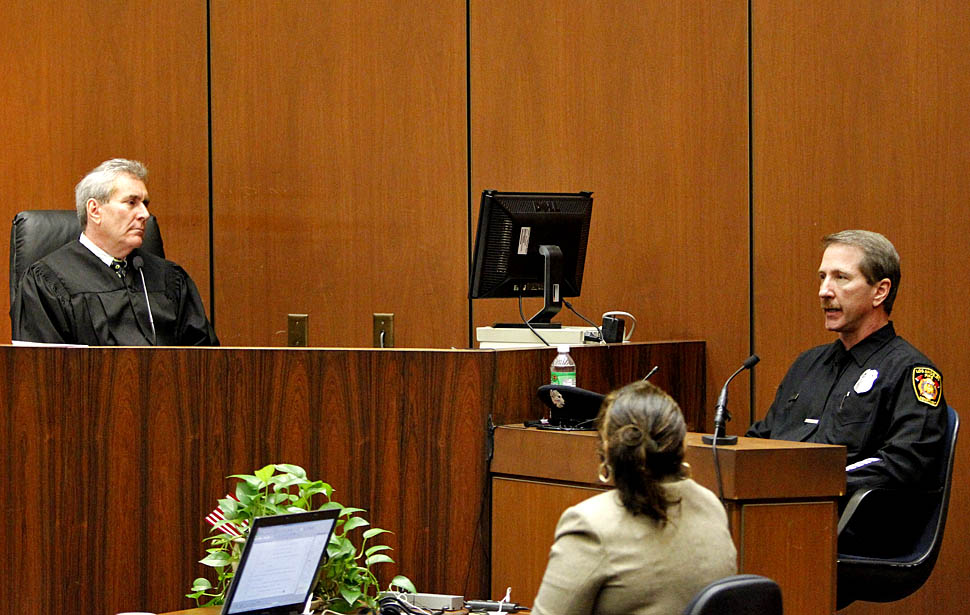
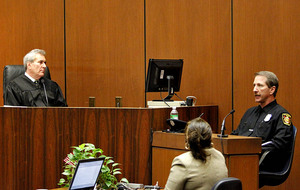
Richard Senneff and Judge Michael Pastor
In the end, Murray told the paramedics that he had treated Michael for exhaustion and dehydration, but he did not say that he had given him propofol. The prosecutor says hiding the drugs he had injected into Michael is evidence of his crime.
When the paramedics arrived, Murray was pacing around in anger and confusion. Senneff says he had to repeat his question three times before Murray finally heard and answered.
Senneff asked what condition Michael was in before they arrived and what his problem was, and Murray responded:
"Nothing. There’s nothing. He’s just unconscious."
Senneff says Murray’s answer didn’t seem right to him. Because when a doctor is in the home, someone has an IV connected there, and an oxygen device is placed there, then there must be a problem.
He asked Murray how long the patient had been in that condition, and Murray answered that as soon as his condition worsened, they called emergency services.
According to the testimony given from the time they found Michael unconscious until the time they called emergency services, at least 15 minutes had passed.
Senneff says that during those 15 minutes, Michael had a good chance of surviving. Emergency doctors were on the scene 5 minutes after the call.
This veteran paramedic says Michael’s body was cold, his eyes were open and dry, his pupils were dilated, and his IV was connected to his leg. When Senneff attached the pulse monitor to Michael, no cardiac activity was seen. Michael was dead.
He noted that Murray had said he detected a pulse in the upper thigh of Michael, but the device showed nothing.
Richard Senneff was the first—and one of four—paramedics who tried to save Michael’s life. The efforts were not effective. At 12:57, the hospital emergency department instructed Senneff over the radio to declare Michael dead, but at Murray’s insistence, Michael was taken to the hospital.
Senneff said that during the 42 minutes he was beside Michael, he saw no signs of life.
During cross-examination, Murray’s lawyers were able to find a contradiction in the witnesses’ testimony. Senneff said that when he entered the room, he saw Alvarez and Murray pulling Michael down from the bed. Alvarez had testified that he had pulled Michael down from the bed with Murray about 6 minutes before the paramedics arrived.
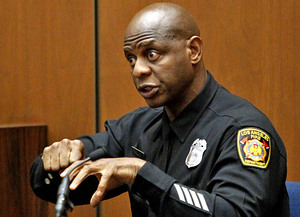
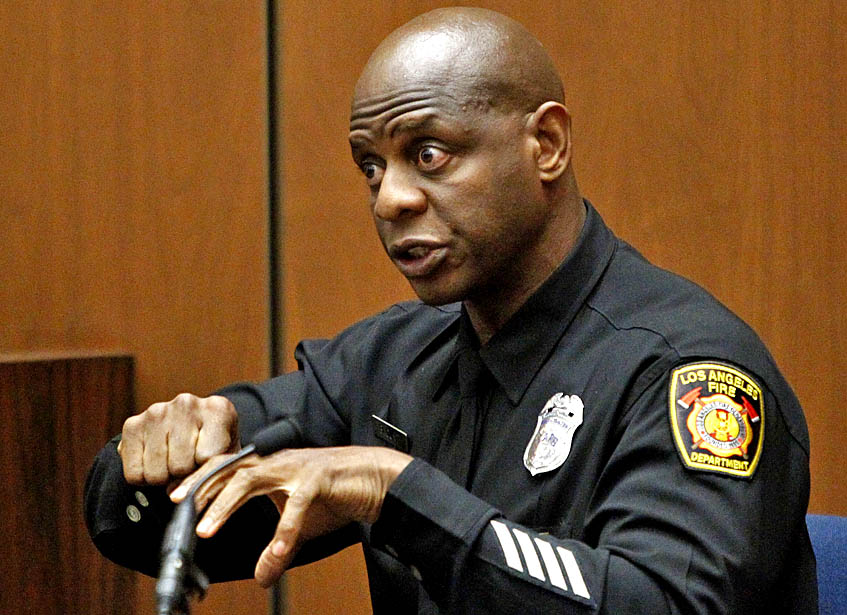 Martin Blount, the ambulance driver who transported Michael to the hospital, told prosecutor Deborah Brazil in response that he also had seen no signs of life in Michael.
Blount said Murray claimed that Michael had lost consciousness only one minute before the paramedics arrived.
He also said he saw that before they carried Michael out of the room on a gurney, Murray picked up some lidocaine from the floor and put it into a bag.
Martin Blount, the ambulance driver who transported Michael to the hospital, told prosecutor Deborah Brazil in response that he also had seen no signs of life in Michael.
Blount said Murray claimed that Michael had lost consciousness only one minute before the paramedics arrived.
He also said he saw that before they carried Michael out of the room on a gurney, Murray picked up some lidocaine from the floor and put it into a bag.
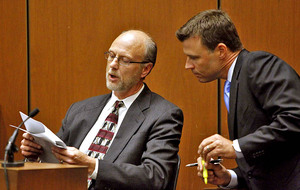
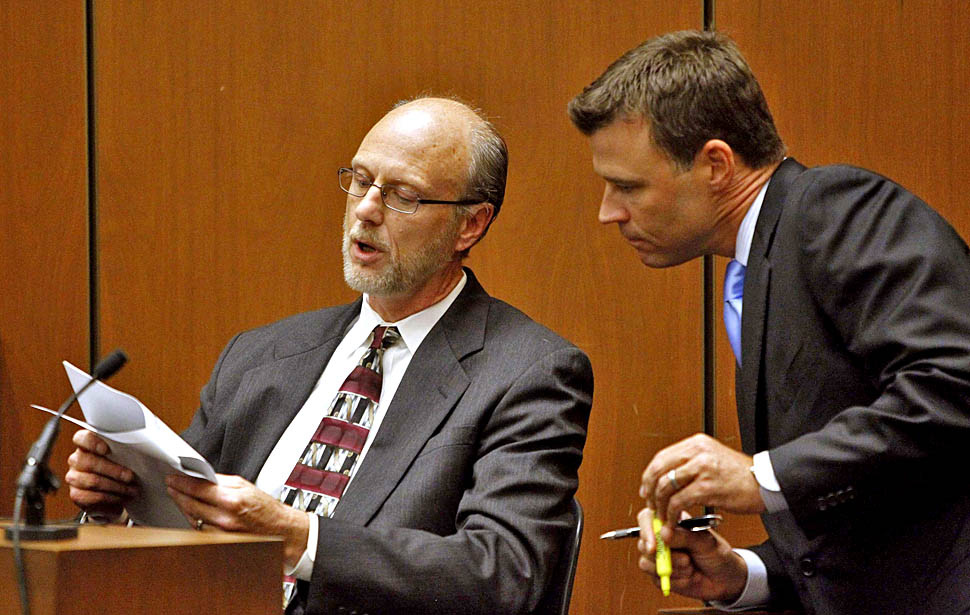 Bob Johnson, executive director of Nannin Medical, the maker of a finger pulse oximeter, was another witness for the prosecution.
Dr. Murray had attached this pulse oximeter to his finger to monitor Michael’s heart rate. Johnson said that this $275 device wasn’t sufficient to monitor a patient’s vital signs because its alarm beep wasn’t working well, and if something went wrong with the patient, the doctor wouldn’t be informed.
Johnson said Murray would have been better off spending $1,200 and buying the proper device.
The prosecutor says Conrad Murray is guilty for failing to provide adequate equipment and facilities to care for Michael.
Bob Johnson, executive director of Nannin Medical, the maker of a finger pulse oximeter, was another witness for the prosecution.
Dr. Murray had attached this pulse oximeter to his finger to monitor Michael’s heart rate. Johnson said that this $275 device wasn’t sufficient to monitor a patient’s vital signs because its alarm beep wasn’t working well, and if something went wrong with the patient, the doctor wouldn’t be informed.
Johnson said Murray would have been better off spending $1,200 and buying the proper device.
The prosecutor says Conrad Murray is guilty for failing to provide adequate equipment and facilities to care for Michael.
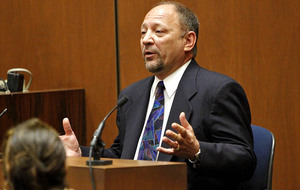
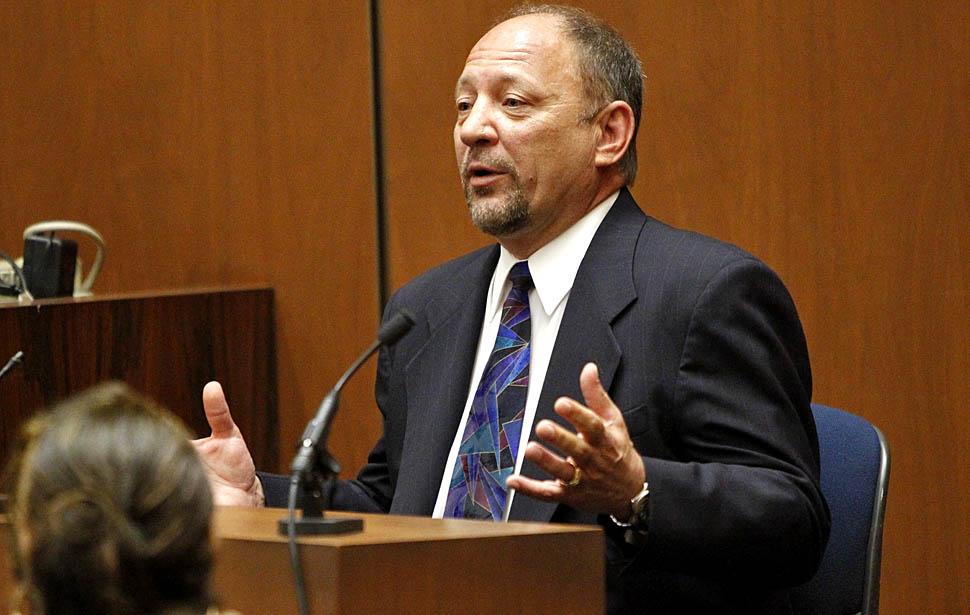 Robert Russell, one of Conrad Murray’s former patients, was called to the stand by the prosecution yesterday.
He praised Murray’s medical care, but said that since Murray was hired by Michael, access to him had become very difficult. Russell said that a few weeks before Michael died, Murray saved his life after he had a heart attack.
Russell called Murray’s office on the day Michael died and left a message for him. That same day at 11:49, Murray left him a voicemail.
The prosecutor says that while Michael was dying, Murray was busy using his mobile phone.
Russell says Murray’s message was strange because it said he was on vacation, even though a few months earlier he had told them he worked for Michael Jackson.
The prosecutor used Russell to show how Murray had a habit of leaving his patients alone.
Russell said: "I was scared. I was confused. I felt like I was left alone and didn’t have any help with me."
Robert Russell, one of Conrad Murray’s former patients, was called to the stand by the prosecution yesterday.
He praised Murray’s medical care, but said that since Murray was hired by Michael, access to him had become very difficult. Russell said that a few weeks before Michael died, Murray saved his life after he had a heart attack.
Russell called Murray’s office on the day Michael died and left a message for him. That same day at 11:49, Murray left him a voicemail.
The prosecutor says that while Michael was dying, Murray was busy using his mobile phone.
Russell says Murray’s message was strange because it said he was on vacation, even though a few months earlier he had told them he worked for Michael Jackson.
The prosecutor used Russell to show how Murray had a habit of leaving his patients alone.
Russell said: "I was scared. I was confused. I felt like I was left alone and didn’t have any help with me."
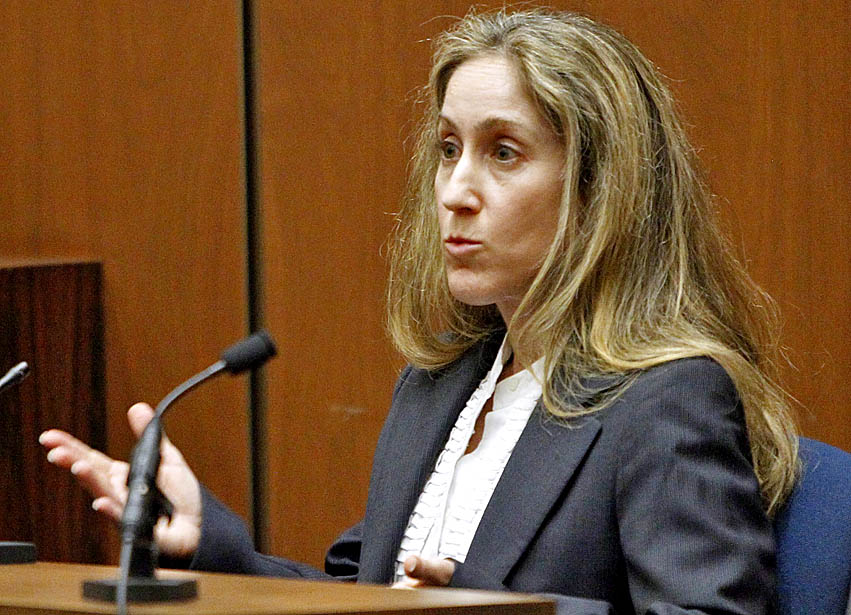 Richelle Cooper was the last witness of the first week of the trial. This doctor, who had confirmed Michael’s death at UCLA Hospital, testified that Michael was already dead when he arrived at the hospital.
"From a medical standpoint, he was dead. His heart wasn’t beating."
Murray had told Dr. Cooper that he had witnessed Michael’s respiratory and cardiac arrest. Meanwhile, the prosecution says Murray was outside the room at that moment.
Cooper stated that Murray told her he had used only lorazepam for Michael and didn’t mention propofol.
After the weekend break, the court will resume on Monday.
Source: eMJey.com / BBC / AP / CNN / LA Times / NY Post
Richelle Cooper was the last witness of the first week of the trial. This doctor, who had confirmed Michael’s death at UCLA Hospital, testified that Michael was already dead when he arrived at the hospital.
"From a medical standpoint, he was dead. His heart wasn’t beating."
Murray had told Dr. Cooper that he had witnessed Michael’s respiratory and cardiac arrest. Meanwhile, the prosecution says Murray was outside the room at that moment.
Cooper stated that Murray told her he had used only lorazepam for Michael and didn’t mention propofol.
After the weekend break, the court will resume on Monday.
Source: eMJey.com / BBC / AP / CNN / LA Times / NY Post