Day 17 of the Trial: Propofol Is Safe in the Doctor’s Hands
The seventeenth day of the trial of the defendant accused of involuntary manslaughter in Michael Jackson’s death came with heavy rain and severe morning traffic. For that reason, the court began late.
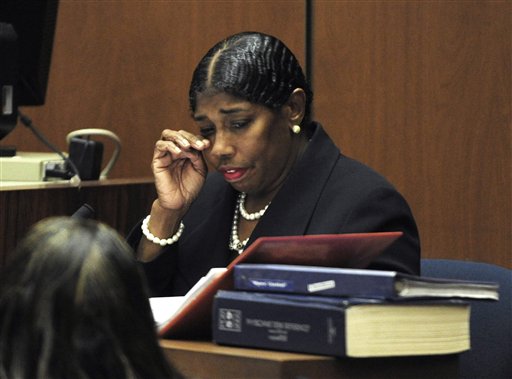
The first witness was nurse Cherilyn Lee, who had also testified the day before. While on the stand, she still hadn’t answered one question when she said she felt weak and couldn’t remain in the witness box. With tears, she told the judge she would be very grateful if she were allowed to rest for a moment. She then added that giving testimony was very sensitive for her. The judge said her health was more important than anything. Lee left the stand, and the judge thanked—warmly and with the utmost good humor—the jury, which was anonymous and unknown, for bringing themselves to court in the rain. He also apologized that they would have to wait for some time until the trial could continue. Pastor also told them to be careful when coming down the steps from the stand.
When Cherilyn Lee returned to the stand after 25 minutes, she said that in the months before Michael’s death, she had tried to treat his insomnia by using a daily routine containing vitamins and without caffeine, but it had produced no results. In April 2009, Michael asked Lee to inject him with propofol.
Michael said this was the only medication that would make him sleep. He explained that he had tested this drug during a surgical procedure.
Lee said she had never even heard the name of this drug, but she asked around, learned about its side effects, and understood that it should only be used in a hospital and for surgery.
Lee told Michael that this drug was too dangerous for home use, but Michael was not convinced.
“He said, ‘It won’t cause me any problems. I just need a doctor who, while I’m asleep, will take care of me with his equipment.’”
“I asked him once whether he had thought about what would happen if he didn’t wake up again.”
Nurse Cherilyn Lee testified that Michael had told her his doctor had given him reassurance that no danger would threaten him as long as he was cared for with equipment.
“He said, ‘I’m telling you the only drug that can put me to sleep is Diprivan. Can you find someone who can help me sleep?’”
Diprivan is the brand name for propofol.
On April 19, Lee rejected Michael’s final request for a propofol injection, and Michael stopped calling her.
Prosecutor Yvette Walgren asked Lee: “Did he say that ‘I’ll be fine. I just need a doctor with his equipment to take care of me while I’m asleep’?”
Cherilyn Lee: “Yes, exactly that.”
Lee broke down in tears here.
Cherilyn Lee was a witness for the defense, and her testimony was in favor of the prosecution!
David Walgren used this moment to show that Conrad Murray, like Allan Metzger and Cherilyn Lee, should have warned Michael about the dangers of propofol in response to Michael’s request—and should have said no.
He also showed that Michael Jackson had complete trust in Dr. Murray and knew that as long as a doctor with his equipment monitored his vital signs, the drug would not pose a danger to him.
The prosecutor says Conrad Murray left Michael alone while he was unconscious for more than 45 minutes.
Another point that emerges from Lee’s testimony is that Michael knew the injection had to be done by a doctor, so he couldn’t have injected himself with propofol.
The defense attorneys say that when Murray wasn’t in the room, Michael had injected the drug himself.
During the video cross-examination with Walgren, Lee referred to a critical point:
“I told him that if someone truly cared about him and was worried, they would never give him this drug.”
Lee also said she had been taking notes on Michael Jackson’s treatment details. One of the criticisms the prosecution has of Conrad Murray is that he never recorded Michael’s medical history or the medications he prescribed.
On the stand, Lee said she used an IV line to inject vitamins into Michael because Michael had thin veins and injections were difficult.
Earlier, Dr. Steven Shaffer had also rejected the possibility that Michael had injected propofol. He said that injecting propofol is very painful and must be done with a painkiller. In addition, such an injection requires a large vein, but Michael’s veins were thin, which would make the injection even more difficult.
Yesterday, the defense attorney, Ed Chernoff, also said that Murray would not testify in court. This forced the judge to say that if necessary, Murray would have to take the stand even if the lawyers’ strategy wasn’t like that.
Chernoff asked the judge whether, legally, he had the authority to give such instructions to the defense attorneys. The judge said this was one of the provisions of Michael Pastor (his own) law!
Pastor also prevented the jury from learning details of the contract made between Michael Jackson and AEG for 50 concerts in London. The defense wanted to show that if Michael canceled the concerts, he would owe AEG $40 million, and therefore he was determined to go through with the tour—and for that, he needed sleep so he could make it to his rehearsals.
Pastor said, “How do we know Michael Jackson was worried about this? He added that this situation could confuse the jury.”
He also reminded them:
“This is not a work contract case! This is a murder case!”
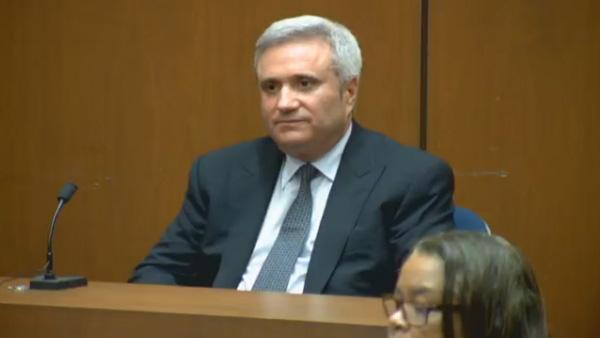
Another witness yesterday was Randy Phillips, CEO of AEG.
He said the lawyers’ theory that Michael Jackson was very afraid of AEG canceling the concerts is not true, because they had never threatened to cancel the contract.
“None of us ever even thought about canceling the contract.”
But if Michael canceled the contract, he would have been required to pay the costs of rehearsal sessions and the tour preparation process. The judge did not allow Randy Phillips to disclose the exact amount stated in the contract for damages to the jury.
Phillips said that during a meeting held at Michael’s home with his presence, Kenny Ortega, Conrad Murray, and Michael, Michael reassured them that if the conditions were right for him, the concerts would happen:
“He said, ‘You build the house, and I’ll install the doors and paint it.’”
Phillips said that during that meeting he told Conrad Murray that he needed to know about Michael’s other doctor, Dr. Arnold Klein. Phillips wanted to ensure that Murray was aware of the medications that Klein prescribed for Michael.
Phillips said this concern existed because one day after Michael returned from Klein’s office, he found him somewhat confused and disoriented.
Phillips said Michael was very eager, excited, and committed to starting his career in London again. He wanted to live in a house in the suburbs with his three children.
Phillips said Michael was tired of constantly changing his place of residence and wanted a fixed place to live with his children.
Phillips pointed out that this was an emotional conversation between the two of them, and it caused both of them to break down.
He also said Michael wanted Dr. Murray to be with him in London the whole time.
Source: eMJey.com / AP / Reuters