Day 11 of the Trial: Michael Jackson’s Death Was Predictable
In yesterday’s court session, another witness testified—an American doctor at UCLA. On June 25, 2009, Michael was transferred to this hospital, and the news of his death was officially announced there.
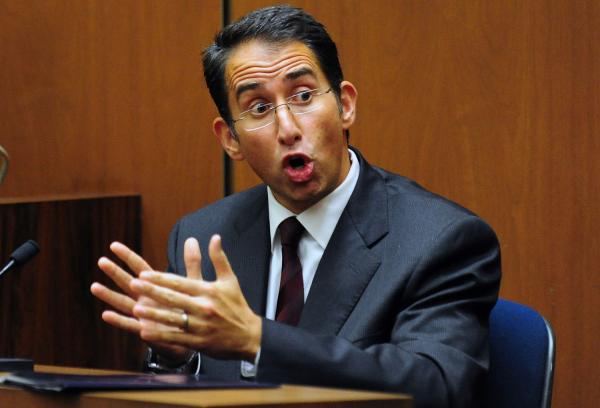
Nader Kamangar, who specializes in treating sleep-related illnesses, said that in the first stage, Conrad Murray should never have used propofol to treat Michael Jackson’s insomnia.
“This mistake goes beyond the farthest boundaries of medical error and its depth is immeasurable.”
Kamangar said that even if the injection of propofol was done by Michael himself, Conrad Murray would still be at fault.
“He should have considered that his patient might be misusing drugs and becoming dependent on them. It seems he had this problem as well.”
Kamangar pointed out that Murray left his patient alone in a room full of drugs. He then called Michael’s death a “predictable result” of this kind of behavior.
He also, like Dr. Alan Steinberg, said that even one minute would have made a difference in saving Michael Jackson’s life. Kamangar referred to Murray’s excessive delay in contacting emergency services and his ineffective cardiac assistance.
Steinberg had also called Murray’s performance “strange.”
Kamangar also said that Murray had not tried to find the cause of Michael Jackson’s insomnia problem, and instead he had focused on injecting and prescribing addictive drugs for him.
In response to a question from prosecutor David Walgren, asking:
“Two drugs—lorazepam and midazolam—were given to Michael Jackson via intravenous injection. Is this an obvious medical error?”
He answered: “Absolutely.”
Source: eMJey.com / WashingtonPost / CNN