Day 11 of the Trial: Michael Jackson Would Have Been Saved If His Doctor Had Not Made a Mistake
On Wednesday, the defense lawyers for the accused Conrad Murray dismissed the theory that Michael died from drinking propofol. The prosecution’s witness, a top-ranked doctor from the Medical Board of the State of California, said that it was Conrad Murray himself who was responsible for Michael Jackson’s death.
The defense lawyers presented another theory and say that Michael died after injecting himself with this drug while Dr. Murray was out of the room.
On Tuesday, Dr. Rogers had said it was impossible for Michael Jackson to wake up from anesthesia and inject himself within the two minutes that Conrad Murray claimed he had been out of the room. The lawyers say the cause of the murder was the needle from the syringe found under Michael’s bed. Of course, earlier the court had heard from the medical examiner’s inspector officer, Alisa Flik, that this needle did not match the syringe plunger found on a table next to the bed. The defense lawyers say Michael injected propofol into his own leg with this syringe.
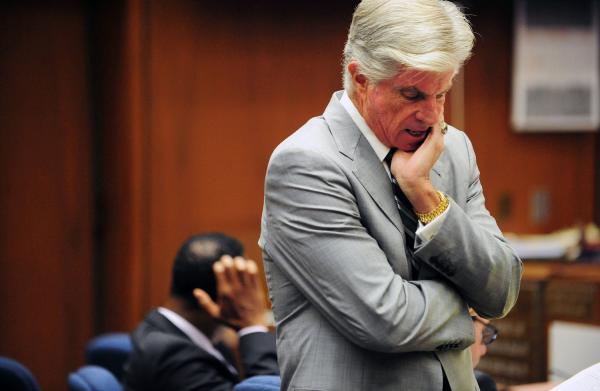
Prosecutor David Walgren said yesterday: “Drinking propofol did not cause Michael’s death.” In an unprecedented event, the defense attorney, Michael Flanagan, accepted this conclusion and agreed that if propofol is swallowed, it would have little effect on the body.
Thus, the theory that Michael Jackson caused his own death by drinking propofol was officially dismissed.
Also yesterday, Alan Steinberg, a cardiology specialist and a senior faculty member of the Medical Board of the State of California, was called by the prosecutor to the witness stand and criticized Conrad Murray’s performance at the time of Michael’s death.
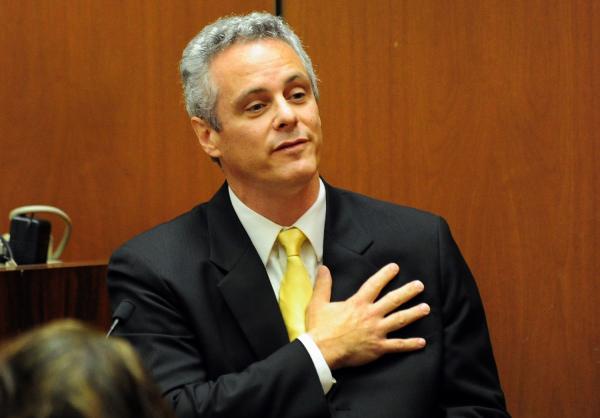
He listed major medical errors and negligence by Conrad Murray:
- Using propofol, which is not a treatment for insomnia.
- Using propofol at home without having the required equipment, including a heart-rate monitor and an oxygen device.
- Using propofol without having additional manpower and a medical assistant.
- Using propofol without being prepared to deal with dangerous situations and emergencies.
- Leaving the unconscious person.
- Delaying the call to emergency services.
- Not using the correct method of artificial respiration.
- Not providing medical information to emergency personnel and being unable to provide the patient’s medical history.
He also called the method Murray used to inject propofol into Michael unscientific and untested. Murray placed the propofol bottle into a saline IV bag so that the liquid would drip through a tube connected to a vein around Michael’s knee.
Steinberg compared leaving the room where Michael was unconscious to leaving a sleeping child on a kitchen counter.
“You never leave a child in these conditions because they might fall off the counter or pick up a knife and injure themselves.”
“When you render someone unconscious, you never leave them alone or put them in a position where they can inject something into themselves.”
Steinberg said Murray failed to provide sufficient aid to his patient after the dangerous situation occurred.
“When he was trying to save Mr. Jackson, he didn’t use the correct method.”
He said no excuses from Conrad Murray are acceptable in this case.
“When Mr. Jackson’s breathing stopped, he should have directed air into his lungs—not massaging a heart that was still beating. He should have dragged the patient onto the floor and performed mouth-to-mouth breathing with a friend on a hard surface.”
Delaying the call to emergency services is another serious mistake. Steinberg said Murray, when he realized his patient wasn’t breathing, first called Michael’s assistant, Amir Williams.
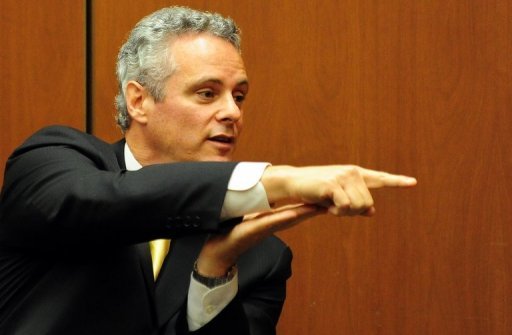
“This is basic knowledge for anyone in America. You don’t need to be a specialist doctor to know that when someone’s condition gets bad, you have to call 911.”
“In this case, there was a serious delay in calling emergency services. In this situation, even one minute is critical.”
Another error by Murray was not providing correct medical information to emergency personnel and the hospital doctors.
Steinberg concluded, by referring to all these issues, that Michael Jackson’s health was put at risk and destroyed as a result of Conrad Murray’s negligence.
“If these deviations hadn’t happened, Mr. Jackson would be alive today.”
Steinberg told the jury that the defense lawyers’ theory—that Michael was responsible for his own death—is absolutely not acceptable.
“If Dr. Murray had called 911 as soon as he realized Mr. Jackson had respiratory arrest, he would be alive.”
“The heart was still beating, but oxygen wasn’t reaching it. If Dr. Murray had had all the necessary equipment to deliver oxygen to him, he could have saved Mr. Jackson.”
“He shouldn’t have started CPR at all. There was no time to waste. He should have called emergency services.”
“Even if emergency services arrived six minutes after this time, they could have saved his life. He should have contacted emergency services quickly—especially since it only took four minutes for the emergency doctors to arrive at the scene.”
“When you put all these things together; yes, he is responsible for Mr. Jackson’s death.”
The prosecutor has only two or three other witnesses to call to the stand, and after that it will be the defense’s witnesses’ turn.
Source: eMJey.com / Reuters / CNN