Arno Bani Talks About His Experience Photographing the King of Pop
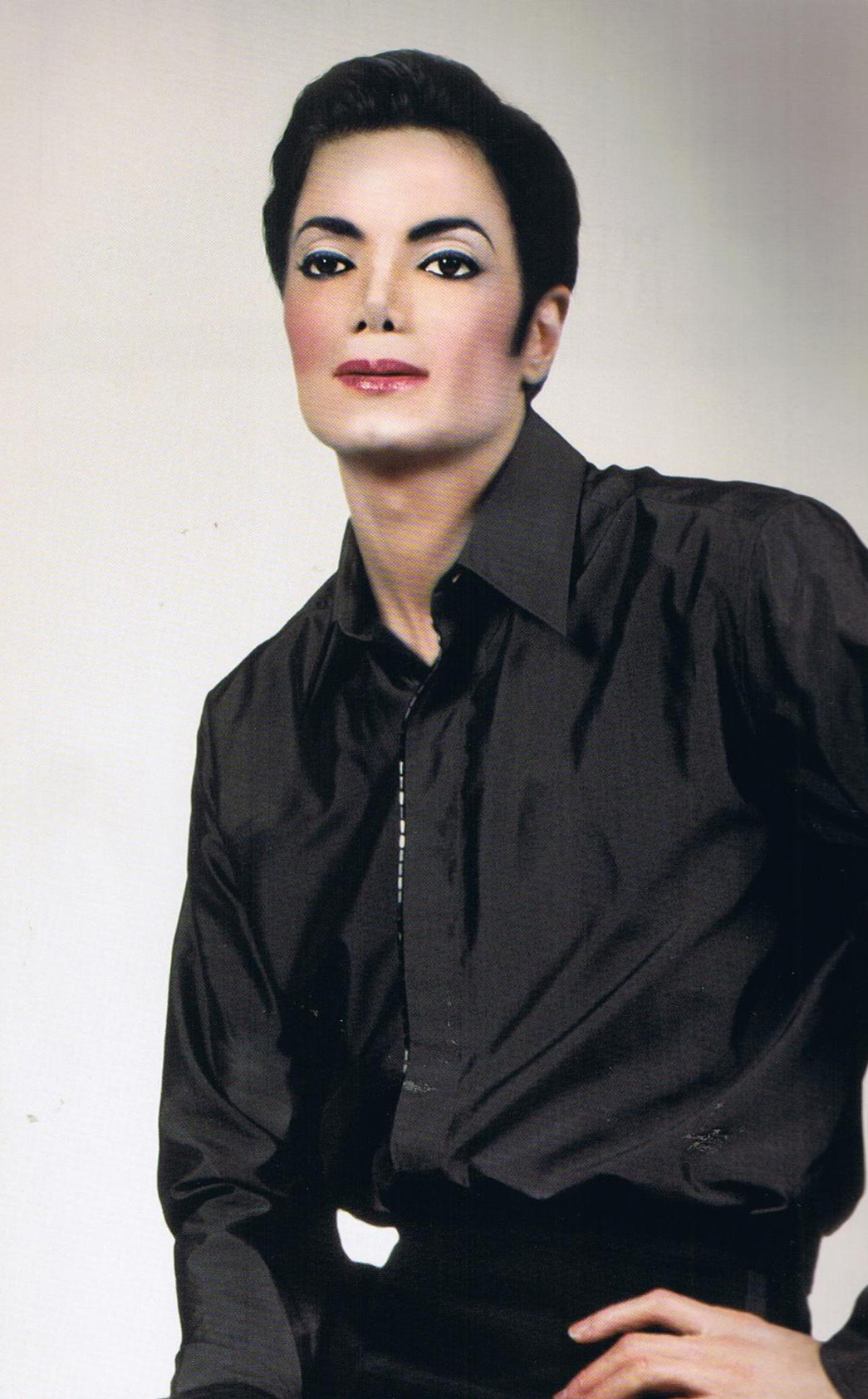
July 1999, Paris: Michael dances with his “Mozart” record, and Arno Bani adjusts the camera’s diaphragm.
They might seem like an odd couple, but the King of Pop became the subject of this young French photographer. He even allowed Bani’s instruction to cut his hair, because the photographer “liked him more” this way.
After that, Michael grew his hair again. Bani says: “He didn’t like his face. With long hair, he could hide it.”

Now, 11 years have passed since that day, and four stunning photo series are set to go up for auction in Paris on December 13. And these are the result of the “only” photography session in which Michael Jackson was “the one” behind the camera. (See the catalogue here.)
Bani, in a meeting with ARTINFO.com, talks about this experience:
“We were like two little boys, putting together puzzles. I was the kid, but he was 10 times younger than me. I prepared colorful glitter powders, and he would dip his fingers into them to see their shine. We would sprinkle them around. Fashion sketch folders for him were toy catalogues.”
“Michael Jackson didn’t want me to just take his picture. He wanted me to create a face for the next 10 years.”

All around them, while they were busy chatting, Michael’s art directors were at work. With notebooks in hand, they asked him whether he liked blue powder or red.
“That was the world he lived in. He was exploring inside his little golden prison. He was endlessly curious and well-educated, but always humble, respectful, and kind. When he liked something new, he would bounce up and down on the couch and clap his hands. He would hug me and bow with his hands pressed together—his kind of Japanese bow. I had to ask him to stop thanking me. But honestly, I was impressed.”
This was an accident. Michael saw the Sunday Times magazine cover design—an Arno Bani piece—and immediately wanted to work with him. At first, Bani thought, like everyone who heard Michael’s voice over the phone, that he had become the victim of some cruel, ridiculous prank—until his friend, the lawyer, confirmed that the King of Pop himself had invited him for an official meeting.

The photo that was called “Golden Cape” was supposed to be the cover design for the album Invincible, but Sony’s music company disagreed and… Bani:
“I was very disappointed.”

The auction organized by Pierre Bergé (Pierre Bergé & Associés) is unique in its own way. Four large-format, single-print photo portraits, along with 31 unretouched photo pieces on contact sheets. The King of Pop’s handwriting appears on many of these sheets.
55 prints of the four original photo pieces on contact sheets will also be sold. With no reserve and no price estimate, the auction for each of the portraits starts at $1,410. The base price for the contact sheets is $705. The photos will no longer be printed, and they won’t be posters either. They won’t appear on clothing either.
The special auction catalogue, in large size and with a silver print of the four photos taken by Arno Bani, is priced at $1,410. A smaller catalogue is set at $63 for sale in bookstores, and a rare $28 version will also be sent to supermarkets.
Editors around the world have even registered to print translated versions of the catalogues, without having seen any of these photos.
Bani says: “The auction takes more of a rock-and-roll or pop theme than what Pierre Bergé had previously done. Our goal was to create an exciting, artistic project that could, of course, attract a wide range of people.”
In the contract he signed with Michael, Bani was required to keep these photos away from public view for 10 years. When Michael died on June 25, 2009, that 10-year deadline was nearing its final days—exactly three weeks later!
The photos were kept in a safe, somewhere in the south of France, alive and waiting to be unveiled.
“We didn’t want to ride the sickly sales waves that erupted after his death using these buried treasures.”

Michael had given Arno Bani full authority to assemble his team of collaborators and to create the look. The young photographer; the star of the world of hair styling, Seb Baskeel—the creator of makeup, Tapalino—and the fashion pioneers, Frédéric Llorca and Mada, were brought together for the King of Pop, and this sometimes created complications. Bani explains:
“For example, in an almost peaceful incident, the makeup artist, Tapalino, and his assistants spread Vaseline around Michael’s eyes and gently blew blue powder toward his face.”
Michael’s staff were shocked. Bani recalls:
“They protested: ‘You’re not allowed to put makeup powder on Michael Jackson’s face!’”
Bani says working with Michael Jackson was enjoyable.
There were no strange requests from famous people, and there were no complaints about food or the room temperature.
Bani says that during the long hours when work was being done on his face, Michael would sit motionless in a Zen-like posture, in meditation.
The first step was repairing and applying the mask, and then creating the desired face.
“He had the ability to switch himself off and then return in about 2 seconds. I asked him to dance in front of the camera to get some images. He seemed drowsy. He looked tired. But at that moment he started the work and did it.”

Bani says the only tension on their path was the contracted company for Michael and its management.
“Michael Jackson had decided to accept this 23-year-old from nowhere. A Parisian fashion photographer kid. The company didn’t trust him—especially when the project was this expensive.”
“I didn’t have a budget limit. If sewing a seam into Michael’s jeans cost 10,000 euros, it wasn’t a problem. Once, Sony employees told me they hadn’t spent that much on clothing before. They even pulled Michael’s stage outfits out of storage so I could see how their process worked.”
“There was an awful jacket among them, with shiny round sequins stitched onto it, and considering all that light and brightness, it could be seen from up to 100 meters away from the stage.”
For “Blue Eye,” Michael wore an embroidered outfit with a design by Yves Saint Laurent.
“He wanted to touch French elegance and beauty in his dreams.”
“When I brought him the embroideries of Françoise Lesage, he touched them and became obsessed. He had never seen such delicate craftsmanship.”
Source: eMJey / artinfo.com