A Critique of Mohammadreza Lotfi’s Writing About Michael Jackson
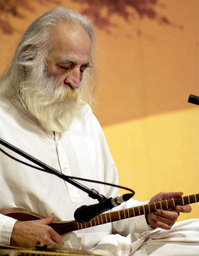
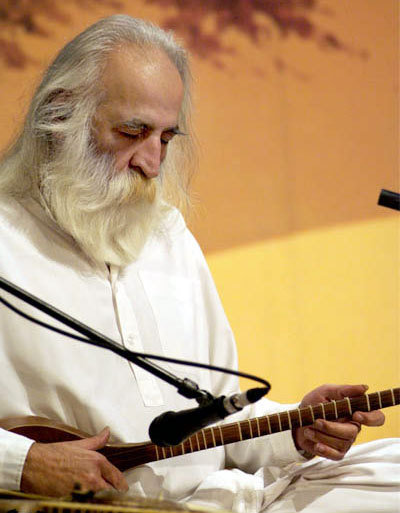
Mohammadreza Lotfi is a well-known Iranian tar player, radif performer, and musicologist. A note written by this esteemed professor titled “By Way of the Death of Michael Jackson” was published in the newspaper Etemad on Saturday, August 7 of this year (17 Mordad). Professor Lotfi’s article also reviewed the clash between tradition and modernity from the perspective of music and the impact of politics on it. You can read the full text of his note here: here.
 With thanks to this dear professor, on this page (as befits its purpose), we offer a Michael Jackson review and critique of Mohammad Reza Lotfi’s note, which is highlighted in a prominent way. Wherever the text needed explanation or correction, it has been marked with specific numbers. But before that, allow us to read a beautiful part of his note together:
“What matters is not whether he became Muslim or remained Christian, or what religion he chose; what matters is that he remained a human being, and his love and affection for peace and friendship created various kinds of music—whose impact can never be denied.”
With thanks to this dear professor, on this page (as befits its purpose), we offer a Michael Jackson review and critique of Mohammad Reza Lotfi’s note, which is highlighted in a prominent way. Wherever the text needed explanation or correction, it has been marked with specific numbers. But before that, allow us to read a beautiful part of his note together:
“What matters is not whether he became Muslim or remained Christian, or what religion he chose; what matters is that he remained a human being, and his love and affection for peace and friendship created various kinds of music—whose impact can never be denied.”
 With thanks to this dear professor, on this page (as befits its purpose), we offer a Michael Jackson review and critique of Mohammad Reza Lotfi’s note, which is highlighted in a prominent way. Wherever the text needed explanation or correction, it has been marked with specific numbers. But before that, allow us to read a beautiful part of his note together:
“What matters is not whether he became Muslim or remained Christian, or what religion he chose; what matters is that he remained a human being, and his love and affection for peace and friendship created various kinds of music—whose impact can never be denied.”
With thanks to this dear professor, on this page (as befits its purpose), we offer a Michael Jackson review and critique of Mohammad Reza Lotfi’s note, which is highlighted in a prominent way. Wherever the text needed explanation or correction, it has been marked with specific numbers. But before that, allow us to read a beautiful part of his note together:
“What matters is not whether he became Muslim or remained Christian, or what religion he chose; what matters is that he remained a human being, and his love and affection for peace and friendship created various kinds of music—whose impact can never be denied.” -----------------------------------------------
In the introduction to his note titled “When He Got Tired of Injustice,” Professor Lotfi writes:
“The student movement of 1968 is drawn out to the borders of America. John Lennon (the main member of the Beatles music group) immigrated to America and was active in New York during this period. Although the FBI and groups of bat-wielding men repeatedly threatened him and tried to set him up—like they did for Michael Jackson—he continued his protest until, apparently, someone in the role of a madman assassinated him. The impact of the Beatles—especially John Lennon—was so great that, with a considerable distance, it even reached the ‘Michael Jackson’ circle, and it seems that the same fate that befell John Lennon was brought upon him as well. Elvis was also confined to his home at the height of his fame and power, and many companies became multi-millionaires from his untimely death, just as the companies of Michael Jackson’s works are becoming richer. (1) Michael Jackson’s story, in our view, cannot be compared to John Lennon and his radical thinking, but if you pay a little attention, you will see that he too gradually became radical—and what’s interesting is that he was also drawn toward Eastern culture and music. (2) If his new concert tours—which numbered 50 concerts—had been held, perhaps he could have had a significant impact on public opinion regarding the massacre of Muslims and the revelations about the Iraq and Afghanistan wars, which could have been disastrous for two superpowers, America and England. (3)”
You have read a summary of Professor Lotfi’s introduction. Our aim is not to address historical and political events, nor the Beatles’ life story, nor to speculate about them. But insofar as it concerns a Michael Jackson fan, there are points in this text that are worth discussing, which we will read:
In 1975, when Michael Jackson was 17 and the Jackson Five separated from Motown and took on the name “The Jacksons,” they began writing their own songs and lyrics, and from that time on, their songs carried more social and human messages. Michael always preserved the human theme of his songs. In his biography book titled Moonwalk, he defines that it was the power of their songs that forced all the radio stations that had previously been playing Beatles songs to also play Jackson Five songs. The first album of this group for Motown was supported by a prominent superstar, Diana Ross—and this was the first time a star stepped forward to introduce a “baby punch” (as Michael put it). The power of this “baby punch,” especially that of 10-year-old Michael, was so great that Berry Gordy was disarmed by their first performance in front of him. Berry Gordy promised them that the first four songs would be number one, and thus the Jackson Five became the first music group in history whose four songs became number one back-to-back. This successful trajectory continued for Michael and reached its peak in 1982. The then President, Ronald Reagan, invited Michael to the White House. Michael was indebted to Republicans and no other politician. It was they who had not gotten him anywhere. It was the White House that benefited from his presence once in the 1980s through Reagan and again in the 1990s through Bill Clinton.
(1) As is the law of music companies, the profits from music album sales are divided between the artist and the company. In addition to the companies, Michael’s children also benefit from the high sales of his albums. Of course, earlier on this same page we had news about Michael saving the music company Sony in the Philippines. These days, people prefer not to buy and instead download illegally, which naturally causes losses for companies and artists. After Michael’s death, the fever that spread across the world led to a collective thirst. Music stores became full and then empty of Michael’s albums so that anyone could have a keepsake of Michael.
(2) Michael has stated everywhere that he is interested in the music of all nations, from East to West. From childhood, he learned pieces by various composers. His favorite music is classical music and he was influenced by works by prominent composers such as Debussy.
(3) In the final scene of the film This Is It (a documentary of Michael’s rehearsals and the preparation for concerts that were to be performed in London for 50 nights), released in late October, Michael tells his team: “What’s important is love.”
They said his purpose in performing these concerts was to send a message to the world. The message that the environment—our Earth—is being destroyed and that we are responsible for it. Not long ago, a summit of the world’s leaders was formed to address this global issue. Also, British businessmen believed that with Michael coming to London, the British economy would be strengthened, and for that reason many people were pleased.
After the start of the Iraq war in 2002, Michael released a song titled We’ve Had Enough—“Enough is enough”—which entered the market in the album Ultimate Collection.
-----------------------------------------------
The continuation of Professor Lotfi’s text titled “The Sad Story of Michael”:
“The story began with the fact that Michael Jackson was brought up with the support of Republicans (4)—especially since Reagan, like the Queen of England, stole the race from him this time, and this time it was America that had toured a full-fledged Beatle. Michael, talented and full of longing (5), in the family environment shown by his childhood films—how poor they had been—under the attention of Reagan and the record-pressing and video companies, managed to rise out of that family poverty. (6)”
(4) As we said, Michael was already being discussed before going to the White House. In 1982, the world shook. There was neither White House support nor a media atmosphere. It was Michael Jackson and his album Thriller. There was a song on that album called Beat It, which pointed to the weaknesses and ugliness of society: discrimination, racism, prejudice, violence. Reagan at the White House praised Michael for his humanitarian services so that he would not fall behind the people and the media. Michael received a token—more than an honorary document for him, it was a golden page in Ronald Reagan’s record, reflecting the value he placed on art and legendary talent like his.
(5) Michael was not “full of longing.” We know Professor Lotfi’s intention was to appreciate Michael Jackson’s humaneness, but perhaps a misunderstanding occurred. In his biography, Michael writes that Ed Sullivan, one of the prominent figures in the music and entertainment industry, once told him in 1970:
“‘Never forget your talent—who gave it to you. Don’t forget that you took your genius from God.’ I was grateful for the kindness he showed me, but I couldn’t tell him that my mother had never given me the chance to forget that truth. I didn’t have polio, and thinking about it would be terrifying for a dancer. But I knew God had tested me and my family in another way. Our small home, poverty—jealous kids in the neighborhood who, when we practiced at home, would break the glass panes of our house with stones and shout that we would never succeed. When I think about my mother and those early years, I can say that there are things that are far more valuable than money, people’s admiration, and music awards.
My mother provided whatever we wanted. If I was interested in the lives of movie stars, she would come home with a bag full of books about movie stars. Even though she had nine children, she treated each of us as if we were her only child. We will never forget. It is because of Catherine’s gentleness, warmth, and attention that I know how hard it is to grow up without receiving such love. If children do not receive this love from their parents, they go looking for someone else to find that love in. With our mother, we never needed to search for such a person.
The lessons she taught us are priceless: kindness, love, and attention—never hurting others, never begging for something, never getting anything without effort. Those things were sins in our home. She always asked us to be generous, but she didn’t want us to ask anything from other people. She was like that herself. I remember a beautiful memory that describes her nature. One day in Gary (in that same poor Jackson home), when I was very small, there was an injured man bleeding in the street. He went door to door, but no one would let him in. Until he reached our house, and my mother opened the door for him. Many people were afraid to do such a thing. But my mother was that kind of person. I remember there was blood spilled on the floor of the house. I wished that all of us were like our mother.
The first memories I have of my father are him coming home from the steel mill with a big bag in his hands full of food for us, and in the blink of an eye we ate everything and emptied the bag. He had a habit of taking us to the park to ride the carousel. But I was so small that I don’t remember.”’
Michael’s father explains that Michael would sometimes share the money he earned from his performances among the poor children in the neighborhood where they lived. From childhood, he wasn’t thinking about material things. If he were, he wouldn’t have donated the income from his tours to charities and wouldn’t have earned the record for the most charitable music star.
-----------------------------------------------
“With his strange talent, emotional and mental genius, Michael was noticed very early by young teenagers. In this regard, American parents initially didn’t want to accept him, but the country’s cultural policy supported him with full force. Even though in the early programs Michael showed movements that appeared immoral, and some famous singers—such as ‘Sammy Davis’—mocked him on television, the young and underage community had found a representative of their own generation. Although Michael was Black, his fans were mostly White and wealthy children. (6)”
(6) From the very beginning, Michael was noticed, and his dancing and art took root among all social classes and every age group. The extremely abundant visual reports of his travels through different cities around the world confirm this. Michael himself says that in every city he was treated as if he were one of them. At his concerts, people attended—from children to elderly individuals. The poor and Black segment of America at that time viewed him as a symbol of freedom and success, to the point that they gave him the nickname “Martin Luther King of music.”
It is true that the media called his dance moves sexual, and for that reason part of his music clip titled Black Or White was censored. Of course, after that it was released differently, and no child was turned away. In particular, his “grabbing-the-pants” move faced many objections for years, but today it is considered an iconic dance move and has found its place.
-----------------------------------------------
“Michael also released his first ‘clip’ of turning left (7) under the name ‘Earth,’ which caused a great deal of noise. Mr. Gore, the vice president, who had written his thesis about the environment and had released many CDs in support of environmental causes, supported him. The Earth clip, which speaks about preserving the environment, conflicted with the anti-environment policies of the Republican system. And in addition, since Michael Jackson had reached success from the Republican table, they could not accept this turning away. From that date, they turned against him and set up traps for him twice on flimsy grounds: the first time they took $22 million from him, closed the case, and the second time they put even more pressure on him and played with his reputation as well. (8)”
(7) Michael always emphasized that he had no political inclination of any kind. The irony is that he didn’t see politicians as strong enough to accomplish anything. But he believed that the music industry was controlled by dishonest people.
(8) The song “Earth,” whose original title is Earth Song—though it is better translated as “Song of the Earth”—is a global call to preserve the environment and save the Earth. The media were behind the scenes, and critics accused Michael of having a messiah delusion, saying that by seeing himself as a messiah, Michael was thinking about saving the Earth. Today, this song is regarded as a global anthem for environmental protection.
The truth is that Michael had not reached success from the Republican table to the point of worrying about political trouble. The traps Professor Lotfi mentioned are the same accusations from 1993 and 2005, and proving the involvement of the White House and the U.S. anti-spy agency in them is not our job. But what is clear is the conspiracy that the media seriously supported in order to discredit Michael Jackson. Some even accuse Sony. But perhaps the reality is much simpler—so simple that it has led some people, out of disbelief, to make it complicated. A dentist decides to make a huge amount of money. A script is written and successfully performed. Bringing down stars has always been the media’s favorite pastime throughout their lifetime, and in a country where television comes first, it is imaginable that this massive machine needs more and more scandals about prominent figures as its daily food.
-----------------------------------------------
“Finally, during the era of George W. Bush, in 2005 he settled in European countries and then in Muslim Bahrain, where the majority is Shia. It is during this period that Michael Jackson also nearly becomes a man without a homeland. His brother, who was very close to him, took responsibility for the non-profit foundations helping the poor and the needy. (9) He had been Muslim for a long time and sometimes wanted his brother to become Muslim too. Michael developed a strong interest in the history of religions and alternative ideas. He personally bought his books, and in this way he created a huge private library in his home. System pressure on him and his mental growth regarding the things that had been done to Black people pushed him toward Islam and the non-racist ideas of this religion. All the records of Black people’s oppression came together, one after another, and led Michael as well toward Islam. The first newspaper that announced Michael had become Muslim was the English newspaper The Sun. No one denied this news after it was announced. (10)”
(9) Germain Jackson, Michael’s Muslim brother, has not been involved in such work. Michael personally supported several charities and even paid for his brother’s children’s daily expenses. Germain has no fixed job and makes a living by appearing in television programs and realistic series. He is friends with Bahrain’s multi-millionaires, and the financial projects he tried to arrange between his brother Michael and Bahrain’s prince son all failed. Contrary to the myth that says Michael lived in Bahrain, during this time he lived in Ireland, in the city of Dublin. He was looking for peace. In Ireland, he lived in a simple wooden house with a recording studio next to it. The calm, musical atmosphere of that place was exactly what Michael was seeking. There, he made songs. For leisure and sightseeing, he also traveled to countries along the Persian Gulf. Germain introduced Michael to major investors in that region so that a business could be formed among them—which, apparently, Michael didn’t like, because it ended without any outcome.
(10) In the 1980s, Michael brought Black people to power on television, and since then the process of their gaining power and progress has continued. Michael has a huge library of tens of thousands of books. He was interested in studying all religions of the world—from Buddhism to Islam. But his favorite religious figure was Jesus, because of his love for children. Michael never revealed his religion, if he had any inclination toward a religion. But apparently his life pattern was not one that fit into a specific mold. He was neither Muslim nor Christian nor Jewish nor… He was a human being. The teacher of Michael’s children who taught them in Bahrain said he had never heard Michael talk to his children about religion. However, he liked to talk with them about artists, painters, musicians, and celebrities. One of his close friends also said that Michael had baptized his children in the manner of Christians. He entrusted the upbringing of his children to his mother, who is a committed Christian.
A few years ago, a song with a similar-sounding voice to Michael was released under the name Give Thanks To Allah, which has an Islamic theme and misled many people. Now is a good opportunity to say that this song has nothing to do with Michael Jackson. It’s only a similarity in voice—and that’s it. The English newspaper The Sun, which broke the news that Michael became Muslim, is known for writing fake news. Besides, Michael never got tired of denying the rumors that were being spoken about him, because from his point of view they seemed insignificant.
And in the end, as Professor Lotfi also said, what matters is that he remained a human being.
-----------------------------------------------
We quote the beautiful final section of Professor Lotfi’s note word for word:
Michael Jackson left this world, but very soon; however, you friends can understand his human intent and gentle spirit with Michael’s first performance. This memory shows how sensitive he was and how much intimacy there was in his work. Michael Jackson’s pure childish voice first captured the hearts of listeners when he was five years old, when he was going to kindergarten. At the Christmas celebration ceremony at Michael’s five-year-old school, he sang the song “Climb Every Mountain,” taken from the film The Sound of Music. His voice was so affecting that it moved many of the audience, teachers, and students to tears. What’s interesting is that Michael performed this calm and very difficult song from all the poems and songs in that film. Perhaps in his subconscious, the path of Michael’s life was influenced by this beautiful lyric;
“Climb every mountain, search high and low, follow every rainbow, till you find your dream; a dream that will need all the love you can give… Every day of your life… while you’re living…”
As a young child, Michael sang this song with his beautiful voice in his first performance in front of others. In his book, he writes:
“When I finished the song, the reaction of the crowd was so overwhelming that I didn’t know what to do. The sound of the applause was very loud and they were smiling. Some of them were standing. My teachers were crying and I truly couldn’t believe it. I had made them all happy. It was an incredible feeling. I was a little confused too because I didn’t think I had done anything special. I just sang the way I sang every night at home. When you perform, you don’t realize how you look or what special impact you leave on the audience. You just open your mouth and sing.” (11)
And perhaps it was this feeling that made him persist and stand firm through the ups and downs of his artistic life. He was always looking to bring happiness to others through his art—full of life and love in its absolute meaning. We end this piece with parts of one of his songs, so that everyone knows the world is in turmoil, and it is the duty of more enlightened leadership to think about the future of humanity, because artists, educated people, and the general public have always been—and are—seeking peace and calm.
(11) Of course, it is a matter of pride for us that in writing this piece we also used Michael Jackson’s biography available on eMJey.com. But I wish the source of that as well had been mentioned.
Source: eMJey / etemaad