The Lethal Dose of Propofol Was the Cause of Michael’s Death
The L.A. Times reported yesterday that, in a legal document unsealed in Houston, quoting the Los Angeles coroner, Michael Jackson died because there was a lethal amount of the powerful anesthetic propofol in his body. This document raises further questions about how Michael was treated—especially in the hours before his death.
In the attached confession, it is stated that Conrad Murray, a cardiology specialist, told Los Angeles police that he had been treating Michael for insomnia for six weeks. Every night, he injected Michael with 50 milligrams of propofol. But he was afraid Michael would become addicted to the drug. For that reason, he tried to replace it with other painkillers. He reduced the propofol dose to 25 milligrams and mixed it with sedatives lorazepam and midazolam.
On June 23, two days before Michael’s death, he injected these two sleeping pills without propofol, and Michael was able to sleep.
After rehearsing for a concert, Michael returned home in the early hours of June 25 and couldn’t sleep because his blood adrenaline levels were high. Meanwhile, he wanted to prepare for his next day’s rehearsal. Conrad Murray tried to make Michael sleep using sleeping medications without using the anesthetic propofol.
In this confession, Conrad Murray said that Michael used the name “milk” for propofol. It is a white-colored drug.
At 1:30 a.m. on June 25, Murray injected Michael with the sleeping drug Valium. But when it didn’t work, at 2:00 a.m. he administered lorazepam (brand name: Ativan). At 3:00 a.m., when Michael was still awake after these injections, he injected the third sedative—midazolam (brand name: Versed). Over the following hours, he injected Michael with more sleeping medications. At 5:00 a.m. and 7:30 a.m., lorazepam and midazolam were injected again, but none of them made him sleep.
Finally, after Michael repeatedly requested propofol, at 10:40 a.m. on June 25, Murray injected 25 milligrams of the anesthetic propofol (brand name: Diprivan), diluted with lidocaine (brand name: Xylocaine), into his body.
Dr. David Zera, head of the Department of Anesthesiology at the University of North Carolina, says that if someone dies as a result of a combination of sleeping drugs, it is not surprising at all.
“All of these drugs intensify each other’s effects. Although propofol’s effect is stronger than the others.”
Lee Kantaral, head of the toxicology department in San Diego, said: “25 milligrams of propofol isn’t a lot. It was probably the combination of sleeping drugs (benzodiazepines) that pulled the trigger. No one gives all that many drugs at once to an insomniac.”
Although Conrad Murray admitted to the propofol injection to police from the beginning, they were unable to find evidence showing that Murray bought or ordered propofol under his medical license or under the tracking number of the Drug Enforcement Administration. Murray told police that he neither bought propofol nor placed an order for it. However, during a search of a pharmacy in Las Vegas on August 11, officers obtained documents showing that Dr. Murray had legally purchased the drug from the Las Vegas pharmacy.
Police found eight vials containing propofol, along with other drugs and pills, in a medicine cabinet in Michael’s home that had been prescribed for Michael by cardiology specialist Conrad Murray, dermatologist Arnold Klein, and rheumatologist Dr. Allen Metzger, as well as Dr. David Adams and Dr. David Slavit, who had been tested for Michael’s concert. Conrad Murray had personally informed police about the existence of this cabinet. Other drugs found in Michael’s home included Valium, Temazulazine, lorazepam, temazepam, clonazepam, trazodone, and tizanidine. They also found propofol in Conrad Murray’s medical bag.
Murray told police that he was not the first doctor to inject Michael with a strong sedative. At least two anonymous doctors injected Michael with propofol during the months of March and April 2009 in Germany.
The line between a safe dose and a dangerous dose of propofol is narrow, and a specialist must always be present at the bedside of the person receiving the injection. Home use of propofol is practically unheard of. Propofol injections are performed in operating rooms, under the supervision of an anesthesiologist and in the presence of full medical equipment.
Murray said that, at Michael’s request, he called Dr. David Adams in Las Vegas so that Adams could administer the propofol injection to Michael. The injection was performed at a cosmetic doctor’s office by Adams, and Murray was present.
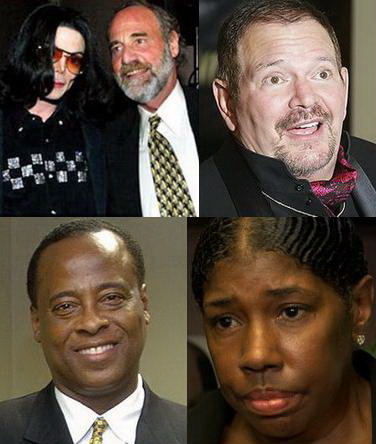
Murray told police that from the very beginning of his work as Michael’s doctor, he kept asking Michael which other doctors he had besides him, and what medications they gave him—but Michael did not provide information. Murray noticed injection marks on Michael’s hands and feet, and when he asked why, Michael told him that a combination of liquids had been injected to help him.
In addition to Murray, officers collected medical records from Dr. Arnold Klein, Dr. Allen Metzger, Dr. David Adams, Dr. David Slavit (who had been tested for Michael’s concert), Dr. Randy Rosen, Dr. Mark Tedder, and nanny Sherylin Lee.
Conrad Murray told police that after the propofol injection, he left Michael alone for only 2 minutes so he could go to the bathroom, and when he returned he noticed that Michael was not breathing. It was reported that Michael fell asleep at 10:40 a.m. on June 25, and his heart stopped at 11:00 a.m. Murray said that after monitoring Michael for 10 minutes, he left the room to go to the bathroom. When he returned, it was 11:00, and Michael was not breathing. He immediately began Michael’s resuscitation using artificial respiration and an injection of flumazenil (brand name: Anexate), a drug that reverses the effects of propofol.
But police encountered contradictions. Conrad Murray’s cell phone shows that on June 25, from 11:18 a.m. to 12:05 p.m., he made three separate phone calls totaling 47 minutes. But Murray says that during that time he was busy performing resuscitation on Michael.
After Murray realized Michael wasn’t breathing, he called Michael’s private secretary and asked that security personnel be sent upstairs to Michael’s room. But after a few minutes with no help arriving, Murray ran downstairs to the kitchen. He asked the cook to send Michael’s older son, Prince, upstairs. Murray said he continued resuscitation until the paramedics arrived. That same day, Murray informed police about the propofol injection to Michael.
However, in another interrogation, Murray told police that to make phone calls to his office and family members, he left Michael—who was under the influence of propofol—alone. When he returned, he found that Michael wasn’t breathing. He started resuscitation, and one of Michael’s employees called 911. The 50-year-old King of Pop was taken to UCLA Hospital, and some time later, news of his death was announced.
Murray did not inform paramedics or doctors at UCLA about the propofol injection to Michael, and told them that he had only injected lorazepam and then flumazenil to reverse the effects of lorazepam. It was only after police questioning that Murray admitted to the propofol injection.
In response to the L.A. Times report, Conrad Murray’s lawyer denied these claims and said that his client never told police that he had noticed Michael Jackson wasn’t breathing at 11 a.m., nor that he had left his patient to make a phone call. The lawyer, while maintaining his previous position, said he would not comment based on statements from sources whose names are not disclosed.
Murray’s negligence in administering the strong anesthetic propofol—meant for operating rooms—could expose him to charges of involuntary manslaughter and even second-degree murder.
After the family learned of this information on Monday, they issued a statement saying they have full confidence in the legal process and the efforts of the investigating officers.
“The family is waiting for the day when justice is served.”
Source: eMJey / AP / LA Times