The secret of Michael Jackson’s ghost at this year’s Billboard Awards was revealed
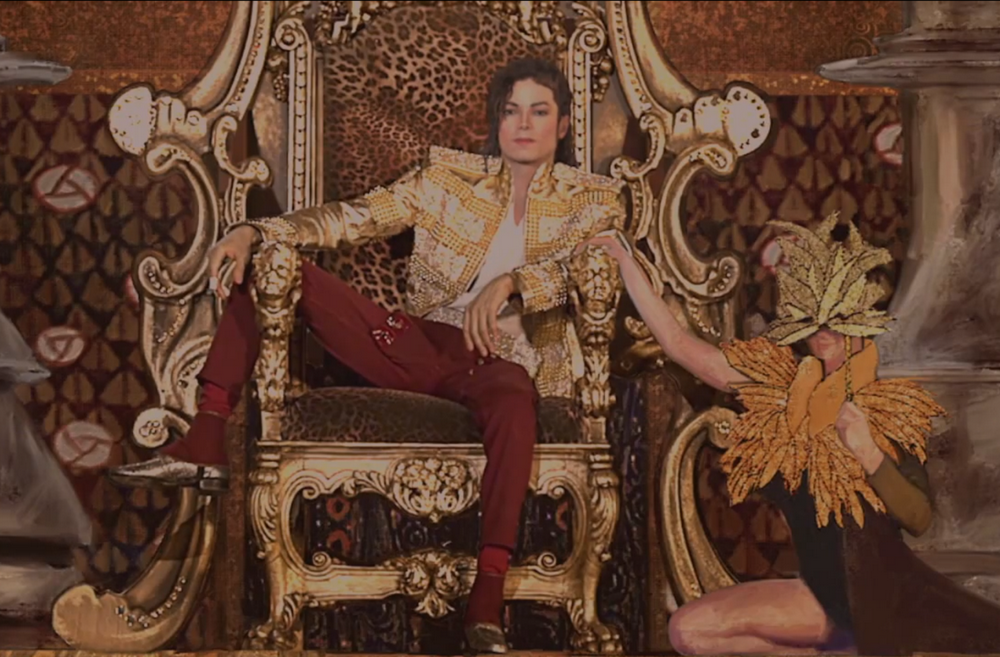
As you read on Sunday night during the Billboard Awards ceremony, a Michael Jackson hologram was used for a live performance. Of course, the Michael Jackson Foundation said that the technique should not be called a “hologram.” Instead, according to them, a “virtual” version of the King of Pop was used for this performance.
After a week of debate and speculation about how this program was prepared, the production team finally spoke out and revealed the secret behind this virtual Michael Jackson. Frank Patterson (Frank Patterson), CEO of the digital effects company Pulse Evolution, says:
“Creating an image that looks like the stage show that’s known all over the world and gives the audience the same feeling—scared us to the point of death.”
And John Tektser, executive director of Pulse, says: “This is not a hologram.”
So what is it? Patterson replies: “Illusion.”
The production team used a 19th-century magic trick technique to create an illusion—or the same virtual Michael Jackson. This technique is called Pepper’s ghost. With this method, by using the reflection of light, you can create the illusion of seeing a ghost for viewers. This phenomenon can be demonstrated with a simple glass pane and special lighting. The technique works like this: the image appears by projecting light onto a glass pane positioned at a 45-degree angle. This image creates the illusion of seeing a ghost.
In the video below, you can observe how this image is formed using a scientific method.
This same technique was used to create the ghost of Tupac Shakur in the 2012 Coachella concert. However, creating a Michael Jackson ghost was far more complex and difficult for the production team.
Patterson says: “Tupac didn’t have any hair on his head and he just stood on stage, but Michael Jackson had to walk all over the stage.”
Preparing this project took eight months.
But how was this ghost made?
First, the production team recorded a golden background image and real dancers in 8K clarity (using $50,000 Red Dragon cameras). In the next stage, the computer stepped in and, based on his 1991 likeness (selected by the Foundation), produced an animated version of him.
Patterson says: “The more you try to make your digital human look real, the worse the work will be.”
Their film still lacked a factor of believability two weeks before the ceremony, and in the end, according to Patterson, by adding more details to Michael’s face and movements, they managed to overcome this challenge.
When it came time to display it, six powerful projectors were installed above the stage so that the recorded film with high image clarity could be projected onto a slanted Mylar sheet (a thin plastic film). What the audience at the MGM saw was a view of Michael Jackson in his real size, dancing on stage. This illusion became more realistic thanks to real dancers on stage and images of dancers moving alongside Michael in the background.
Tektser says: “When people who knew Michael better than anyone else started crying, we knew our work had paid off—and then we cried too.”
Diana Barron, a spokesperson for the Michael Jackson Foundation, said:
“This is new technology, and we don’t reveal its details, because Michael never revealed the details of his magic.”
Barron said that on Sunday night, a virtual Michael Jackson performed the song Slave to the Rhythm at the Billboard ceremony, and as mentioned above, the images related to it were not taken from existing films—they were created exclusively.
The key to this project was set in motion in October 2012, and the production team worked until the morning of the performance, making changes to the ghost of Michael Jackson.
Barron says: “Michael always wanted to do things like this. Projects like these always begin with Michael Jackson.”
Jackie Jackson, Michael’s older brother who witnessed Sunday night’s performance, says:
“When the ghost started dancing, it was unbelievable. It took me back to the past years. If Michael himself had been here, he would have said ‘bravo.’”
Behind-the-scenes video of the program’s production
Source: eMJey.com / USA Today
 As you read on Sunday night during the Billboard Awards ceremony, a Michael Jackson hologram was used for a live performance. Of course, the Michael Jackson Foundation said that the technique should not be called a “hologram.” Instead, according to them, a “virtual” version of the King of Pop was used for this performance.
After a week of debate and speculation about how this program was prepared, the production team finally spoke out and revealed the secret behind this virtual Michael Jackson. Frank Patterson (Frank Patterson), CEO of the digital effects company Pulse Evolution, says:
“Creating an image that looks like the stage show that’s known all over the world and gives the audience the same feeling—scared us to the point of death.”
And John Tektser, executive director of Pulse, says: “This is not a hologram.”
So what is it? Patterson replies: “Illusion.”
The production team used a 19th-century magic trick technique to create an illusion—or the same virtual Michael Jackson. This technique is called Pepper’s ghost. With this method, by using the reflection of light, you can create the illusion of seeing a ghost for viewers. This phenomenon can be demonstrated with a simple glass pane and special lighting. The technique works like this: the image appears by projecting light onto a glass pane positioned at a 45-degree angle. This image creates the illusion of seeing a ghost.
In the video below, you can observe how this image is formed using a scientific method.
This same technique was used to create the ghost of Tupac Shakur in the 2012 Coachella concert. However, creating a Michael Jackson ghost was far more complex and difficult for the production team.
Patterson says: “Tupac didn’t have any hair on his head and he just stood on stage, but Michael Jackson had to walk all over the stage.”
Preparing this project took eight months.
But how was this ghost made?
First, the production team recorded a golden background image and real dancers in 8K clarity (using $50,000 Red Dragon cameras). In the next stage, the computer stepped in and, based on his 1991 likeness (selected by the Foundation), produced an animated version of him.
Patterson says: “The more you try to make your digital human look real, the worse the work will be.”
Their film still lacked a factor of believability two weeks before the ceremony, and in the end, according to Patterson, by adding more details to Michael’s face and movements, they managed to overcome this challenge.
As you read on Sunday night during the Billboard Awards ceremony, a Michael Jackson hologram was used for a live performance. Of course, the Michael Jackson Foundation said that the technique should not be called a “hologram.” Instead, according to them, a “virtual” version of the King of Pop was used for this performance.
After a week of debate and speculation about how this program was prepared, the production team finally spoke out and revealed the secret behind this virtual Michael Jackson. Frank Patterson (Frank Patterson), CEO of the digital effects company Pulse Evolution, says:
“Creating an image that looks like the stage show that’s known all over the world and gives the audience the same feeling—scared us to the point of death.”
And John Tektser, executive director of Pulse, says: “This is not a hologram.”
So what is it? Patterson replies: “Illusion.”
The production team used a 19th-century magic trick technique to create an illusion—or the same virtual Michael Jackson. This technique is called Pepper’s ghost. With this method, by using the reflection of light, you can create the illusion of seeing a ghost for viewers. This phenomenon can be demonstrated with a simple glass pane and special lighting. The technique works like this: the image appears by projecting light onto a glass pane positioned at a 45-degree angle. This image creates the illusion of seeing a ghost.
In the video below, you can observe how this image is formed using a scientific method.
This same technique was used to create the ghost of Tupac Shakur in the 2012 Coachella concert. However, creating a Michael Jackson ghost was far more complex and difficult for the production team.
Patterson says: “Tupac didn’t have any hair on his head and he just stood on stage, but Michael Jackson had to walk all over the stage.”
Preparing this project took eight months.
But how was this ghost made?
First, the production team recorded a golden background image and real dancers in 8K clarity (using $50,000 Red Dragon cameras). In the next stage, the computer stepped in and, based on his 1991 likeness (selected by the Foundation), produced an animated version of him.
Patterson says: “The more you try to make your digital human look real, the worse the work will be.”
Their film still lacked a factor of believability two weeks before the ceremony, and in the end, according to Patterson, by adding more details to Michael’s face and movements, they managed to overcome this challenge.
 When it came time to display it, six powerful projectors were installed above the stage so that the recorded film with high image clarity could be projected onto a slanted Mylar sheet (a thin plastic film). What the audience at the MGM saw was a view of Michael Jackson in his real size, dancing on stage. This illusion became more realistic thanks to real dancers on stage and images of dancers moving alongside Michael in the background.
Tektser says: “When people who knew Michael better than anyone else started crying, we knew our work had paid off—and then we cried too.”
When it came time to display it, six powerful projectors were installed above the stage so that the recorded film with high image clarity could be projected onto a slanted Mylar sheet (a thin plastic film). What the audience at the MGM saw was a view of Michael Jackson in his real size, dancing on stage. This illusion became more realistic thanks to real dancers on stage and images of dancers moving alongside Michael in the background.
Tektser says: “When people who knew Michael better than anyone else started crying, we knew our work had paid off—and then we cried too.”
 Diana Barron, a spokesperson for the Michael Jackson Foundation, said:
“This is new technology, and we don’t reveal its details, because Michael never revealed the details of his magic.”
Barron said that on Sunday night, a virtual Michael Jackson performed the song Slave to the Rhythm at the Billboard ceremony, and as mentioned above, the images related to it were not taken from existing films—they were created exclusively.
The key to this project was set in motion in October 2012, and the production team worked until the morning of the performance, making changes to the ghost of Michael Jackson.
Barron says: “Michael always wanted to do things like this. Projects like these always begin with Michael Jackson.”
Jackie Jackson, Michael’s older brother who witnessed Sunday night’s performance, says:
“When the ghost started dancing, it was unbelievable. It took me back to the past years. If Michael himself had been here, he would have said ‘bravo.’”
Behind-the-scenes video of the program’s production
Source: eMJey.com / USA Today
Diana Barron, a spokesperson for the Michael Jackson Foundation, said:
“This is new technology, and we don’t reveal its details, because Michael never revealed the details of his magic.”
Barron said that on Sunday night, a virtual Michael Jackson performed the song Slave to the Rhythm at the Billboard ceremony, and as mentioned above, the images related to it were not taken from existing films—they were created exclusively.
The key to this project was set in motion in October 2012, and the production team worked until the morning of the performance, making changes to the ghost of Michael Jackson.
Barron says: “Michael always wanted to do things like this. Projects like these always begin with Michael Jackson.”
Jackie Jackson, Michael’s older brother who witnessed Sunday night’s performance, says:
“When the ghost started dancing, it was unbelievable. It took me back to the past years. If Michael himself had been here, he would have said ‘bravo.’”
Behind-the-scenes video of the program’s production
Source: eMJey.com / USA Today