Day 46 of the AEG trial: Kenny Ortega moves from Michael Jackson’s troubles to the “miraculous transformation” he says he witnessed (disturbing content)
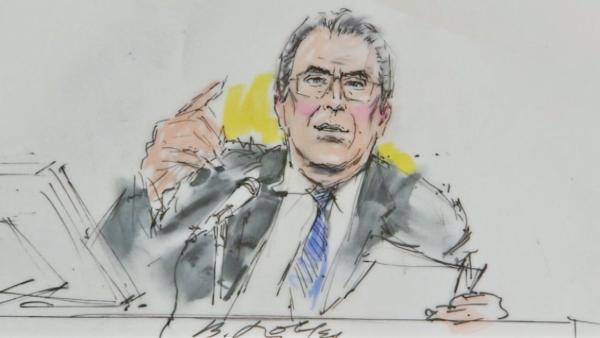
 Today, Kenny Ortega was back in the witness chair.
Brian Panish, one of the Jacksons’ lawyers, asked him whether he was paid by AEG for the testimony he would give in court. Ortega said no.
Panish asked about the phrase “pulling two branches.” Ortega had written in an email to Phillips that if things didn’t change, they might need to “pull two branches” and stop the tour. At the time, Michael had been absent from rehearsals for a week, and Ortega said the only way to reach him was through Dr. Murray. Panish asked whether Ortega used the phrase “pulling two branches” in reference to Michael; he said no, it was about the tour. Panish asked whether Randy Phillips also used the same phrase. Ortega said he didn’t know, but they had discussed stopping the tour while Michael was absent from rehearsals. Ortega wrote in the email: “Without Michael, I don’t know how we can continue.”
Travis Payne, the tour choreographer, had said in Day 11 of the trial that in mid-June 2009 there was talk that if they couldn’t integrate and organize the work, the tour company would cancel the tour.
After a poor rehearsal on Friday, June 12, and an absence from rehearsal the next day, Ortega emailed Paul Gongwer on June 14 asking whether he, Randy Phillips, and Frank Delio knew that Dr. Murray had prohibited Michael from rehearsing the day before.
Panish: “Had it ever happened that a doctor would keep an artist from rehearsing?” Ortega answered yes. He said he wanted to keep the company informed.
Email: “Do you have any idea that the doctor didn’t allow MJ to be present for rehearsal yesterday? Does Randy and Frank know? Please ask them to find out about MJ’s health status without interfering in MJ’s privacy. Maybe it’s a good idea to speak with his doctor and make sure MJ’s needs are met.”
AEG executives then told Ortega that they had spoken with Murray and had appointed him as the person responsible for Michael’s presence at rehearsals. They said that if he wanted to know, he should ask the doctor. Ortega was given Murray’s phone number, which he entered into his phone. When Michael didn’t show up for another week, Ortega called Murray on June 18, and the call lasted about half an hour.
“I had been told that Dr. Murray was putting together the rehearsal schedule and that schedule wasn’t working,” Ortega said. He said he was fed up with the situation and expressed it in emails.
Email from Ortega to Gongwer, June 14: “Paul, MJ didn’t have a good Friday and he didn’t come on Saturday either. His late arrival has become a habit. I think he’s dealing with a lot of issues. I have a lot of love and sympathy for what he has been going through. As a group, we have to do everything we can to make sure his needs are met every day. He needs more attention and management. As I’ve said, I truly believe he needs a nutritionist and physiotherapy (massage) to address his muscle fatigue and injuries. His physical condition isn’t very good. I believe he is suffering. He has been working on it. We have twenty days left; we can’t let him slip. I do everything I can every day to boost his confidence and create a plan to help him get ready and reach our goal. Every time he delays or doesn’t show up for rehearsal, it reduces the chance (of reaching the goal). We can’t keep calling Travis and asking him to come to the house anymore. We need to tell MJ that it’s time to be serious. He needs to take care of himself so he can follow the plan; otherwise there will be consequences. For the remaining rehearsals in the Forum and Staples and some at the O2 in July, we need a healthy, calm, and ready MJ. Thank you. K.A.”
Gongwer’s response to Ortega, the same day: “Frank and I just discussed it and we’ve requested an in-person meeting with the doctor. We want to remind him that this is AEG that pays his salary, not MJ. We want him to know what is expected of him.”
Panish: “Can it be said that on June 14, you saw the tour as being in danger?”
Ortega: “Yes.”
Panish: “Can it be said that on June 14, everyone was under pressure?”
Ortega: “Yes.”
Panish said Ortega had seen at least four times that Michael had shown up for rehearsals while under the influence of medication. Ortega confirmed. Panish asked whether Travis Payne had told Ortega that after Michael returned to rehearsals, he had been “helped.” Ortega said he didn’t remember Travis using that term, but he wouldn’t deny the conversation about it, even though he didn’t remember. Ortega said he knew the term was used to describe someone who is under the influence of drugs.
Today, Kenny Ortega was back in the witness chair.
Brian Panish, one of the Jacksons’ lawyers, asked him whether he was paid by AEG for the testimony he would give in court. Ortega said no.
Panish asked about the phrase “pulling two branches.” Ortega had written in an email to Phillips that if things didn’t change, they might need to “pull two branches” and stop the tour. At the time, Michael had been absent from rehearsals for a week, and Ortega said the only way to reach him was through Dr. Murray. Panish asked whether Ortega used the phrase “pulling two branches” in reference to Michael; he said no, it was about the tour. Panish asked whether Randy Phillips also used the same phrase. Ortega said he didn’t know, but they had discussed stopping the tour while Michael was absent from rehearsals. Ortega wrote in the email: “Without Michael, I don’t know how we can continue.”
Travis Payne, the tour choreographer, had said in Day 11 of the trial that in mid-June 2009 there was talk that if they couldn’t integrate and organize the work, the tour company would cancel the tour.
After a poor rehearsal on Friday, June 12, and an absence from rehearsal the next day, Ortega emailed Paul Gongwer on June 14 asking whether he, Randy Phillips, and Frank Delio knew that Dr. Murray had prohibited Michael from rehearsing the day before.
Panish: “Had it ever happened that a doctor would keep an artist from rehearsing?” Ortega answered yes. He said he wanted to keep the company informed.
Email: “Do you have any idea that the doctor didn’t allow MJ to be present for rehearsal yesterday? Does Randy and Frank know? Please ask them to find out about MJ’s health status without interfering in MJ’s privacy. Maybe it’s a good idea to speak with his doctor and make sure MJ’s needs are met.”
AEG executives then told Ortega that they had spoken with Murray and had appointed him as the person responsible for Michael’s presence at rehearsals. They said that if he wanted to know, he should ask the doctor. Ortega was given Murray’s phone number, which he entered into his phone. When Michael didn’t show up for another week, Ortega called Murray on June 18, and the call lasted about half an hour.
“I had been told that Dr. Murray was putting together the rehearsal schedule and that schedule wasn’t working,” Ortega said. He said he was fed up with the situation and expressed it in emails.
Email from Ortega to Gongwer, June 14: “Paul, MJ didn’t have a good Friday and he didn’t come on Saturday either. His late arrival has become a habit. I think he’s dealing with a lot of issues. I have a lot of love and sympathy for what he has been going through. As a group, we have to do everything we can to make sure his needs are met every day. He needs more attention and management. As I’ve said, I truly believe he needs a nutritionist and physiotherapy (massage) to address his muscle fatigue and injuries. His physical condition isn’t very good. I believe he is suffering. He has been working on it. We have twenty days left; we can’t let him slip. I do everything I can every day to boost his confidence and create a plan to help him get ready and reach our goal. Every time he delays or doesn’t show up for rehearsal, it reduces the chance (of reaching the goal). We can’t keep calling Travis and asking him to come to the house anymore. We need to tell MJ that it’s time to be serious. He needs to take care of himself so he can follow the plan; otherwise there will be consequences. For the remaining rehearsals in the Forum and Staples and some at the O2 in July, we need a healthy, calm, and ready MJ. Thank you. K.A.”
Gongwer’s response to Ortega, the same day: “Frank and I just discussed it and we’ve requested an in-person meeting with the doctor. We want to remind him that this is AEG that pays his salary, not MJ. We want him to know what is expected of him.”
Panish: “Can it be said that on June 14, you saw the tour as being in danger?”
Ortega: “Yes.”
Panish: “Can it be said that on June 14, everyone was under pressure?”
Ortega: “Yes.”
Panish said Ortega had seen at least four times that Michael had shown up for rehearsals while under the influence of medication. Ortega confirmed. Panish asked whether Travis Payne had told Ortega that after Michael returned to rehearsals, he had been “helped.” Ortega said he didn’t remember Travis using that term, but he wouldn’t deny the conversation about it, even though he didn’t remember. Ortega said he knew the term was used to describe someone who is under the influence of drugs.
 “I thought he was coming back from the doctor’s office. Mr. Panish didn’t need to tell me about it.”
Panish: “(Under the influence) was it completely obvious?”
Ortega: “Yes.”
Ortega said that at that time the tour still hadn’t received a cancellation insurance policy. Ortega, who also has the Olympic Games opening ceremony on his resume, said he was insured for the Olympics and had undergone health tests to get the insurance policy.
Ortega listed the people who had expressed concern to him about Michael’s health: Karen Faye, Travis Payne, Elif Sancak, as well as Stacy Walker and James Farris (assistants). Of those five, everyone except James Farris testified in court.
Karen Faye and Ortega’s relationship is only professional; they aren’t friends.
“I think she was watching out for Michael’s interests, although this time she didn’t hide the MJ issues.”
Michael Bearden was the tour’s music director. Ortega said he is among the best in the music industry and is highly respected. Panish asked whether he was also worried about Michael; Ortega said maybe.
Email from Bearden to Ortega, June 16, 2009, about Michael’s singing:
“I don’t know whether we can get to what we want in time. Michael is still not ready to sing and dance at the same time. He can perform the slower songs live and this will build his confidence and strength. Once he regains his strength and confidence, I’m 100 percent sure he can perform more of the concert songs live. His voice sounds incredible right now. He needs to build it up. We now have to handle a lot of dance songs and work on their choreography.”
Ortega testified: “From a sound perspective, MJ wasn’t ready yet. He couldn’t sing and dance at the same time.”
Ortega’s response to Bearden, the same day: “Today at 2:30, I’m meeting with Frank, Randy, Paul, and the doctor at MJ’s house. I’m adding your concern and request to the long list I’ve prepared to share with Michael.”
However, Ortega didn’t remember whether he had gone to Michael’s home on June 16, though he said he wasn’t denying it. Panish asked whether Michael’s condition had improved since June 16. Ortega said: “It had gotten worse.”
Ortega said the meeting at Michael’s home on June 20 was what he described as an “intervention.” That meeting had been called because of what happened the day before. On June 19, Ortega had been horrified by what he saw of Michael’s condition. After June 16, 17, and 18, Michael showed up for rehearsal on June 19 at around 9 p.m.
“Michael scared me. He was shaking and he was cold. I thought he had a very emotional, emotional problem—something physical. His physical condition was very concerning.”
Panish: “Skin and bones?”
Ortega: “No, he was never heavy. What I was worried about wasn’t his weight. It was his appearance.”
Panish: “Had he lost weight?”
Ortega: “Yes. I had never seen him like that. It really worried me. He looked disoriented, chilled, and terrified.”
Ortega said that at first, Michael seemed unable to speak, but once he started talking, things improved and Michael could speak in a measured way.
“He warmed himself up and felt better, calmed down, got involved in the work, but his condition wasn’t good enough for rehearsal.”
Ortega then helped put Michael into the clothes for the fitting/probably the “dress rehearsal” session. He said he wasn’t in the room at first; Karen called him and asked him to be there too. Panish showed Ortega a picture of Michael from that session and asked whether Michael’s appearance was always like that.
“No, he’s very thin here. I hadn’t seen him in a T-shirt; I didn’t know he had gotten that thin.”
That night, Ortega asked Michael whether he had eaten and then ordered him food.
“I called the doctor. I don’t remember whether he answered or whether I left a voicemail. I was very upset and worried. I wanted a specialist to know about Michael’s condition. I did everything I could to make sure Michael’s needs were met. We talked; Karen turned on a heater, took off his shoes, I massaged his feet—he said the (massage) felt really good.”
Michael told Ortega that before that, no one had ever massaged his feet, and Ortega couldn’t believe it.
Ortega cut up Michael’s salad into pieces, and Michael ate it. They talked, and Michael said he didn’t want to go home; he wanted to watch rehearsals. Michael asked Travis Payne to go on stage and perform his role so Michael and Kenny could watch.
Hagdal, the tour production manager, had written to AEG executives in an email about that same night: “Kenny said Michael was shaking and couldn’t hold a fork and knife. Kenny cut his food into pieces so he could eat, and then he had to use his fingers.”
“I thought he was coming back from the doctor’s office. Mr. Panish didn’t need to tell me about it.”
Panish: “(Under the influence) was it completely obvious?”
Ortega: “Yes.”
Ortega said that at that time the tour still hadn’t received a cancellation insurance policy. Ortega, who also has the Olympic Games opening ceremony on his resume, said he was insured for the Olympics and had undergone health tests to get the insurance policy.
Ortega listed the people who had expressed concern to him about Michael’s health: Karen Faye, Travis Payne, Elif Sancak, as well as Stacy Walker and James Farris (assistants). Of those five, everyone except James Farris testified in court.
Karen Faye and Ortega’s relationship is only professional; they aren’t friends.
“I think she was watching out for Michael’s interests, although this time she didn’t hide the MJ issues.”
Michael Bearden was the tour’s music director. Ortega said he is among the best in the music industry and is highly respected. Panish asked whether he was also worried about Michael; Ortega said maybe.
Email from Bearden to Ortega, June 16, 2009, about Michael’s singing:
“I don’t know whether we can get to what we want in time. Michael is still not ready to sing and dance at the same time. He can perform the slower songs live and this will build his confidence and strength. Once he regains his strength and confidence, I’m 100 percent sure he can perform more of the concert songs live. His voice sounds incredible right now. He needs to build it up. We now have to handle a lot of dance songs and work on their choreography.”
Ortega testified: “From a sound perspective, MJ wasn’t ready yet. He couldn’t sing and dance at the same time.”
Ortega’s response to Bearden, the same day: “Today at 2:30, I’m meeting with Frank, Randy, Paul, and the doctor at MJ’s house. I’m adding your concern and request to the long list I’ve prepared to share with Michael.”
However, Ortega didn’t remember whether he had gone to Michael’s home on June 16, though he said he wasn’t denying it. Panish asked whether Michael’s condition had improved since June 16. Ortega said: “It had gotten worse.”
Ortega said the meeting at Michael’s home on June 20 was what he described as an “intervention.” That meeting had been called because of what happened the day before. On June 19, Ortega had been horrified by what he saw of Michael’s condition. After June 16, 17, and 18, Michael showed up for rehearsal on June 19 at around 9 p.m.
“Michael scared me. He was shaking and he was cold. I thought he had a very emotional, emotional problem—something physical. His physical condition was very concerning.”
Panish: “Skin and bones?”
Ortega: “No, he was never heavy. What I was worried about wasn’t his weight. It was his appearance.”
Panish: “Had he lost weight?”
Ortega: “Yes. I had never seen him like that. It really worried me. He looked disoriented, chilled, and terrified.”
Ortega said that at first, Michael seemed unable to speak, but once he started talking, things improved and Michael could speak in a measured way.
“He warmed himself up and felt better, calmed down, got involved in the work, but his condition wasn’t good enough for rehearsal.”
Ortega then helped put Michael into the clothes for the fitting/probably the “dress rehearsal” session. He said he wasn’t in the room at first; Karen called him and asked him to be there too. Panish showed Ortega a picture of Michael from that session and asked whether Michael’s appearance was always like that.
“No, he’s very thin here. I hadn’t seen him in a T-shirt; I didn’t know he had gotten that thin.”
That night, Ortega asked Michael whether he had eaten and then ordered him food.
“I called the doctor. I don’t remember whether he answered or whether I left a voicemail. I was very upset and worried. I wanted a specialist to know about Michael’s condition. I did everything I could to make sure Michael’s needs were met. We talked; Karen turned on a heater, took off his shoes, I massaged his feet—he said the (massage) felt really good.”
Michael told Ortega that before that, no one had ever massaged his feet, and Ortega couldn’t believe it.
Ortega cut up Michael’s salad into pieces, and Michael ate it. They talked, and Michael said he didn’t want to go home; he wanted to watch rehearsals. Michael asked Travis Payne to go on stage and perform his role so Michael and Kenny could watch.
Hagdal, the tour production manager, had written to AEG executives in an email about that same night: “Kenny said Michael was shaking and couldn’t hold a fork and knife. Kenny cut his food into pieces so he could eat, and then he had to use his fingers.”
 That night, Ortega started crying from how worried he was about Michael.
Panish: “Did you not worry for no reason—didn’t you make a fuss?”
Ortega: “No.”
Panish: “Was it a serious issue?”
Ortega: “Yes.”
Panish: “And you did everything you could?”
Ortega: “Yes, everything that came to my mind.”
Panish: “Did you tell AEG that there was a problem?”
Ortega: “I’m sure you have their documents.”
Panish presented again the famous June 19 emails titled “Trouble in the Front Line.” Ortega said sending those emails seemed necessary. At that moment, he took a deep breath. Panish asked how he was feeling; Ortega requested to continue.
Email from the Loic team to Phillips, dated June 19: “Let’s set up a meeting.”
Email from Phillips to Ortega: “Be at the meeting.”
Email from Hagdal (Bagzzy) to Phillips and Gongwer: “I don’t want to cause a scandal. Kenny Ortega asked me to tell you both that MJ was sent back home today without even stepping onto the stage. He was completely helpless, and Kenny was afraid that on stage he would make a fool of himself or, worse, get injured. The group (in Michael’s absence) continues rehearsing, but the doubts remain strong.”
Ortega said he hadn’t asked Bagzzy to write those words; he only asked him to inform Paul and Randy.
“Those aren’t my words. I informed Bagzzy of the situation; I don’t even remember whether I told him myself or sent someone else to him.”
“I didn’t leave Michael’s side until he left. I wanted to be with him. I didn’t want to abandon him.”
When Panish asked whether Kenny was worried about the tour’s fate, Kenny was upset.
“On June 19, I was thinking about Michael’s health, not the show. I was only thinking about Michael.”
After a short break, Ortega read aloud the email he had sent to Randy Phillips on June 20.
“I will do everything I can to improve this situation. Now that we’ve brought in the doctor (Murray) and asked him, with kindness, to be stricter and to tell him it’s now or never; my concern is that the artist (Michael) won’t be able to reach peak readiness due to emotional issues. He looked tired and weak today. He was extremely cold, shaking, talking nonsense, and obsessive. Everything tells me he needs a psychologist. If we have a chance to get him back on stage, it will require help from a therapist and a nutrition specialist. Our choreographer told me that tonight, during the fitting, he noticed Michael’s weight had dropped even more. As far as I know, there is no one who is responsible for taking care of him every day. Where was his assistant tonight? Tonight I fed him and wrapped him in a blanket to warm him up. I massaged his feet to calm him down and called his doctor. Four security guards are standing behind the door to his room, but none of them are giving him a cup of hot tea. It’s important that everyone knows this. In my opinion, this tour is important to him and he truly wants it. If we pull the two branches right now (cancel the tour contract), he will break—his heart will break. He’s terrified that everything will be ruined. Tonight he asked me many times whether I was going to abandon him. He was basically begging me to trust him. My heart broke. He was like a lost boy. There is still a chance for him to get to where he needs to be, if we don’t withhold the help he needs.”
Ortega explained that by writing “now that we’ve brought Murray into the picture,” he meant that Murray was responsible for Michael’s rehearsal schedule and that Kenny had also gotten involved in the issue. He also said that he hadn’t given Michael dinner literally—he hadn’t put anything in his mouth; rather, he had prepared food for him. Ortega agreed that this email was essentially a cry for help.
Ortega read the email aloud with pauses. As he read the final part of the email (“My heart broke. He was like a lost boy.”), he started crying. He had to stop reading, removed his glasses, and wiped his eyes with a tissue. He told the court, “I’m not feeling well.” The judge asked whether he needed a break. He said he just needed a few moments, but the judge announced a recess; the court was closed for 10 minutes. When they returned, Ortega apologized to everyone. It was heard that he had told Brian Panish, “This is devastating,” and then his testimony continued.
Panish displayed Ortega’s phone contact information with Murray on June 19. Ortega said he did his best to call Murray, but he doesn’t remember whether he succeeded. In the 2011 Conrad Murray trial, it had been revealed that Murray spent time at a women’s nude dance club that night. This point wasn’t mentioned in the present court.
That night, Ortega started crying from how worried he was about Michael.
Panish: “Did you not worry for no reason—didn’t you make a fuss?”
Ortega: “No.”
Panish: “Was it a serious issue?”
Ortega: “Yes.”
Panish: “And you did everything you could?”
Ortega: “Yes, everything that came to my mind.”
Panish: “Did you tell AEG that there was a problem?”
Ortega: “I’m sure you have their documents.”
Panish presented again the famous June 19 emails titled “Trouble in the Front Line.” Ortega said sending those emails seemed necessary. At that moment, he took a deep breath. Panish asked how he was feeling; Ortega requested to continue.
Email from the Loic team to Phillips, dated June 19: “Let’s set up a meeting.”
Email from Phillips to Ortega: “Be at the meeting.”
Email from Hagdal (Bagzzy) to Phillips and Gongwer: “I don’t want to cause a scandal. Kenny Ortega asked me to tell you both that MJ was sent back home today without even stepping onto the stage. He was completely helpless, and Kenny was afraid that on stage he would make a fool of himself or, worse, get injured. The group (in Michael’s absence) continues rehearsing, but the doubts remain strong.”
Ortega said he hadn’t asked Bagzzy to write those words; he only asked him to inform Paul and Randy.
“Those aren’t my words. I informed Bagzzy of the situation; I don’t even remember whether I told him myself or sent someone else to him.”
“I didn’t leave Michael’s side until he left. I wanted to be with him. I didn’t want to abandon him.”
When Panish asked whether Kenny was worried about the tour’s fate, Kenny was upset.
“On June 19, I was thinking about Michael’s health, not the show. I was only thinking about Michael.”
After a short break, Ortega read aloud the email he had sent to Randy Phillips on June 20.
“I will do everything I can to improve this situation. Now that we’ve brought in the doctor (Murray) and asked him, with kindness, to be stricter and to tell him it’s now or never; my concern is that the artist (Michael) won’t be able to reach peak readiness due to emotional issues. He looked tired and weak today. He was extremely cold, shaking, talking nonsense, and obsessive. Everything tells me he needs a psychologist. If we have a chance to get him back on stage, it will require help from a therapist and a nutrition specialist. Our choreographer told me that tonight, during the fitting, he noticed Michael’s weight had dropped even more. As far as I know, there is no one who is responsible for taking care of him every day. Where was his assistant tonight? Tonight I fed him and wrapped him in a blanket to warm him up. I massaged his feet to calm him down and called his doctor. Four security guards are standing behind the door to his room, but none of them are giving him a cup of hot tea. It’s important that everyone knows this. In my opinion, this tour is important to him and he truly wants it. If we pull the two branches right now (cancel the tour contract), he will break—his heart will break. He’s terrified that everything will be ruined. Tonight he asked me many times whether I was going to abandon him. He was basically begging me to trust him. My heart broke. He was like a lost boy. There is still a chance for him to get to where he needs to be, if we don’t withhold the help he needs.”
Ortega explained that by writing “now that we’ve brought Murray into the picture,” he meant that Murray was responsible for Michael’s rehearsal schedule and that Kenny had also gotten involved in the issue. He also said that he hadn’t given Michael dinner literally—he hadn’t put anything in his mouth; rather, he had prepared food for him. Ortega agreed that this email was essentially a cry for help.
Ortega read the email aloud with pauses. As he read the final part of the email (“My heart broke. He was like a lost boy.”), he started crying. He had to stop reading, removed his glasses, and wiped his eyes with a tissue. He told the court, “I’m not feeling well.” The judge asked whether he needed a break. He said he just needed a few moments, but the judge announced a recess; the court was closed for 10 minutes. When they returned, Ortega apologized to everyone. It was heard that he had told Brian Panish, “This is devastating,” and then his testimony continued.
Panish displayed Ortega’s phone contact information with Murray on June 19. Ortega said he did his best to call Murray, but he doesn’t remember whether he succeeded. In the 2011 Conrad Murray trial, it had been revealed that Murray spent time at a women’s nude dance club that night. This point wasn’t mentioned in the present court.
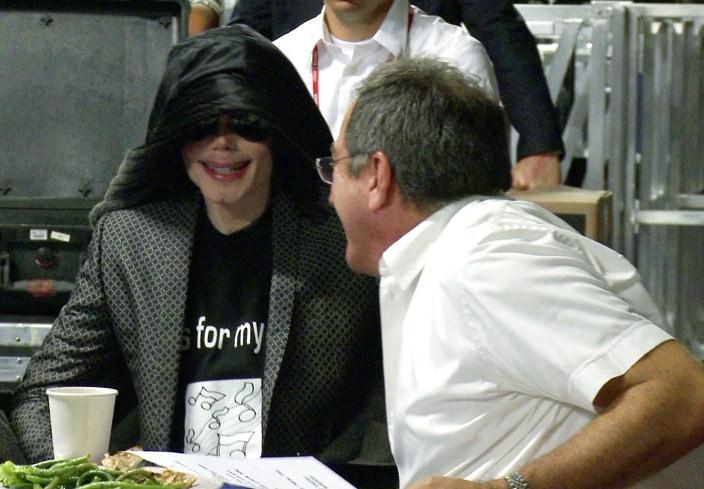 The next day, Ortega and Murray exchanged eleven phone calls and discussed revising Michael’s rehearsal schedule because Ortega believed the current schedule wasn’t working.
Panish: “At this time, did you become concerned about Dr. Murray?”
Ortega: “Yes. I didn’t know what Dr. Murray was doing, but seeing Michael in that condition worried me, especially when he was under a doctor’s supervision.”
He said he wanted MJ to be treated by another specialist besides Murray because he had concluded that Dr. Murray wasn’t taking care of him the way he should.
At this stage, Ortega was willing to leave the tour because it would likely stop the tour’s progress.
“I didn’t want to break Michael’s heart; I was broken. My instinct told me to stop the tour, but I didn’t want to break Michael’s heart. I knew Michael wanted to continue.”
Ortega didn’t see Randy Phillips until the next day, June 20. They had a meeting at Michael’s house with Carol Wood.
In response to Ortega’s email that same day, Phillips wrote: “Kenny, once I’m in the loop, I’ll let you know. We have a person, Bridget, who is arranging his (Michael’s) accommodations in London. We will bring her and Frank (Delio, Michael’s manager) back to Los Angeles as soon as possible. But I’m stuck—I don’t know who to hire as a therapist and how this person can help him in such a short time.”
Phillips wrote that he didn’t know which therapist to hire and that he had hit a closed door. Panish asked Ortega whether he also felt what Phillips felt. Ortega denied it.
Ortega’s reply to Phillips: “I’m at home waiting for your call or your instructions. Given his mental and physical condition, honestly I don’t think he’s ready for the tour. This is a reminder for Karen, Bush, Travis, and me—of the way he fainted on stage and the cancellation of the H.B.O. concert. Strong signs of paranoia, anxiety, and obsession are visible in him. I think the best thing we can do is to inform a qualified psychologist as soon as possible. It’s as if two people live inside him. One of them (deep inside) is trying to hold onto what he was and what he could still be, and he doesn’t want us to stop him at this time. Meanwhile, another part of him is trapped in weakness and a problem. Honestly, if I had let him rehearse on stage last night, he would have hurt himself. I think we need the advice of a specialist.”
Ortega: “Michael was afraid that I would leave him. He was anxious; he didn’t want me to stop working.”
He said that Michael’s obsessive behavior meant that Michael kept repeating to Ortega that he should not leave him and should not stop working.
“There was no doubt in my mind that Michael wanted to carry out this tour. I told him, ‘There’s nothing to be afraid of; we’ll do it.’ I was loyal to Michael.”
After sending this response, Ortega received a phone call from Gongwer about the meeting that afternoon at Michael’s house. Ortega went to the meeting, and after it ended, he received an email from Phillips asking him not to consider himself a doctor or psychiatrist. Ortega testified that he didn’t mean at all to assume the role of an expert.
Phillips’ email to Ortega: “It’s necessary that neither I, nor you, nor anyone else claim knowledge of medical or psychological matters. I had a long conversation with Dr. Murray, and the more I get to know him, the more my respect for him grows. He said not only is Michael physically ready for the tour, but mentally he is also capable. Dr. Murray was speaking with me from Michael’s house; he spent the morning with MJ. This doctor is extremely successful (we check everyone). He doesn’t need (the money) for this tour, so he is completely polite and unbiased. It’s very vital that we surround Michael with love and support and listen to what he says and how he wants to get ready for July 13 (the tour opening). You can’t imagine the harm and the downstream consequences of stopping this tour at this time. I’m not only talking about AEG’s interests; I’m also considering MJ’s well-being, and the many crises, issues, and lawsuits that will be formed against him.”
Ortega said he didn’t know whether Murray was the successful, polite, unbiased doctor described by Phillips, but he didn’t think Murray was taking good care of Michael.
Phillips also wrote that Michael needed to be surrounded with love and support. Ortega said that was exactly what he was trying to do.
The next day, Ortega and Murray exchanged eleven phone calls and discussed revising Michael’s rehearsal schedule because Ortega believed the current schedule wasn’t working.
Panish: “At this time, did you become concerned about Dr. Murray?”
Ortega: “Yes. I didn’t know what Dr. Murray was doing, but seeing Michael in that condition worried me, especially when he was under a doctor’s supervision.”
He said he wanted MJ to be treated by another specialist besides Murray because he had concluded that Dr. Murray wasn’t taking care of him the way he should.
At this stage, Ortega was willing to leave the tour because it would likely stop the tour’s progress.
“I didn’t want to break Michael’s heart; I was broken. My instinct told me to stop the tour, but I didn’t want to break Michael’s heart. I knew Michael wanted to continue.”
Ortega didn’t see Randy Phillips until the next day, June 20. They had a meeting at Michael’s house with Carol Wood.
In response to Ortega’s email that same day, Phillips wrote: “Kenny, once I’m in the loop, I’ll let you know. We have a person, Bridget, who is arranging his (Michael’s) accommodations in London. We will bring her and Frank (Delio, Michael’s manager) back to Los Angeles as soon as possible. But I’m stuck—I don’t know who to hire as a therapist and how this person can help him in such a short time.”
Phillips wrote that he didn’t know which therapist to hire and that he had hit a closed door. Panish asked Ortega whether he also felt what Phillips felt. Ortega denied it.
Ortega’s reply to Phillips: “I’m at home waiting for your call or your instructions. Given his mental and physical condition, honestly I don’t think he’s ready for the tour. This is a reminder for Karen, Bush, Travis, and me—of the way he fainted on stage and the cancellation of the H.B.O. concert. Strong signs of paranoia, anxiety, and obsession are visible in him. I think the best thing we can do is to inform a qualified psychologist as soon as possible. It’s as if two people live inside him. One of them (deep inside) is trying to hold onto what he was and what he could still be, and he doesn’t want us to stop him at this time. Meanwhile, another part of him is trapped in weakness and a problem. Honestly, if I had let him rehearse on stage last night, he would have hurt himself. I think we need the advice of a specialist.”
Ortega: “Michael was afraid that I would leave him. He was anxious; he didn’t want me to stop working.”
He said that Michael’s obsessive behavior meant that Michael kept repeating to Ortega that he should not leave him and should not stop working.
“There was no doubt in my mind that Michael wanted to carry out this tour. I told him, ‘There’s nothing to be afraid of; we’ll do it.’ I was loyal to Michael.”
After sending this response, Ortega received a phone call from Gongwer about the meeting that afternoon at Michael’s house. Ortega went to the meeting, and after it ended, he received an email from Phillips asking him not to consider himself a doctor or psychiatrist. Ortega testified that he didn’t mean at all to assume the role of an expert.
Phillips’ email to Ortega: “It’s necessary that neither I, nor you, nor anyone else claim knowledge of medical or psychological matters. I had a long conversation with Dr. Murray, and the more I get to know him, the more my respect for him grows. He said not only is Michael physically ready for the tour, but mentally he is also capable. Dr. Murray was speaking with me from Michael’s house; he spent the morning with MJ. This doctor is extremely successful (we check everyone). He doesn’t need (the money) for this tour, so he is completely polite and unbiased. It’s very vital that we surround Michael with love and support and listen to what he says and how he wants to get ready for July 13 (the tour opening). You can’t imagine the harm and the downstream consequences of stopping this tour at this time. I’m not only talking about AEG’s interests; I’m also considering MJ’s well-being, and the many crises, issues, and lawsuits that will be formed against him.”
Ortega said he didn’t know whether Murray was the successful, polite, unbiased doctor described by Phillips, but he didn’t think Murray was taking good care of Michael.
Phillips also wrote that Michael needed to be surrounded with love and support. Ortega said that was exactly what he was trying to do.
 Panish asked Ortega whether he was the type to yell at people and cause a scene, or whether he tried to be patient with others. Ortega said: “Both.” His answer made the courtroom and jury laugh.
Panish: “Were you trying to sound the alarm?”
Ortega: “Yes.”
Panish: “Why?”
Ortega: “Because I was worried. I saw things that really worried me and I felt they needed to be addressed. I wanted them to take it seriously. I felt Michael had a problem and needed help.”
Panish: “Did you try to make Mr. Phillips understand the situation?”
Ortega: “Yes.”
Panish: “If Phillips was more worried about the tour than about MJ’s health, would that have worried you?”
Ortega: “Yes, I was more worried about Michael than anything else.”
Unfortunately, Phillips didn’t take any of Ortega’s concerns seriously. He testified that he thought Ortega was interfering in Murray’s work and wasn’t being rational.
Ortega disagreed with Phillips and said his understanding was that Phillips had decided to personally handle and investigate the matter.
Panish: “Did Phillips ever tell you what MJ’s problem was?”
Ortega: “No.”
Dr. Murray had tried to tell Ortega what was happening, but Ortega never received a clear answer about what Michael’s problem actually was.
Panish asked whether Ortega knew that Phillips had written to other people in emails that Ortega was making him worry. Ortega said no.
The June 20 meeting took place in Carol Wood’s living room with Michael, Murray, Phillips, and Ortega. Murray started the meeting. Ortega said that when he felt the meeting was about him, he stood up to express his feelings. Panish asked Ortega to describe the meeting with one word. Ortega said: “An accusation.” He said he had been accused of Dr. Murray’s actions. Ortega stayed in the meeting only 10 to 15 minutes, then left the house alone. The rest of the people stayed in the house. Then Phillips sent an email to Ortega.
Panish: “Was Michael getting worse?”
Ortega: “Yes.”
Panish: “Mentally, stable and capable?”
Ortega: “On June 19, I definitely didn’t think that.”
During the June 20 meeting, Murray was angry at Ortega. Ortega said this reaction shocked him. Ortega stood up for most of the meeting.
“I was shocked because what he was saying had absolutely nothing to do with reality. He was angry at me; he said I didn’t have the right to stop MJ from rehearsing. Dr. Murray said Michael was healthy and could carry out all his responsibilities for the tour. I was stunned, because I didn’t think something like that was possible.”
Murray told Ortega to stick to his job and let Murray do his work. Ortega was upset by the confrontation and felt insulted. Panish asked whether, during his career, he had ever witnessed such confrontations. He answered: “Yes, of course, many times.” The jury laughed at his answer. Ortega had had many chaotic meetings, but never had a doctor spoken to him like that.
Panish: “Did Michael defend you?”
Ortega: “Yes.”
Ortega asked Michael to explain the conditions from the previous day to Murray, and he did. Murray said Michael had told him something else, and now he was saying something different.
“Michael told him: ‘No, no, no.’”
And Michael and Murray got into a discussion, though it wasn’t as intense as the argument between Murray and Ortega. On that day, Phillips was just an observer and said nothing.
In the end, before leaving, Michael hugged Kenny. Ortega told Michael that only he mattered to him. Michael replied, “I know, I know, I love you. I’ll take care of it; you’ll see.”
Panish: “And five days later, Michael died.”
Panish asked Ortega whether he was the type to yell at people and cause a scene, or whether he tried to be patient with others. Ortega said: “Both.” His answer made the courtroom and jury laugh.
Panish: “Were you trying to sound the alarm?”
Ortega: “Yes.”
Panish: “Why?”
Ortega: “Because I was worried. I saw things that really worried me and I felt they needed to be addressed. I wanted them to take it seriously. I felt Michael had a problem and needed help.”
Panish: “Did you try to make Mr. Phillips understand the situation?”
Ortega: “Yes.”
Panish: “If Phillips was more worried about the tour than about MJ’s health, would that have worried you?”
Ortega: “Yes, I was more worried about Michael than anything else.”
Unfortunately, Phillips didn’t take any of Ortega’s concerns seriously. He testified that he thought Ortega was interfering in Murray’s work and wasn’t being rational.
Ortega disagreed with Phillips and said his understanding was that Phillips had decided to personally handle and investigate the matter.
Panish: “Did Phillips ever tell you what MJ’s problem was?”
Ortega: “No.”
Dr. Murray had tried to tell Ortega what was happening, but Ortega never received a clear answer about what Michael’s problem actually was.
Panish asked whether Ortega knew that Phillips had written to other people in emails that Ortega was making him worry. Ortega said no.
The June 20 meeting took place in Carol Wood’s living room with Michael, Murray, Phillips, and Ortega. Murray started the meeting. Ortega said that when he felt the meeting was about him, he stood up to express his feelings. Panish asked Ortega to describe the meeting with one word. Ortega said: “An accusation.” He said he had been accused of Dr. Murray’s actions. Ortega stayed in the meeting only 10 to 15 minutes, then left the house alone. The rest of the people stayed in the house. Then Phillips sent an email to Ortega.
Panish: “Was Michael getting worse?”
Ortega: “Yes.”
Panish: “Mentally, stable and capable?”
Ortega: “On June 19, I definitely didn’t think that.”
During the June 20 meeting, Murray was angry at Ortega. Ortega said this reaction shocked him. Ortega stood up for most of the meeting.
“I was shocked because what he was saying had absolutely nothing to do with reality. He was angry at me; he said I didn’t have the right to stop MJ from rehearsing. Dr. Murray said Michael was healthy and could carry out all his responsibilities for the tour. I was stunned, because I didn’t think something like that was possible.”
Murray told Ortega to stick to his job and let Murray do his work. Ortega was upset by the confrontation and felt insulted. Panish asked whether, during his career, he had ever witnessed such confrontations. He answered: “Yes, of course, many times.” The jury laughed at his answer. Ortega had had many chaotic meetings, but never had a doctor spoken to him like that.
Panish: “Did Michael defend you?”
Ortega: “Yes.”
Ortega asked Michael to explain the conditions from the previous day to Murray, and he did. Murray said Michael had told him something else, and now he was saying something different.
“Michael told him: ‘No, no, no.’”
And Michael and Murray got into a discussion, though it wasn’t as intense as the argument between Murray and Ortega. On that day, Phillips was just an observer and said nothing.
In the end, before leaving, Michael hugged Kenny. Ortega told Michael that only he mattered to him. Michael replied, “I know, I know, I love you. I’ll take care of it; you’ll see.”
Panish: “And five days later, Michael died.”
 Rehearsals were stopped for several days. Ortega says that when Michael returned to rehearsal on June 23, he was completely different from the Michael Ortega had seen on June 19.
“It was miraculous! A miraculous recovery. Whatever the problem was—flu or whatever—it was gone. It was as if he had risen from the dead all at once. He had undergone a transformation. It seemed like he had been able to sleep well. I didn’t ask any questions. I was overwhelmed with happiness. Everyone had noticed this huge change. I had no idea about the medications. I was in shock and disbelief—it was completely amazing. It made me doubt myself; I remember thinking, ‘Did I really see something on June 19?’ Michael wasn’t really the same Michael from June 19.”
Panish: “Did you know that his recovery was because Dr. Murray stopped the injection of propofol?”
Ortega: “No.”
“Earth Song” was the last song Michael rehearsed on stage on June 24, 2009. Panish asked whether it went well. Ortega smiled and said yes. He said his first and second favorite songs are “Man in the Mirror” and “Billie Jean.” The rest are in third place. During rehearsals, they never fully performed the show.
Ortega was taking deep breaths and became emotional again.
Panish played a clip of Michael performing “Earth Song.” Michael was wearing a long coat. Panish asked whether the Staples was cold. Ortega: “These places are all like refrigerators.”
Ortega said Michael wrapped himself in a blanket, but not like five days earlier (June 19).
Panish: “What happened the next day?”
Ortega, his voice shaking, said: “Michael died.”
He learned of Michael’s death on June 25 from Paul Gongwer.
“I was standing on stage waiting for Michael.”
Ortega thought Randy Phillips had gone to Michael’s home to bring him to Staples for rehearsal.
Gongwer called him from the hospital and asked him to sit down, then said: “Listen to me—our boy is gone! Michael is gone!” Ortega couldn’t believe it. He said it wasn’t Paul Gongwer calling him; he asked him to say something only the two of them knew to make sure it was really Gongwer.
Ortega said his salary had been fully paid. Sony paid him because of the documentary This Is It. Ortega said Sony kept all the rehearsal footage in a vault so nothing would leak.
Ortega said Michael intended to take the tour around the world and end it in the United States. If that happened, Ortega would have received more money: $100,000 for each of the five continents and $250,000 for the United States. The judge asked why; Ortega answered that because he was one of the creators of the show and he would receive something like royalties.
Panish: “What is MJ’s track record?”
Ortega: “He made music—made it, made it, made it. He raised the standards in every area he worked in. He was an incredible songwriter, singer, musician, dancer, and filmmaker. We worked together really, really well.”
Rehearsals were stopped for several days. Ortega says that when Michael returned to rehearsal on June 23, he was completely different from the Michael Ortega had seen on June 19.
“It was miraculous! A miraculous recovery. Whatever the problem was—flu or whatever—it was gone. It was as if he had risen from the dead all at once. He had undergone a transformation. It seemed like he had been able to sleep well. I didn’t ask any questions. I was overwhelmed with happiness. Everyone had noticed this huge change. I had no idea about the medications. I was in shock and disbelief—it was completely amazing. It made me doubt myself; I remember thinking, ‘Did I really see something on June 19?’ Michael wasn’t really the same Michael from June 19.”
Panish: “Did you know that his recovery was because Dr. Murray stopped the injection of propofol?”
Ortega: “No.”
“Earth Song” was the last song Michael rehearsed on stage on June 24, 2009. Panish asked whether it went well. Ortega smiled and said yes. He said his first and second favorite songs are “Man in the Mirror” and “Billie Jean.” The rest are in third place. During rehearsals, they never fully performed the show.
Ortega was taking deep breaths and became emotional again.
Panish played a clip of Michael performing “Earth Song.” Michael was wearing a long coat. Panish asked whether the Staples was cold. Ortega: “These places are all like refrigerators.”
Ortega said Michael wrapped himself in a blanket, but not like five days earlier (June 19).
Panish: “What happened the next day?”
Ortega, his voice shaking, said: “Michael died.”
He learned of Michael’s death on June 25 from Paul Gongwer.
“I was standing on stage waiting for Michael.”
Ortega thought Randy Phillips had gone to Michael’s home to bring him to Staples for rehearsal.
Gongwer called him from the hospital and asked him to sit down, then said: “Listen to me—our boy is gone! Michael is gone!” Ortega couldn’t believe it. He said it wasn’t Paul Gongwer calling him; he asked him to say something only the two of them knew to make sure it was really Gongwer.
Ortega said his salary had been fully paid. Sony paid him because of the documentary This Is It. Ortega said Sony kept all the rehearsal footage in a vault so nothing would leak.
Ortega said Michael intended to take the tour around the world and end it in the United States. If that happened, Ortega would have received more money: $100,000 for each of the five continents and $250,000 for the United States. The judge asked why; Ortega answered that because he was one of the creators of the show and he would receive something like royalties.
Panish: “What is MJ’s track record?”
Ortega: “He made music—made it, made it, made it. He raised the standards in every area he worked in. He was an incredible songwriter, singer, musician, dancer, and filmmaker. We worked together really, really well.”
 Ortega said Michael wanted to make films based on the trailer songs and “Smooth Criminal” for This Is It. They made four short films for the tour. Panish showed a photo of Michael next to Ortega, looking through the camera viewfinder from inside.
Panish: “What was your reaction?”
Ortega: “I said, ‘Yes. Please!’ I was interested in anything Michael wanted to do with me.”
Ortega said Michael wanted to make films based on the trailer songs and “Smooth Criminal” for This Is It. They made four short films for the tour. Panish showed a photo of Michael next to Ortega, looking through the camera viewfinder from inside.
Panish: “What was your reaction?”
Ortega: “I said, ‘Yes. Please!’ I was interested in anything Michael wanted to do with me.”
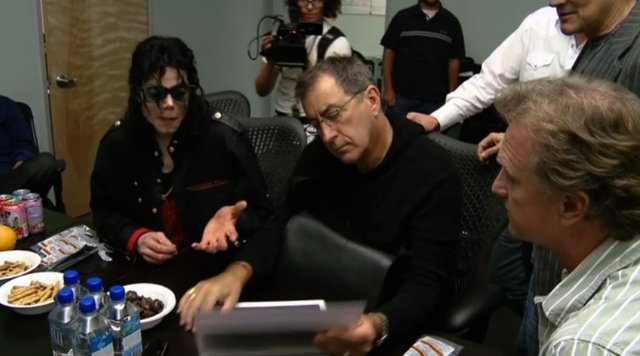
Next to Bruce Jones, director of the 3D films for This Is It
Panish asked about Michael’s love for filmmaking. Ortega couldn’t remember the name of one of Michael’s films, and Panish couldn’t either. He went to Catherine Jackson and told her “Captain EO.” Panish showed photos of Michael next to Ortega; one of them was a profile image of Michael and Ortega standing next to one of Michael’s children. (Ortega’s protruding belly was visible in the photo.) Ortega, who had previously provided details of his phone calls in court, told Panish: “Interesting—you don’t show my phone number, but why show my profile?” The jury laughed, and Panish apologized. They then discussed whether the child in the photo was Prince or Paris, because the child wore a mask. Ortega said he thought it was Prince, but he wasn’t sure. (The correct answer is Prince.)
 He then talked about Michael’s children: “Just like he talked about their mother, his children were the greatest gift in his life. They gave him the most joy.”
Ortega said life with Michael was very joyful for the kids; every day was like Christmas: “MJ would celebrate Christmas for them every day of the year.”
Ortega recalled that in April, when he went to the Carol Wood house, everything was decorated with Christmas details everywhere. Paper airplanes were also thrown around here and there.
“The evidence of happiness and joy was clear. He was always with his children. He worried about them; he was their father. They loved their father too—it was obvious, it was clear, it was evident.”
He talked about Michael’s love for his mother, Katherine: “He loved her very much; he cared about her deeply.”
After Panish’s questions ended, Marvin Putnam began his work for AEG. He said Ortega wouldn’t be here for a few weeks, so he needed to rush through the questions.
Putnam asked why Ortega’s lawyer’s fees were being paid by AEG. Ortega said the contract conditions were like that. Ortega was under AEG’s commitment for the Rolling Stones tour. He said AEG was obligated to pay and that “they probably don’t want to do this.” Ortega said it didn’t affect his testimony.
Ortega said that during the 1995 concert rehearsals, he had also been worried about Michael’s mental state. Putnam asked whether Phillips or Gongwer were involved in the concert. Ortega said no—AEG didn’t even exist. Ortega said Michael’s condition during the 1995 H.B.O. concert was different from June 19, 2009. In 1995, Michael was anxious and unhappy, but he wasn’t physically weak. Those two experiences were the only times Ortega had seen Michael in a bad condition.
Panish asked about Ortega’s first meeting with Murray in March or April 2009, and whether MJ had introduced Murray to him as the tour doctor. The answer was no. Michael had said, “This is my doctor.” Ortega had met Murray three or four times before the June 20 hearing.
Putnam asked him about his failure to remember some emails. Ortega said that at the time, they hadn’t read them. Putnam asked whether Ortega was trying to dodge questions. Ortega said: “No, I’m doing my best.”
Putnam then focused on the June 19 emails titled “Trouble in the Front Line,” and also noted that on that day there had been two short calls from Ortega’s phone to Murray’s phone and one short call from Murray’s phone to Ortega’s.
Putnam asked Ortega about Phillips. Ortega said he thought Phillips was professional in his work. Putnam asked whether it was possible Phillips had become confused due to conflicting information he was receiving. Ortega answered yes. Putnam asked what views Gongwer and Phillips had about Michael.
Ortega: “It felt like they cared about him.”
Putnam: “Was there any reason to think they didn’t like him?”
Ortega: “No.”
Ortega said he thought these executives cared about Michael because they supported him throughout the tour process.
Putnam ended his questions and expressed hope that he would see Ortega in court after a few weeks. Ortega is traveling for work.
Source: eMJey.com / AP & ABC7
He then talked about Michael’s children: “Just like he talked about their mother, his children were the greatest gift in his life. They gave him the most joy.”
Ortega said life with Michael was very joyful for the kids; every day was like Christmas: “MJ would celebrate Christmas for them every day of the year.”
Ortega recalled that in April, when he went to the Carol Wood house, everything was decorated with Christmas details everywhere. Paper airplanes were also thrown around here and there.
“The evidence of happiness and joy was clear. He was always with his children. He worried about them; he was their father. They loved their father too—it was obvious, it was clear, it was evident.”
He talked about Michael’s love for his mother, Katherine: “He loved her very much; he cared about her deeply.”
After Panish’s questions ended, Marvin Putnam began his work for AEG. He said Ortega wouldn’t be here for a few weeks, so he needed to rush through the questions.
Putnam asked why Ortega’s lawyer’s fees were being paid by AEG. Ortega said the contract conditions were like that. Ortega was under AEG’s commitment for the Rolling Stones tour. He said AEG was obligated to pay and that “they probably don’t want to do this.” Ortega said it didn’t affect his testimony.
Ortega said that during the 1995 concert rehearsals, he had also been worried about Michael’s mental state. Putnam asked whether Phillips or Gongwer were involved in the concert. Ortega said no—AEG didn’t even exist. Ortega said Michael’s condition during the 1995 H.B.O. concert was different from June 19, 2009. In 1995, Michael was anxious and unhappy, but he wasn’t physically weak. Those two experiences were the only times Ortega had seen Michael in a bad condition.
Panish asked about Ortega’s first meeting with Murray in March or April 2009, and whether MJ had introduced Murray to him as the tour doctor. The answer was no. Michael had said, “This is my doctor.” Ortega had met Murray three or four times before the June 20 hearing.
Putnam asked him about his failure to remember some emails. Ortega said that at the time, they hadn’t read them. Putnam asked whether Ortega was trying to dodge questions. Ortega said: “No, I’m doing my best.”
Putnam then focused on the June 19 emails titled “Trouble in the Front Line,” and also noted that on that day there had been two short calls from Ortega’s phone to Murray’s phone and one short call from Murray’s phone to Ortega’s.
Putnam asked Ortega about Phillips. Ortega said he thought Phillips was professional in his work. Putnam asked whether it was possible Phillips had become confused due to conflicting information he was receiving. Ortega answered yes. Putnam asked what views Gongwer and Phillips had about Michael.
Ortega: “It felt like they cared about him.”
Putnam: “Was there any reason to think they didn’t like him?”
Ortega: “No.”
Ortega said he thought these executives cared about Michael because they supported him throughout the tour process.
Putnam ended his questions and expressed hope that he would see Ortega in court after a few weeks. Ortega is traveling for work.
Source: eMJey.com / AP & ABC7