AEG Court Session 52: Katherine Jackson’s Defense of Michael + Videos and Images of Michael and His Children

Today, Katherine Jackson—the plaintiff in the case and the mother of Michael Jackson—took the witness stand.
In a calm but strained voice, Katherine said: “The hardest thing is to sit in this courtroom and listen to the bad things they say about my son. Those things are not true. He is not here to defend himself. Most of what has been said is not true.”
Her attorney, Panish, asked whether Katherine was there to speak on Michael’s behalf?
Katherine: “I will do my best.”
Katherine stated her purpose in filing the lawsuit against the company: “I want to know what truly happened to my son. That’s why I’m here.”
Panish: “When they said they wanted to tell you that your son was a bad person, how did that make you feel?” (Referring to the opening statement by the company’s lawyer in court, who said that the ‘dark truths of the Jacksons’ would be revealed.)
Katherine: “A very bad feeling. My son was a very good person. He helped charities. His name is recorded in the Guinness World Records. I’m very anxious; I’m very sorry. I know my son was a very good person. He loved everyone. He was named in the Guinness World Records book as the artist who did the most to support charities.”
Katherine said that Michael loved all children—especially those who had issues, such as orphaned children, sick children, and children with disabilities. Michael worked with the “Make a Wish” foundation. She said her full name: Katherine Ester Jackson. Born May 4, 1930 in Alabama, she is 83 years old. She said she has some hearing difficulty. This was her first testimony, and she was somewhat nervous.
Brian Panish: “Did you sleep well last night?”
Katherine: “No.”
The mother of the most famous family in the entertainment and music industry said that the singing talent of the Jacksons came from her maternal grandfather. He was named Columbus Brown.
Katherine’s father’s name was Prince, and he also had singing talent. Katherine’s mother would open the windows so her husband’s singing voice could carry down the street.
Michael, following a long-standing family tradition in his mother’s family—dating back to the era of slavery—named his son Prince (the Prince). Katherine said that this name had nothing to do with Michael being referred to as the “King of Pop.” Katherine’s father, grandfather, and great-grandfather were also named Prince.

Katherine: “Michael loved my father.”
Panish: “When you found out that MJ wanted to name his son Prince, were you happy?”
Katherine: “Very much!”
Katherine’s father had taught his children to play guitar. Katherine’s sister played the cello.
Katherine: “Music was always in our home.”
Katherine: “As a child, I got polio, and from ages 7 to 9 I wore a brace on my left leg. I was shy.”
Panish showed a photo of Katherine during high school. With embarrassment, Katherine said: “Oh my God, that’s me in this picture.”

When Katherine was nineteen, she married 21-year-old Joe Jackson. They settled in the city of Gary, Indiana, and bought a home on Jackson Street. Katherine says the street name matching their family name was a coincidence. The house was like a garage, with four rooms—two of them were bedrooms. Katherine raised nine children in that home: Rebbie, Jackie, Tito, Jermaine, La Toya, Marlon, Michael, Randy, and Janet. They had bunk beds. Randy, the youngest boy, slept in the same room as his mother and father, while the other boys slept in the other room. The living room was for the girls.

Katherine says that both she and Joe came from musical families and passed their talent down to their children. Sometimes Katherine would wake up to the sound of her sons singing. Joe worked in a steel plant; during slow seasons, he would sometimes be suspended from work for two or three weeks. So, between the births of Randy and Janet, over a five-year period, Katherine found a job for herself. She worked at the Sears, Roebuck & Company chain store.
Panish: “Were you always wealthy?”
Katherine: “Oh, no, not at all.”
At home, Katherine did sewing, checked newspapers for coupons, and cut them out of the newspapers to go shopping. She got the children’s shoes from the Salvation Army. They were poor. To get money, they had to wait for payday. Money was a big problem; they had to buy food. Katherine says they didn’t want to collect charity. Katherine would buy and can part of a cow—one half or one quarter—each year.
“We ate fruits and vegetables. We kept them in the freezer, and that’s how we survived.”
Panish: “Are you a good cook?”
Katherine: “The kids think so. I can make potatoes any way you can imagine.”

Katherine was happy to have such a large family. Jackie and Tito played baseball in the yard; they were members of the Katz Kittens team, which was named in honor of the mayor because he was the team’s sponsor. Michael would spend his money on buying cookies and candies, set up a little shop with them, and sell the treats to his sisters and brothers at the same price he had paid.
Katherine was always a faithful woman. She said: “I was always close to God, and I raised my children in the best way I could with spiritual teachings.”
Katherine grew up with the teachings of the Church of the Brethren (the Baptismal sect), but later leaned toward Lutheranism, though she wasn’t satisfied. When she was mature enough to understand the issues, she became a member of Jehovah’s Witnesses—what she called the “true religion.” Jehovah’s Witnesses do not celebrate Christmas, birthdays, or other holidays. Their only celebration is the Last Supper of Christ. Some of Katherine’s children became members of this faith: Michael, Rebbie, and La Toya. Joe was not a member, so they didn’t immediately stop their celebrations at that time.

When Panish showed a photo of Michael at age two and asked Katherine what it showed, she replied: “This is my sweet little boy, my dear.”
Katherine: “Michael was always sensitive and loving. One day, when his brother was sick, Michael held his hand and cried. Michael didn’t let his fame change him. He was the most humble person.”
Panish asked about the first sparks of Michael’s musical talent.
Katherine: “He was born dancing. When the kids danced around me, he was in my arms and couldn’t settle down—he danced with the music.”
Katherine had an old washing machine that made noise while running, and Michael would dance to the sound of it. The jury laughed at Katherine’s story.
“He would dance and hold his bottle to his mouth. When he started talking, he was still dancing. He truly loved music—he loved dancing.”
When Katherine was little, her father played country music for them. Katherine would listen to country music with her children. They had a television at home that would break; a repairman would take it to fix it, and sometimes they didn’t have money to get the TV back. The kids loved the Temptations and imitated their expressions at home all the time. The children were very young, but they sang and danced nonstop. There wasn’t much to do in Gary. Roosevelt High School held competitions. Whenever there was a competition at school, the Jackson boys won. The boys then formed a music group. At first, it was called the “Jackson Brothers Five,” but that name was too long, so it was shortened to Jackson Five.
When Michael was five years old, he sang the song “Climb Every Mountain” from The Sound of Music at his elementary school. Everyone was impressed by his singing and clapped for him while standing. Katherine says she and Michael’s grandfather (Joe’s father) were in the crowd.

“When he stepped on stage, I was very nervous because he was always shy. And then he started singing the song—he sang it fluently. Joe’s father was sitting there crying like a child; I was crying too. Michael looked around; everyone stood and applauded him for his performance. He wasn’t nervous at all. I was shocked. He seemed more comfortable on stage.”
After that, Michael was soon accepted as a member of his brothers’ group, and as the lead singer he took the place of his older brother Jermaine. The kids practiced at home. They pushed the furniture along the sides of the walls and danced in the middle of the room. Michael, at five years old, and his brothers continued to participate in competitions. Katherine says Michael won every competition except one time. They once lost a competition to a boy who lived in their neighborhood. Katherine jokes:
“I think people were tired of the fact that the Jacksons always won.”
They saved their money to buy an amplifier.

Panish showed videos of the Jackson Five group and asked Katherine what the kids were wearing. When Katherine answered “hand-knit suits,” the jury laughed again. Katherine sewed the suits specifically for the boys’ performances herself.
The boys progressed so much that singers like Goldiesnate and the Temptations paid them to perform at their concerts.
In 1968, Motown signed a contract with the Jackson 5; Michael was ten years old and already had several years of singing experience. That winter, the boys migrated from Gary to sunny, warm California, and moved in alongside Diana Ross—an artist from the company—to receive training. Katherine joined them four months later. Joe, the family’s father, bought Hayvenhurst in 1971, and from then on it became the Jackson family home for four decades.
“I always wanted to live in California because Gary was always cold and snowy.”
After signing with Motown, the Jackson 5 began breaking records. Four of their singles went to number one in a row. The Jackson mania started right then. Katherine says that whenever the neighborhood kids realized the Jackson boys were on their way, they got excited. Katherine laughs that she was tired of all the girls crowding around their house.
“They would stay there all day, and sometimes the weather would get so dark that I had to take them home.”

Some of Michael’s performances at special events surprised Katherine. At age fourteen, he performed the song “Ben” on the Oscar stage by himself. He was nominated for an award for that song.
Katherine: “I was very proud of him.”
Panish: “Did you have anxiety?”
Katherine: “I was a little anxious, but he performed well.”
The song “Ben” is about friendship with a rat. Katherine said Michael liked rats. They once went to a restaurant in Beverly Hills for dinner, and Michael would pour crumbs into his pocket to take to the rats. They had a turkey, a parrot, a gerbil, a rat, and a cat, but Michael didn’t like dogs. Once, when he was small, he was bitten severely by a pit bull dog belonging to their friend—Randy’s arm—and Michael was afraid of dogs ever since. But years later, he bought his children a chocolate-colored Labrador named Kenya.
Michael did art projects at school.
“He was a very good artist. He drew many pictures at school, and some of them were sold.”

Katherine said Michael didn’t waste his time sitting and watching television; he wrote songs. Katherine added that it’s very hard to sit in court and watch as others (AEG employees) call Michael lazy. She described how an email read in court—sent by Gang Wer, the company’s manager—was very upsetting, because it described Michael as lazy.
“My son wasn’t lazy. That’s the biggest lie. Nobody becomes the biggest artist... (long pause)... if they’re lazy.”
Katherine added that Michael was an excellent student at school and got straight A’s. But Katherine says her son Prince was a better student than his father. Prince is a member of the United States’ National Honor Society and has received awards.
Katherine praised Michael’s love of movies. She named some of his favorite films: The Wiz, Sidney, and 12 Angry Men.
Panish showed parts of The Wiz. The jury was highly entertained; some smiled, while others bit their lips as if trying to hold back their smiles.
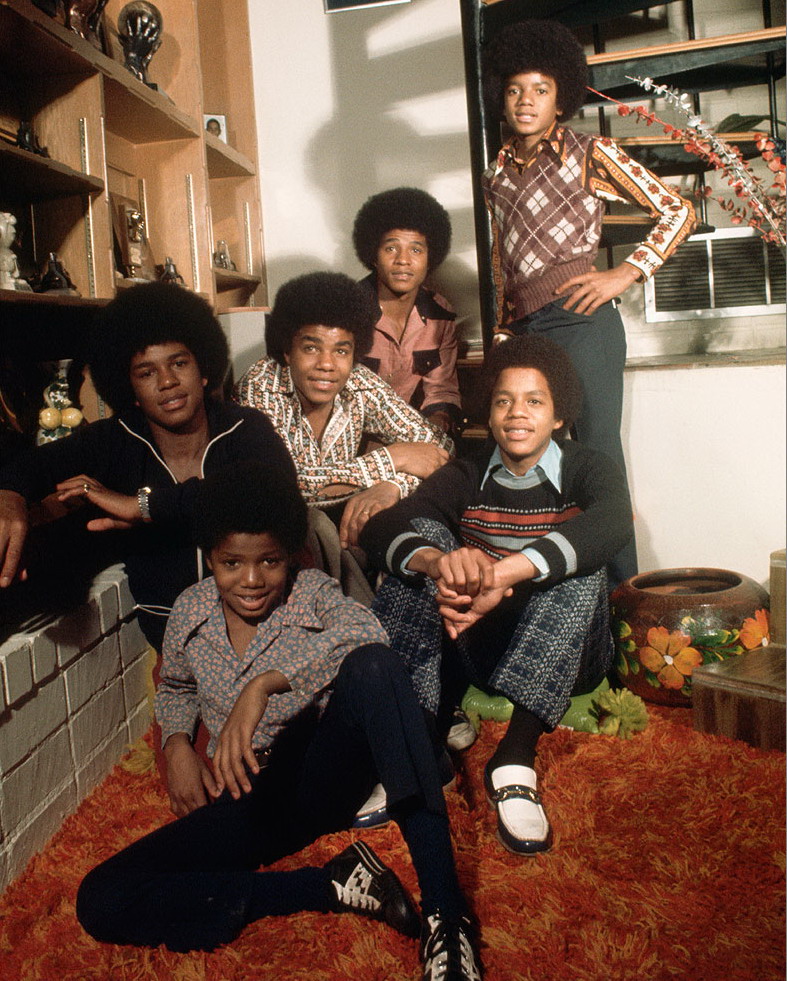
Katherine said Michael and Quincy Jones worked well together. They collaborated on three of Michael’s albums: Thriller, Bad, and Off the Wall.
Panish then referred to Michael’s habit of writing notes.
Katherine: “He was writing things down for himself all the time.”
In those notes, he wrote how many copies of each album he wanted to sell, or where he wanted to be at a specific time. Katherine said those writings came true. When Michael still lived with his family at Hayvenhurst, his goal was for people to recognize him as a new person—not that little, lovable Jackson Five kid.
Panish: “When Michael was 21, did he write down his goals?”
Katherine: “Yes. He wanted to be known as MJ—not as little Michael or little Jackson.”

Panish showed a video of Motown 25, the first time Michael danced the Moonwalk. The jury smiled. Katherine said Michael practiced all the time. Michael had a room above the garage where he danced nonstop for two hours. The sequined jacket Michael wore at the Motown 25 celebration belonged to Katherine. Before the show began, Michael went into his mother’s closet, took the jacket, and after that night he never returned it.
Katherine: “When Michael was eighteen, he wanted to buy me a house. But at that time house prices had gone up, so he decided to renovate the house. He rebuilt the Hayvenhurst you see now. He had a room upstairs that you didn’t want anyone to enter.”

Michael then decorated that special room for his dance practice with pictures of the family as wallpaper, and then told his mother, “This surprise is for you.” Michael also installed a plaque with a poem for his mother there, and it is still in place.
Katherine: “He gave me this room as a gift. Even pictures are pasted on the ceiling. Everything is covered with pictures.”
(Michael lived with his parents at Hayvenhurst from age 13 to 30, and then moved to Neverland in 1988. In the early eighties, Michael bought Hayvenhurst from his father. Joe put the house up for sale because of a house debt. After buying the house, Michael carried out a major two-year renovation. This renovation was the prelude to building Neverland. Michael dedicated Hayvenhurst to his mother on her birthday and fulfilled the promise of buying a house for her. / eMJey)
You can watch this video, which shows images of Hayvenhurst.
Katherine continued to recall memories. She said that Michael had changed his appearance so much that she didn’t recognize him several times. One time it happened during the filming of the movie Ghosts. A fat white man in the scene was greeting her.

Panish: “Did MJ have an interest in music clips?”
Katherine: “Oh yes. They were like short films—like trailers. When he was making Ghosts, he invited me to the filming location. I was sitting on a chair when a white man came up to me. I told him, ‘Hi, I’m here to see my son.’ Michael said, ‘Mom, it’s me.’”
While Michael was still living with Katherine, he continued to be a member of the Jehovah’s Witnesses church, and Katherine says he was active for a while. Some teachings of this religion instruct people to be diligent in spreading it. Michael and Katherine would go door to door to invite people to the church. Michael, of course, would change his appearance and turn himself into a fat man. The first time, Katherine didn’t recognize her son until Michael said, “Mom, it’s me.” Then they went around knocking on their neighbors’ doors.
Panish: “Did it ever happen that people knocked on the door in front of his face?”
Katherine: “Many times. They never figured out who he was.”
In 1988, Michael bought Neverland and left his parents.
Panish showed a video of the ranch—its animals, amusement park items, poems Michael had written, a movie theater, and a train station that Michael had named in honor of his mother, Katherine.
Panish: “Did Neverland have a train station? What was it called?”
Mrs. Jackson: “Yes, Katherine.”
In the movie theater, there was a candy buffet. Katherine said: “He finally set up a candy store.” Michael had practiced this job at home since childhood.
Katherine said Michael opened the doors of Neverland to people and to children with disabilities. He invited children from different social classes. In the movie theater, special beds were set up for children who couldn’t sit due to illness.

Katherine described how Michael’s children grew up at Neverland. They studied at home, loved Neverland. They went to the “Chuck and Cheese” entertainment center, and other kids would ask them if they had a pet. They would answer with an elephant, a giraffe—but nobody believed them.
“One day, a woman told their nanny, ‘The kids have such an imagination!’”
Panish then moved on to uncomfortable topics and asked Katherine about Michael’s pains and his medications. Katherine said Michael’s scalp was burned, he had back pain, she mentioned vitiligo, and said Michael trusted his doctors. She named Dr. Alan Metzger as one of her son’s main doctors.
Katherine: “He got compensation from Pepsi, and that money was donated to the Children’s Burn Accident Center.”
Katherine said Michael had a lot of pain and wanted to end it.
“He didn’t say much about his sleep problem. When he was at home, he couldn’t sleep at all at night.”
Panish: “Did you ever witness him taking pills or drugs?”
Katherine: “No, never. I knew he was taking pain medication. I would check on his room many times, but I never saw him in that condition.”
Katherine said she had heard from her other children that Michael had misused prescription drugs. Once, she went to Michael’s house by force to intervene in his drug use, but Katherine didn’t want to go.
“When we finally went to his house, I saw that he was doing fine.”
Katherine said she never found any evidence of misuse. When Michael was living in Las Vegas, Katherine visited him and talked with him about it.
“He promised. He kept saying, ‘I’m fine.’ Sometimes mothers at the end find out last. I told him, ‘I don’t want to hear in the news that you’re not in this world anymore.’”
Michael’s last meeting with his family members took place on May 14, 2009, during the celebration of Katherine and Joe’s 60th wedding anniversary.

Katherine said it wasn’t really an anniversary celebration; Janet wanted to name it something so everyone could gather together. Katherine said that at the beginning of the celebration she hadn’t noticed her son’s significant weight loss because Michael was wearing a jacket, but later she realized Michael had become thinner.

Katherine: “Michael and I were very close. No mother can have a better son than Michael.”
Michael wrote poems for his mother. One of the poems was titled: “Mother, My Guardian Angel.”
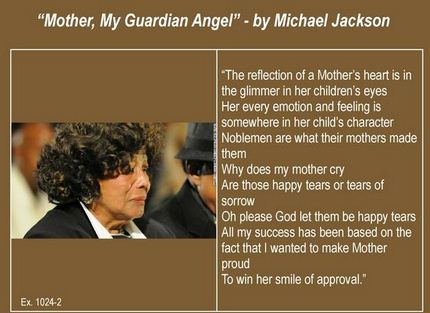
Panish: “How did the poems make you feel?”
Katherine: “They made me cry for a reason. I felt like I was loved so much.”
After Michael’s death, his brother Jermaine found a handwritten note addressed to their mother and framed it. Katherine said that when she read that poem, she started crying.
Michael wrote: “All of my successes were because I wanted my mother to be proud of me and to smile with satisfaction.”

Financially, Katherine depended on Michael. Michael gave her cash; she never cashed checks. He also gave his mother many gifts, from jewelry to a house.
“He took care of me; he fulfilled every need and wish I had. He gave me everything. He kept giving me gifts—life necessities, a car, jewelry, a mobile home.”
When Panish brought up Michael’s death, Katherine became upset and started crying. Panish asked what the loss of Michael had been like for Katherine’s life; she cried and said she had lost the best thing in her life.
“No one can understand it until they experience it. The worst thing is for a mother to lose her child. I lost my mother, my father, and my sister, but when I lost Michael, I lost everything. He was the kindest person and very, very humble.”
Panish asked about the interrogation film of Katherine that had been shown in court a while back. In that film, Katherine says Michael didn’t want to dance the Moonwalk at age fifty.
Katherine said that Michael’s statement was a funny joke because fifty isn’t that old, and people in their fifties don’t necessarily feel old. But Michael always thought that fifty was old.
Panish then asked Katherine whether her son could perform the 50 concerts of the This Is It London tour at age fifty. Katherine said Michael had the ability to do it, but not under conditions where the time between concerts was very short. Katherine didn’t think Michael could handle the tight schedule that AEG had planned. Katherine added that she had called the CEO Randy Phillips and the manager of the tour, and told them that Michael couldn’t do that schedule. Katherine said she learned about the planning through the nurse, Grace Roomba.
When Michael moved to Carowinds Wood a few months before his death, Katherine would go visit him.
“Every time I was there, I would go to his bedroom.”
Katherine and Trent Jackson (Joe’s nephew) would go to Carowinds Wood together. They would watch films in Michael’s bedroom alongside Michael.
On the afternoon of June 25, 2009, after a cardiac arrest, Michael had been taken to the hospital, and Katherine was doing Jehovah’s Witness duties—going from house to house to spread her faith. When she returned home, she found that her husband Joe had left her a voicemail asking her to go to the hospital. One of the fans standing outside Michael’s house called Joe and said that the person whose entire body was covered had been taken out of the house on a stretcher.
When Katherine had just arrived at the hospital, she didn’t know that her son was dead. At the hospital, she encountered Michael’s colleagues, including Frank Dileo, his manager. A man was walking up and down in the hospital hallway. Katherine didn’t recognize him because it was the first time she was seeing him. Later, she learned that the person was Dr. Murray, the doctor specifically for her son. Katherine was taken to a room and asked to wait. After some time, Frank Dileo—carrying terrible news—came into the room.

While crying and squeezing a tissue in her hand, Katherine said:
“I thought Michael was just sick. Nobody wanted to tell me. I sat down and waited. I think they were consulting out of my sight. Frank Dileo came in and said that Michael had shown a bad reaction. I asked how he was. Nobody said anything. I asked if he was saved. Frank told me, ‘No.’”
Katherine’s voice began to shake; she was crying in the witness stand the whole time. She continued: “Then I started screaming.”
After that, Katherine was taken to another room, where nurses came to see her. She was crying intensely. A little later, Michael’s children entered. They were crying—especially Paris, who couldn’t calm down.
“She was looking up at the sky and kept saying, ‘Daddy, I want to come with you. I can’t live without you.’”
The children hugged their father one last time in the morgue. Katherine didn’t go because she didn’t want to see Michael in that condition. After that, Michael’s body was transferred to the coroner’s office by helicopter for an autopsy.
When they had to leave the hospital, Paris asked her grandmother, “Grandma, where are we going?” Katherine told her, “You’re going home with Grandma.”
Panish: “Do you miss your son?”
Katherine: “You can’t put it into words.”

Panish asked how the children dealt with their father’s death.
“The boys handled it well—though I shouldn’t say ‘well.’ You can’t know what’s going on in their minds. But Paris had the hardest days. One of my granddaughter’s told me that Paris was telling them she wanted to go somewhere where her father is.”
Katherine said Paris received medical care to cope with her father’s grief, and she had even been hospitalized. Paris had attempted suicide earlier in the month by cutting her hand.
“Before we buried Michael, Paris forced us to search for special heart necklaces with Trent and her brothers in the stores. The hearts were split in half. When we bought it, she went to the morgue and threw one half of it around her father’s neck, and kept the other half for herself.”
“Paris took Michael’s pajama shirt. She didn’t want anyone to wash it; she wanted it to smell like her father. She put it on a pillow and placed it on her bed.”
“I thought she was the bravest of all because she had so many pictures of Michael in her room. I told her I would decorate her room and bought everything and decorated it, and I put some of my pictures in her room—but she said, ‘I have pictures too.’ She had about five large pictures of Michael, and she said she wanted two of them above her bed and her writing desk. She placed the pictures all around her room. I thought to myself how she could do it, because I didn’t want to see Michael. Every time I saw his image, I became very sad.”
Then they moved from Hayvenhurst to Calabasas, but Paris continued her way in the new house.

“She worked on a collage of Michael’s photos on one wall, like the room Michael had decorated for me in Hayvenhurst. Her room was covered with images of Michael.”
“Prince sometimes talks about his father. But he spends a lot of time with his cousins or doing other things. He doesn’t show his feelings that much.”
Panish: “Is he more quiet and withdrawn into himself?”
Katherine: “Yes.”
Panish: “Does he miss his father?”
Katherine: “Oh yes, he misses him.”
“Blanket was very small. When Michael died, he was seven years old. Now he is eleven. He has been through many things. Prince and Paris were at school, so wherever Michael went, he would take Blanket with him.”
Panish: “Does he still have long hair?”
Katherine: “Yes. He doesn’t want to cut his hair because that’s how Michael liked it. But sooner or later he will have to cut it. I don’t want his hair to be long, but he doesn’t want to cut it, so for now I’m not deciding to cut his hair.”
Katherine said that becoming a father had changed Michael a lot:
“His songs became more romantic and more meaningful; he wrote more from his heart. His life changed. Michael was one of the best fathers. You would be surprised at what a good father he was. Words can’t express his love for his children.”
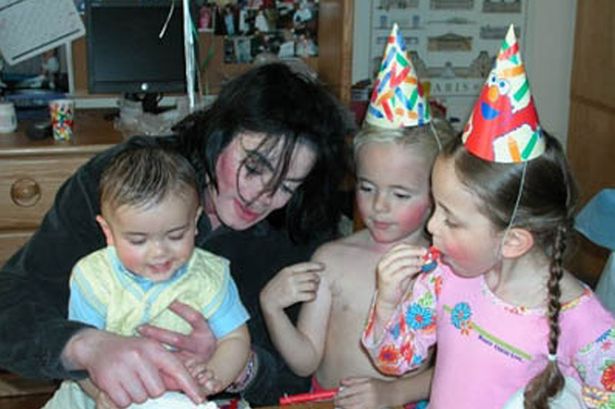
Brian Panish showed a video of Michael and his children in court. The video used home movies of Michael’s children when they were little, and the song Speechless from the album Invincible was used as the soundtrack. At the end of the video, part of the This Is It tour rehearsals was also added, during which Michael sings this song.
After that, Marvin Putnam, the company’s attorney, began questioning Katherine.
Katherine said that filing the lawsuit against AEG (in September 2010) was her personal decision; she didn’t remember the date. She filed the lawsuit on her own behalf and on behalf of Michael’s children. Before bringing the case, she hadn’t spoken with Michael’s children, her own children, or her husband Joe. She said that after the complaint was filed, she informed her children. She also said that she and Joe live apart. (They haven’t divorced, but for years they haven’t lived under the same roof.)
Putnam told Katherine that despite her saying she is a private person, she pushed this case forward and has lived in the public eye for forty years, and after Michael’s death she has done interviews with the media.
Katherine: “My family is famous. I’ve always been in the background. I put fame on my children. I get anxious around strangers.”
Katherine gave her reason for suing AEG as follows:
“I wanted to find out that—I think I owed this to my son—to understand what truly happened to him. I heard stories. I heard from my grandson (Prince) that Michael was under pressure, that he was looking for Joe, and that he thought Joe knew what to do. My son was sick, and Kenny Ortega (in court) said that nobody even gave him a cup of tea. Nobody said, ‘Let’s call the doctor and see what the problem is.’ It bothers me to sit here and listen to how sick my son was and to hear that nobody tried to help him.”
Putnam: “But he had a doctor.”
Katherine: “Michael needed another doctor—a real doctor, not Dr. Murray. He was the doctor for his children, but I didn’t know him. Later I found out it was Dr. Murray.”
Panish asked what false and unpleasant information she claims was presented in court.
“It’s hard to sit here and hear them call my son weird and say he was lazy. This week I had to hear how empty his hands were—that he didn’t bring even a single coin (from the tours) back home. Why didn’t he bring it home? Because he gave all of it to charities!”
Putnam said that Michael had been called “weird” in an email by someone unrelated to the case. That email was sent to AEG.
With a determined charity-minded look, Katherine told Putnam: “I don’t remember who wrote the email. I only know that it’s hard to sit here and hear these things. He wasn’t weird; he wasn’t lazy.”
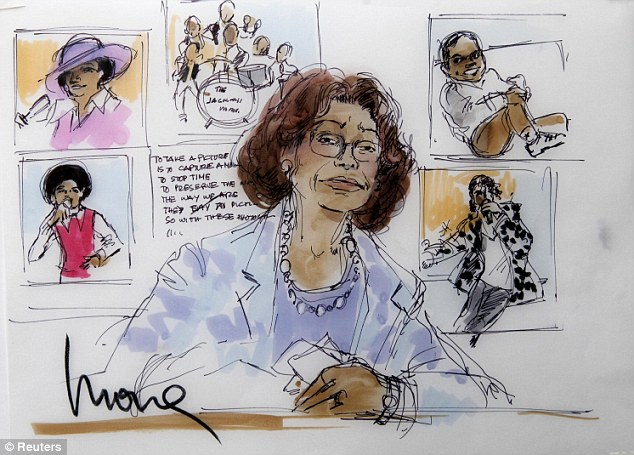
Putnam asked whether she had heard Gang Wer’s explanation about “Michael’s laziness,” and that he had pointed to Michael’s lack of interest in practice. Katherine answered no and said that during the trial she shuts her ears to some things, but she has heard that one of the managers called her son lazy, and another manager called him weird.
Katherine: “He wasn’t lazy.”
Putnam: “He didn’t want to practice on his past tours.”
Katherine: “He didn’t need practice. He knew the dances; he made them himself. He didn’t need much practice. Besides, in June 2009 he was sick and couldn’t practice.”
Putnam: “Is it very difficult to have heard bad things about your son over the past forty years?”
Katherine: “Yes.”
Putnam mentioned that his own lawyer had not rejected the issue of Michael’s drug problem.
Katherine: “My son was taking prescription drugs from doctors. That doesn’t mean he was also taking other drugs they say he was taking.”
Putnam’s attorney asked whether Katherine had also sued Kenny Ortega. Katherine’s lawyers said Ortega’s name had been removed from the complaint. Katherine didn’t remember why Ortega’s name was added and then removed.
Putnam: “You forgot, ma’am?”
Katherine stared at Putnam for about a minute.
Putnam: “Would reading the questions again help you?”
Katherine answered rudely: “No, it doesn’t help.”
The courtroom audience laughed.
Putnam asked other questions about Ortega, and Katherine’s attorney objected, saying it was repetitive; the judge accepted the objection. Some questions were also suspended by the judge because Katherine needed to consult with her lawyers.
Katherine once said, “Yes.” Putnam thought that was her answer. Katherine corrected him: “I didn’t say yes to you.” The court audience laughed again.
Marvin Putnam’s questions had left Katherine frustrated and upset. In the end, she slowly asked the judge for a break, saying she couldn’t continue due to exhaustion, and the judge ended the session.
Source: eMJey.com / LA Times & ABC & AP & NY Daily