Day 30 of the AEG trial: Randy Phillips’ testimony ends

The ninth and final day of testimony from Randy Phillips, CEO of AEG, began with questions from Brian Panish, the attorney for Katherine Jackson, who tried to show that Phillips kept changing his testimony.
Panish again asked about Phillips’ meeting with Dr. Tohme on May 4 of this year in Pulau Lang. Phillips denied the claim that during that meeting he had used an insulting title for Katherine Jackson, and he also rejected calling Michael an insult and describing him as “strange and unusual.” He said he had not discussed the AEG case with Tohme. Panish then moved to Phillips’ conversation with Brenda Richie about contacting Michael Jackson’s spirit.
This was discussed in Day 26 of the trial. Brenda had told Phillips that she had connected with Michael’s spirit through a mediator or directly, and that Michael had said Murray was innocent and that she had mistakenly caused his death. In his interrogations, Phillips had not mentioned this, and Panish concluded—by showing a video of Phillips’ interrogation—that Phillips kept changing his testimony.
The dispute between Phillips and Panish during the session went so far that the judge intervened and asked them to calm down. For example, Panish once asked Phillips whether he was tired; Phillips replied: “No, you’re a very interesting person.”
Panish pointed out that Phillips had testified about his conversations with Michael, Frank Delio, and Peter Lopez. He asked Phillips what these three people had in common. Phillips called Panish’s question rhetorical; he then said, “All three of them have passed away.” Panish said none of these three had testified in relation to this case before their deaths, and the company’s attorney objected, saying Delio had made oath statements in another case.
Panish also played a video of Phillips’ interview with Sky News, conducted a few days after Michael’s death on July 1, 2009. In that interview, Phillips said that they (AEG) had hired Conrad Murray. The focus of the case is based on that issue. But in court, Phillips said the company had not hired Murray. In challenging Phillips’ testimony, Panish pointed out that in the Sky News interview Phillips had not said that Michael was responsible for paying Murray’s salary. Panish also referenced articles in the media that, quoting Phillips, had written that Murray was hired by him. Phillips said he didn’t remember whether he had discussed Murray’s hiring in another interview. Phillips said he opposed hiring an American doctor (Conrad Murray) for two reasons: it was expensive, and for working in London he needed a medical license.
Panish then turned to Phillips’ conversation with Murray on June 20. In interrogations, Phillips had said the phone call lasted 2 to 3 minutes, but after speaking with his lawyer he had said the call lasted 25 minutes. Panish criticized Phillips for changing his statements and for not simply saying in the interrogation that he didn’t remember the length of the conversation. Panish explained that during interrogations, Phillips repeatedly answered questions by saying he didn’t remember.
Panish then addressed emails exchanged on June 19 between Phillips and several others titled “Problem at the Front Line.” Haggdal, the tour manager, had written to Phillips that at the beginning of rehearsals Michael could do his famous 360-degree turn, but if he tried to dance like that now, he would hit the floor on his butt. Yesterday’s court video showing Michael’s 360-degree turn was played. In the video, Michael turns many times, but each time only once. Panish said Michael’s Billie Jean dancing was recorded for the documentary This Is It on June 5. This attorney showed the earlier 360-degree turns from before that time—when Michael spun very fast and multiple times in a row—and then asked Phillips whether there was a video of Michael’s 2009 rehearsals showing that kind of spinning quality. Phillips’ answer was no, but he explained that all recorded videos related to This Is It were rehearsal performances, and he believes Michael saved his ability for the stage.
Phillips again said that Murray’s comments and what he had heard from Ortega and Haggdal confused him, because Murray assured him that Michael was fine. On the night of June 19, Michael was not well; he was trembling, Ortega didn’t allow him to rehearse, and sent him home. Phillips said Murray didn’t know the reason for Michael’s illness on June 19 and said he probably had the flu. That night, Murray—the doctor specifically for Michael—was not with him. He had gone to his hangout, a women’s nude dance club.
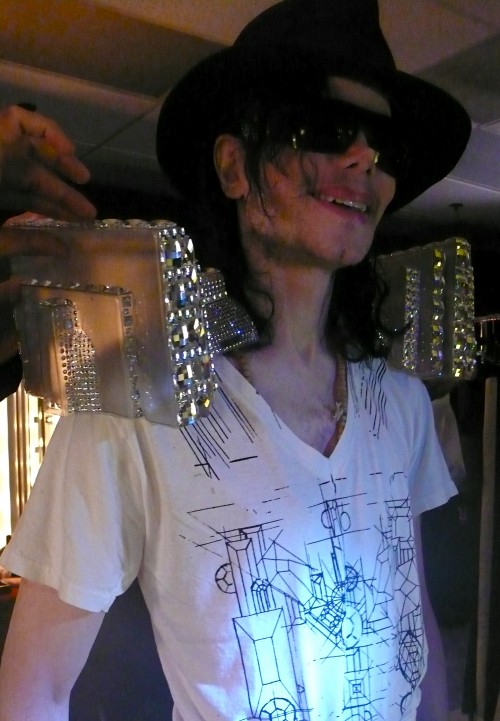
Panish addressed this part of Phillips’ testimony, where he had said that one day after Michael’s poor condition was reported, he found him well and healthy on June 20. Panish showed a photo of Michael taken on June 19 during a pre-pro wardrobe session, with Michael wearing a white T-shirt. Michael looked very thin. Panish asked Phillips whether MJ looks very good in this photo. Phillips said the Michael who was sitting in the living room of Carol Wood’s house on June 20 looked very good. When Panish asked what had changed in Michael so quickly within 12 hours, Phillips said he didn’t know because he hadn’t seen him on June 19. He said Michael looked very good on June 23 and 24 and was not similar to the image taken of him on June 19. Phillips said that on June 23 Michael wasn’t wearing a T-shirt; his hair and face were made up, and he looked very good.
When Phillips said Michael’s appearance on June 23 and 24 was “very good,” Panish used his legal right to challenge him and said: “But earlier you said it was excellent.” Phillips said that after receiving worrying emails about Michael, he was confused, and the Michael he saw in the final days was different from what was described in the emails.
Panish tried to play an audio message that Frank Delio had sent to Murray on the morning of June 20. In that message, Delio said they should conduct good tests on Michael. When the company’s attorney objected, the jury left the courtroom so the lawyers could reach an agreement on the matter. Panish argued that this audio tape should be played for the jury because Phillips could confirm that the person speaking on the tape was Frank Delio himself. The company’s attorney, Jessica Benna, objected that hearing this tape could negatively affect the members’ reasoning. In the end, the judge prevented the tape from being played for the jury. Brian Panish, in anger, threw his left arm toward his right thigh and appeared to mutter a curse under his breath.
After lunch, Panish told Phillips he wanted to finish the job—if Phillips cooperated.
Panish: “I want to finish my work; you answer the questions too, okay?”Phillips: “Agreed.”
Panish asked whether there had been intervention by two people among Michael’s show managers. Those two were Tohme and Delio. Michael fired Tohme and hired Delio. Panish asked whether Phillips had tried to reconcile the two. Phillips said no, and that he had asked them to come for breakfast or another meal, but their relationship had nothing to do with him.
Panish then asked whether the company had adhered to ethics in dealing with Michael Jackson. In court, Phillips had referred to this concept as a “Chinese wall.” The judge asked that instead of “Chinese wall,” they use “ethical wall.” Phillips said the arrangement was made so that one side of the contract would not unfairly benefit. Panish then pointed out that if someone works with both sides of the contract, it can create a conflict of interest. Phillips responded that it’s not always like that. He added that he didn’t play a role in the contract with Travis Payne, but he did have a role in the contract with Kenny Ortega.
This question by Panish referred to Tohme’s cooperation with the company. Tohme was also Michael’s manager. Tohme had signed a contract with the company for a monthly salary of $100,000. Panish then asked whether there was an ethical wall between Tohme and the company. Phillips answered that he thinks ethical positions were respected between them. Phillips said that payment to Tohme depended on him being able to obtain from Lloyd London the tour cancellation insurance before the deadline, and once the deadline passed, no payment was made to him.
Regarding Panish’s question about creating a conflict of interest after the company signed a contract with Tohme, Phillips said he didn’t even know who Tohme was, and Michael himself had asked them to sign a contract with Tohme, and Michael had signed the contract. Phillips said perhaps Michael himself caused the conflict of interest, not them.
Panish then asked whether this ethical wall was observed in writing the contracts. Phillips answered that it wasn’t a real wall; it only referred to ethics and the type of behavior, and it was a way of expressing commitment to ethical principles.
Panish: “So you don’t know how to build an ethical wall?”Phillips: “I’ve never seen such a wall built officially. It’s a way of behaving—how people treat each other.”
Phillips said that an ethical wall existed between MJ and the company.
Panish: “How do AEG employees become aware of this ethical wall?”Phillips: “Honestly, I believe that after signing the contract, the interests of both parties become one.”
Panish: “Did you tell Mr. Gangwer (the company’s manager) that there was an ethical wall?”Phillips: “That’s not something you discuss with people; it’s a way of behaving.”
Panish then referred to many artists who had worked with the company and asked which of their managers or doctors had been hired by the company. Phillips’ answer was: “None.”
Panish then, referring to Phillips’ statement that “Michael changes his managers easily,” asked how many times Phillips changes his own socks during the day. Phillips said: “Two to three times.” Panish then asked how many managers Michael had from 2007 until his death:
Phillips: “The doctor Tohme arranged the contract. Then Frank Delio. For a while also Arpac Hussain and Leonard Ro.”
He added Raymon Benin (spokesman) and Peter Lopez (lawyer) to the list of Michael’s managers and said that Lopez, as Michael’s manager, had signed an advertising contract with Pepsi on behalf of the company.
When Panish asked whether Tohme and Delio were the main managers, Phillips agreed.
Panish: “So you said that whoever MJ’s manager is, it doesn’t matter to you.”Phillips: “That’s right.”
Panish asked how many of these people the company’s contract with Conrad Murray had been sent to; Phillips answered that this was done by the company’s lawyers and he wasn’t aware.
Phillips said he had sent an email he received from the company’s lawyer, Katie Gory, about Tohme to Peter Lopez, Michael’s lawyer. In that email, she suggested that Tohme be investigated. That investigation was not carried out.
Panish then addressed an email in which Phillips said Murray was a successful doctor. In court, Phillips said he thought Murray must be successful because Murray had requested a $5 million salary. At that point, Panish asked whether it surprised him that when Murray agreed to work as Michael’s personal doctor for a much lower salary—$150,000 per month. Phillips said Murray’s performance was not irrational because doctors usually earn such incomes.
Panish: “If he had asked for ten million, would that mean he was a more successful doctor?”Phillips: “Definitely.”Panish: “And if he had asked for twenty million, he would be the most successful doctor in the world.”Phillips: “That’s right.”
Phillips said that John Branca was hired by Michael on June 18, 2009—two days before the famous June 20 meeting at Michael’s home. Branca had asked Phillips in an email on June 19 whether Michael had a drug problem and whether he could introduce a trustworthy and qualified person to solve Michael’s problem. Phillips said that at the time he didn’t know anything about Michael’s problem.
Phillips also said about AEG: “I built it. I invented this company based on my business plans, and I even named it.”
After Panish, Marvin Putnam, the company’s attorney, took over with questions.
Phillips joked: “Your Excellency, will it really be over after this (session)?” (Laughter from the audience.)
During Putnam’s questions, some points were repeated, and Phillips said the company had not paid Tohme. He said Tohme had no connection to Murray and that he didn’t know what quotes about Murray’s hiring by the company had been written in the media.
Regarding the video shown yesterday of Michael’s 360-degree turn, Phillips repeated that Michael was fifty years old and that it was a rehearsal performance, so naturally the level was lower than what is performed at a concert.
After that, Panish again began questioning Phillips:
Phillips: “You’re back?”Panish: “Just a few more questions.”Phillips: “I’ll miss you.” (Laughter from the audience.)
Panish again asked about Michael’s 360-degree turns and whether, according to John Haggdal, the tour manager, Michael was unable to do this move during the last days. Phillips had said Michael did this move in the final two days. When Panish asked whether he was familiar with the dance and movements, Phillips joked and said: “I’m clumsy. There’s a reason I’m doing business work. If I try to do a 360, I’ll be thrown into the jury’s lap.”
Panish: “Who is more qualified to judge dance moves—yourself or Mr. Haggdal?”Phillips: “Maybe me, because he hadn’t worked in pop before.”
He also said: “I know what a 360 means. You don’t need to be a choreographer to know that.”
Phillips was finally released after nine days from the trial, but he would return if necessary.
Source: eMJey.com / ABC7 & LA Times & CNN & AP