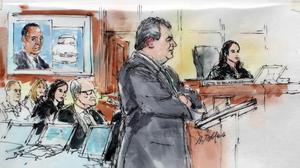
Yesterday, the first hearing on Katherine Jackson’s lawsuit against AEG was held in the presence of a jury.
Katherine, Michael’s mother, is suing AEG for negligence in hiring Dr. Conrad Murray. The other three plaintiffs are Michael Jackson’s children. In ۲۰۰۹, Dr. Murray caused Michael’s death by injecting propofol.
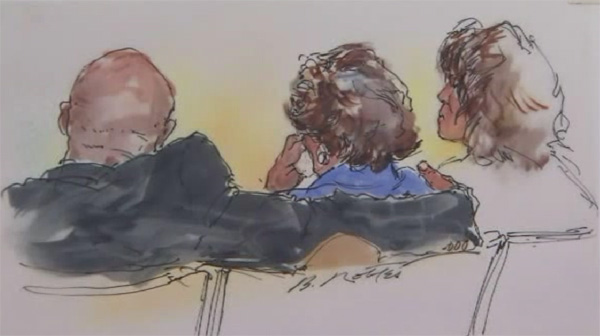
The focus of yesterday’s proceedings was Michael’s dependence on painkillers, sedatives, and the anesthetic propofol. Brian Panish, Katherine’s attorney, in addition to discussing Michael’s medication issues, described Michael in court as a loving son and a worthy father in the presence of his mother and sister and brother—Randy and Rebbie—who had come to court. He also played part of the song "You Are My Life" from Michael’s Invincible album, which was written for his children. He further showed a clip from Michael’s home video involving his children, related to a Christmas morning. In the video, Michael surprised his children with a dog he had bought for them. Showing the video was meant to illustrate the deep emotional relationship between Michael and his children. Katherine broke down in tears when she heard her son’s voice.
Only sixteen journalists and a small number of ordinary people are allowed to attend the courtroom, because nearly thirty other seats are filled by members of the two sides involved in the case. The judge did not allow recording or broadcasting of the court proceedings via television or radio.
Yesterday, members of the jury saw photos and writings about Michael. When Panish spoke about Michael Jackson’s achievements, several of them nodded their heads in approval.
Panish read a handwritten note from Michael that said:
"All of my success has been because I always tried to make my mother proud and put a smile of satisfaction on her lips."
Hearing these words, Katherine wiped her eyes.
Panish then continued by describing AEG executives as "cruel and heartless" men who did not value even a penny’s worth of Michael’s health, and who ignored the ethical problems of the doctor specifically hired for him. Panish said that the company had put Murray on a crossroads. They forced Murray to choose between high pay and caring for Michael’s life. Panish said AEG was heavily involved in competition with other companies and wanted Michael Jackson’s tour to happen no matter what.
Panish told the jury: "We are not seeking sympathy or compassion. We want right and justice."
The jury members, who receive $۱۵ per day for attending court, will decide whether AEG—one of the major concert promoters—must pay Katherine and Michael’s children billions of dollars in damages.
Panish said in court that the company knew Michael was physically and emotionally weak to perform this tour, and that weeks after Murray began working as his personal doctor—and during the time when he was rehearsing for the tour—Michael’s condition was "rapidly deteriorating."
Panish considered Murray’s request for a $۵ million salary as another red flag that the company ignored. In the end, the company agreed to pay a monthly salary of $۱۵۰,۰۰۰. Another doctor told AEG that he would do Murray’s job for a salary of $۴۰,۰۰۰, on the condition that Michael not be given a specific drug.
Panish showed the jury a video of Martin Humm, one of the company’s experts. In the video, it was said that Murray’s request was arrogant. Humm says in the video: "Murray’s request rang alarm bells for us because he asked for a huge amount of money."
Panish went on to explain that the company ignored that warning and hired Murray.
One of the cornerstones of this case is an email that Paul Gongaware, the company’s vice CEO, sent eleven days before Michael’s death. The email discussed concerns from Kenny Ortega, the tour director. Murray had prevented Michael from attending one of the rehearsal meetings, which upset Ortega.
In the email, Gongaware wrote: "We need to remind Murray that it is this company that pays his salary, not MJ. We need to remind him of his duties."
Jackson family lawyers are trying to prove that the company forced Murray to make Michael attend rehearsal meetings despite his illness, relying on Murray’s weakness—his need for money and his fear of losing his high-paying job.
Gongaware said he did not remember writing the email, which Katherine’s lawyers call a "winning card."
Gongaware, who managed Michael’s dangerous and history tours in the ۱۹۹۰s, knew that Michael had a history of using painkillers and used them during his tours to be able to sleep.
Panish showed another video in which a doctor testified that in ۱۹۹۳ he had warned Gongaware about this issue.
Dr. Stuart Finkelstein: "We felt the need for intervention and mediation in this matter. We needed to apply addiction withdrawal care."
Panish also showed another email dated March ۲۰۰۹. This email was sent by Randy Phillips, the company’s CEO, to Tim Leiweke, the former CEO of the parent company AEG, before Michael’s press conference in London (March ۵—for announcing the tour). In the email, Phillips wrote that Michael had been drinking alcohol and was not willing to attend the conference and address his fans:
"This is the most terrible thing I’ve ever seen. Emotionally, he is completely paralyzed and in a mess. Now that it’s showtime, he is full of doubt and hates himself. He is terrified to the point of death."
Panish says Michael’s behavior was only one of the red flags the company ignored.
He addressed the jury again and reminded them that the fate of the case is in their hands. He also asked them to judge the company’s performance, not Michael’s issues.
"Michael paid a heavy price. He died. He paid the price for his work."
In this way, Panish asked the jurors not to blame Michael any further for his own death.
At the start of the jury discussion, Martin Ponant, the company’s attorney, warned the jury:
"We are going to show you some unpleasant things. There is no other way for the company to keep the darkest and worst secrets of Michael Jackson from being revealed, because it has to defend itself against the accusation from the Jackson family that holds it responsible for Michael’s death."
Ponnant addressed the point that Gongaware and other company executives were not aware that Michael was using propofol as a sleeping aid, and that knowing this was even impossible for them.
"AEG didn’t know anything about a decade of propofol use by him. They only hold concerts—how could they know about such things?"
He promised that Michael’s former wife and the mother of his children, Debbie Row, would say that in the ۱۹۹۰s she helped Michael’s doctor inject propofol into her. At that time, Debbie Row was a nurse.
"She witnessed many doctors in hotel rooms putting Mr. Jackson, who was involved in the tour, to sleep with propofol."
He listed the tour in cities like Munich, London, and Paris as examples.
Ponnant added: "The truth is that Mr. Jackson fooled everyone. He kept doctors who could have helped him close by, and hid his darkest and worst secret from everyone."
Ponnant said that his remarks mean the company could never have recognized these warning signs. He emphasized that the Jackson family would talk about their unsuccessful efforts to help Michael quit his addiction to painkillers, and that they themselves had no knowledge of Michael’s propofol use.
"If they didn’t know about something like that, then how can we expect the company to have known?"
Ponnant said that Michael personally hired Murray, and Murray’s dependence on painkillers had fatal consequences for him. He blamed Michael for his own death.
"In this case, we are dealing with personal choices. Every person is responsible for their own decisions. The tragedy of Mr. Jackson’s death was not caused by the company."
The attorney continued: "Murray was never an employee of the company. He was employed by Michael for four years until he died. The company never paid Murray anything."
He played part of a video of Murray’s interview with police two days after Michael’s death, in which he said:
"I am an employee of Michael Jackson, but my salary is paid by AEG."
Ponnant focused on Dr. Murray’s efforts to obtain drugs for Michael. He presented a list of forty doctors and nurses who had been contacted to obtain the drugs, and said that allegations of child sexual abuse against Michael—which led to a court case in ۲۰۰۵ and in which Michael was acquitted—had contributed to Michael’s increased dependence on these drugs.
At the beginning of yesterday’s session, the discussion moved to Michael’s concerts around the world. Arthur Erk, one of the experts for the Jackson family, said Michael could have earned $۱.۴ billion from the This Is It tour worldwide and ۲۶۰ concerts. Katherine’s attorney also noted that at the time, AEG considered a global tour to be plausible.
Perry Sanders, one of Katherine’s lawyers, reminded the court: "When This Is It tickets went on sale in March ۲۰۰۹, demand to see Michael’s performances was at its highest. In history, no one has ever had demand at that level. Nobody even came close. Demand was so high that after a few hours, two million seats were filled."
He referred to an email that Randy Phillips sent to the owner of AEG: "To cover this demand, even ۱۰۰ concerts is not enough!"
Sanders added that on every global tour, Michael filled Tokyo Dome Stadium multiple times.
However, the company’s attorney, Sabrina Strong, questioned these statements and said she doubts Michael Jackson would have died before completing ۵۰ concerts in London. She said that even at his peak, Michael had not performed ۲۶۰ concerts on tour and had not earned such revenue. She added that no one had done this except the band Cher (the female singer).
Erk then estimated that before turning ۶۵, Michael could have held four more tours. The judge also joined the discussion, saying it is likely because the Rolling Stones—who are in their seventh decade of life—still tour.
Erk also mentioned other possible revenue projects, including film and clothing design, and Strong said Michael had a habit of rejecting projects and wasting opportunities, so she considered Erk’s claim to be a fantasy.
However, Katherine’s lawyers managed to convince the judge to allow Arthur Erk to also present his statements to the jury.
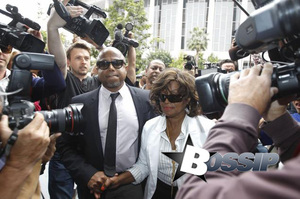
Yesterday, fans gathered outside the courthouse and chanted that they wanted to see justice done for Michael. A forty-year-old fan said: "The company was telling Michael what to do and what not to do. They put him under so much nervous pressure that his sleep was disrupted, and he needed anesthesia to sleep."
As expected, relations between the lawyers on both sides were not pleasant. Previously, tensions had risen between them, with the Jackson lawyers accusing the company’s attorney of starting a world war III over the smallest dispute, and the company’s attorney, in response, calling the Jackson lawyers naive and inexperienced.
The judge, in a session held earlier on Thursday, explained that he would allow the use of monitors in court for the audio and video portion. Panish then said: "AEG can cover the costs." Ponant responded: "Your Honor, please stop these kinds of arguments." Panish replied with a reason: "I’m not AEG—I don’t have billions of dollars."
Source: eMJey.com / AP & CNN & Reuters & LA Times
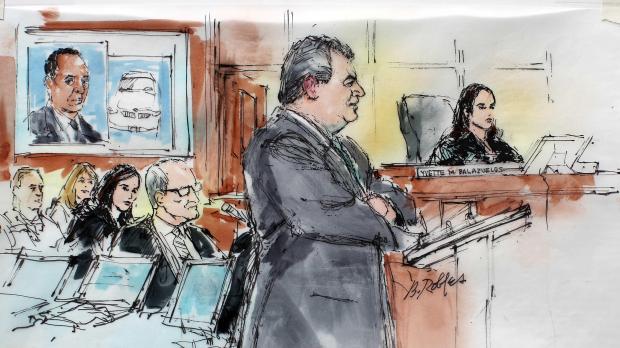 Yesterday, the first hearing on Katherine Jackson’s lawsuit against AEG was held in the presence of a jury.
Katherine, Michael’s mother, is suing AEG for negligence in hiring Dr. Conrad Murray. The other three plaintiffs are Michael Jackson’s children. In ۲۰۰۹, Dr. Murray caused Michael’s death by injecting propofol.
The focus of yesterday’s proceedings was Michael’s dependence on painkillers, sedatives, and the anesthetic propofol. Brian Panish, Katherine’s attorney, in addition to discussing Michael’s medication issues, described Michael in court as a loving son and a worthy father in the presence of his mother and sister and brother—Randy and Rebbie—who had come to court. He also played part of the song "You Are My Life" from Michael’s Invincible album, which was written for his children. He further showed a clip from Michael’s home video involving his children, related to a Christmas morning. In the video, Michael surprised his children with a dog he had bought for them. Showing the video was meant to illustrate the deep emotional relationship between Michael and his children. Katherine broke down in tears when she heard her son’s voice.
Only sixteen journalists and a small number of ordinary people are allowed to attend the courtroom, because nearly thirty other seats are filled by members of the two sides involved in the case. The judge did not allow recording or broadcasting of the court proceedings via television or radio.
Yesterday, members of the jury saw photos and writings about Michael. When Panish spoke about Michael Jackson’s achievements, several of them nodded their heads in approval.
Panish read a handwritten note from Michael that said:
"All of my success has been because I always tried to make my mother proud and put a smile of satisfaction on her lips."
Hearing these words, Katherine wiped her eyes.
Yesterday, the first hearing on Katherine Jackson’s lawsuit against AEG was held in the presence of a jury.
Katherine, Michael’s mother, is suing AEG for negligence in hiring Dr. Conrad Murray. The other three plaintiffs are Michael Jackson’s children. In ۲۰۰۹, Dr. Murray caused Michael’s death by injecting propofol.
The focus of yesterday’s proceedings was Michael’s dependence on painkillers, sedatives, and the anesthetic propofol. Brian Panish, Katherine’s attorney, in addition to discussing Michael’s medication issues, described Michael in court as a loving son and a worthy father in the presence of his mother and sister and brother—Randy and Rebbie—who had come to court. He also played part of the song "You Are My Life" from Michael’s Invincible album, which was written for his children. He further showed a clip from Michael’s home video involving his children, related to a Christmas morning. In the video, Michael surprised his children with a dog he had bought for them. Showing the video was meant to illustrate the deep emotional relationship between Michael and his children. Katherine broke down in tears when she heard her son’s voice.
Only sixteen journalists and a small number of ordinary people are allowed to attend the courtroom, because nearly thirty other seats are filled by members of the two sides involved in the case. The judge did not allow recording or broadcasting of the court proceedings via television or radio.
Yesterday, members of the jury saw photos and writings about Michael. When Panish spoke about Michael Jackson’s achievements, several of them nodded their heads in approval.
Panish read a handwritten note from Michael that said:
"All of my success has been because I always tried to make my mother proud and put a smile of satisfaction on her lips."
Hearing these words, Katherine wiped her eyes.
 Panish then continued by describing AEG executives as "cruel and heartless" men who did not value even a penny’s worth of Michael’s health, and who ignored the ethical problems of the doctor specifically hired for him. Panish said that the company had put Murray on a crossroads. They forced Murray to choose between high pay and caring for Michael’s life. Panish said AEG was heavily involved in competition with other companies and wanted Michael Jackson’s tour to happen no matter what.
Panish told the jury: "We are not seeking sympathy or compassion. We want right and justice."
The jury members, who receive $۱۵ per day for attending court, will decide whether AEG—one of the major concert promoters—must pay Katherine and Michael’s children billions of dollars in damages.
Panish said in court that the company knew Michael was physically and emotionally weak to perform this tour, and that weeks after Murray began working as his personal doctor—and during the time when he was rehearsing for the tour—Michael’s condition was "rapidly deteriorating."
Panish considered Murray’s request for a $۵ million salary as another red flag that the company ignored. In the end, the company agreed to pay a monthly salary of $۱۵۰,۰۰۰. Another doctor told AEG that he would do Murray’s job for a salary of $۴۰,۰۰۰, on the condition that Michael not be given a specific drug.
Panish showed the jury a video of Martin Humm, one of the company’s experts. In the video, it was said that Murray’s request was arrogant. Humm says in the video: "Murray’s request rang alarm bells for us because he asked for a huge amount of money."
Panish went on to explain that the company ignored that warning and hired Murray.
One of the cornerstones of this case is an email that Paul Gongaware, the company’s vice CEO, sent eleven days before Michael’s death. The email discussed concerns from Kenny Ortega, the tour director. Murray had prevented Michael from attending one of the rehearsal meetings, which upset Ortega.
In the email, Gongaware wrote: "We need to remind Murray that it is this company that pays his salary, not MJ. We need to remind him of his duties."
Jackson family lawyers are trying to prove that the company forced Murray to make Michael attend rehearsal meetings despite his illness, relying on Murray’s weakness—his need for money and his fear of losing his high-paying job.
Gongaware said he did not remember writing the email, which Katherine’s lawyers call a "winning card."
Gongaware, who managed Michael’s dangerous and history tours in the ۱۹۹۰s, knew that Michael had a history of using painkillers and used them during his tours to be able to sleep.
Panish showed another video in which a doctor testified that in ۱۹۹۳ he had warned Gongaware about this issue.
Dr. Stuart Finkelstein: "We felt the need for intervention and mediation in this matter. We needed to apply addiction withdrawal care."
Panish also showed another email dated March ۲۰۰۹. This email was sent by Randy Phillips, the company’s CEO, to Tim Leiweke, the former CEO of the parent company AEG, before Michael’s press conference in London (March ۵—for announcing the tour). In the email, Phillips wrote that Michael had been drinking alcohol and was not willing to attend the conference and address his fans:
"This is the most terrible thing I’ve ever seen. Emotionally, he is completely paralyzed and in a mess. Now that it’s showtime, he is full of doubt and hates himself. He is terrified to the point of death."
Panish says Michael’s behavior was only one of the red flags the company ignored.
He addressed the jury again and reminded them that the fate of the case is in their hands. He also asked them to judge the company’s performance, not Michael’s issues.
"Michael paid a heavy price. He died. He paid the price for his work."
In this way, Panish asked the jurors not to blame Michael any further for his own death.
Panish then continued by describing AEG executives as "cruel and heartless" men who did not value even a penny’s worth of Michael’s health, and who ignored the ethical problems of the doctor specifically hired for him. Panish said that the company had put Murray on a crossroads. They forced Murray to choose between high pay and caring for Michael’s life. Panish said AEG was heavily involved in competition with other companies and wanted Michael Jackson’s tour to happen no matter what.
Panish told the jury: "We are not seeking sympathy or compassion. We want right and justice."
The jury members, who receive $۱۵ per day for attending court, will decide whether AEG—one of the major concert promoters—must pay Katherine and Michael’s children billions of dollars in damages.
Panish said in court that the company knew Michael was physically and emotionally weak to perform this tour, and that weeks after Murray began working as his personal doctor—and during the time when he was rehearsing for the tour—Michael’s condition was "rapidly deteriorating."
Panish considered Murray’s request for a $۵ million salary as another red flag that the company ignored. In the end, the company agreed to pay a monthly salary of $۱۵۰,۰۰۰. Another doctor told AEG that he would do Murray’s job for a salary of $۴۰,۰۰۰, on the condition that Michael not be given a specific drug.
Panish showed the jury a video of Martin Humm, one of the company’s experts. In the video, it was said that Murray’s request was arrogant. Humm says in the video: "Murray’s request rang alarm bells for us because he asked for a huge amount of money."
Panish went on to explain that the company ignored that warning and hired Murray.
One of the cornerstones of this case is an email that Paul Gongaware, the company’s vice CEO, sent eleven days before Michael’s death. The email discussed concerns from Kenny Ortega, the tour director. Murray had prevented Michael from attending one of the rehearsal meetings, which upset Ortega.
In the email, Gongaware wrote: "We need to remind Murray that it is this company that pays his salary, not MJ. We need to remind him of his duties."
Jackson family lawyers are trying to prove that the company forced Murray to make Michael attend rehearsal meetings despite his illness, relying on Murray’s weakness—his need for money and his fear of losing his high-paying job.
Gongaware said he did not remember writing the email, which Katherine’s lawyers call a "winning card."
Gongaware, who managed Michael’s dangerous and history tours in the ۱۹۹۰s, knew that Michael had a history of using painkillers and used them during his tours to be able to sleep.
Panish showed another video in which a doctor testified that in ۱۹۹۳ he had warned Gongaware about this issue.
Dr. Stuart Finkelstein: "We felt the need for intervention and mediation in this matter. We needed to apply addiction withdrawal care."
Panish also showed another email dated March ۲۰۰۹. This email was sent by Randy Phillips, the company’s CEO, to Tim Leiweke, the former CEO of the parent company AEG, before Michael’s press conference in London (March ۵—for announcing the tour). In the email, Phillips wrote that Michael had been drinking alcohol and was not willing to attend the conference and address his fans:
"This is the most terrible thing I’ve ever seen. Emotionally, he is completely paralyzed and in a mess. Now that it’s showtime, he is full of doubt and hates himself. He is terrified to the point of death."
Panish says Michael’s behavior was only one of the red flags the company ignored.
He addressed the jury again and reminded them that the fate of the case is in their hands. He also asked them to judge the company’s performance, not Michael’s issues.
"Michael paid a heavy price. He died. He paid the price for his work."
In this way, Panish asked the jurors not to blame Michael any further for his own death.
 At the start of the jury discussion, Martin Ponant, the company’s attorney, warned the jury:
"We are going to show you some unpleasant things. There is no other way for the company to keep the darkest and worst secrets of Michael Jackson from being revealed, because it has to defend itself against the accusation from the Jackson family that holds it responsible for Michael’s death."
Ponnant addressed the point that Gongaware and other company executives were not aware that Michael was using propofol as a sleeping aid, and that knowing this was even impossible for them.
"AEG didn’t know anything about a decade of propofol use by him. They only hold concerts—how could they know about such things?"
He promised that Michael’s former wife and the mother of his children, Debbie Row, would say that in the ۱۹۹۰s she helped Michael’s doctor inject propofol into her. At that time, Debbie Row was a nurse.
"She witnessed many doctors in hotel rooms putting Mr. Jackson, who was involved in the tour, to sleep with propofol."
He listed the tour in cities like Munich, London, and Paris as examples.
Ponnant added: "The truth is that Mr. Jackson fooled everyone. He kept doctors who could have helped him close by, and hid his darkest and worst secret from everyone."
Ponnant said that his remarks mean the company could never have recognized these warning signs. He emphasized that the Jackson family would talk about their unsuccessful efforts to help Michael quit his addiction to painkillers, and that they themselves had no knowledge of Michael’s propofol use.
"If they didn’t know about something like that, then how can we expect the company to have known?"
Ponnant said that Michael personally hired Murray, and Murray’s dependence on painkillers had fatal consequences for him. He blamed Michael for his own death.
"In this case, we are dealing with personal choices. Every person is responsible for their own decisions. The tragedy of Mr. Jackson’s death was not caused by the company."
The attorney continued: "Murray was never an employee of the company. He was employed by Michael for four years until he died. The company never paid Murray anything."
He played part of a video of Murray’s interview with police two days after Michael’s death, in which he said:
"I am an employee of Michael Jackson, but my salary is paid by AEG."
Ponnant focused on Dr. Murray’s efforts to obtain drugs for Michael. He presented a list of forty doctors and nurses who had been contacted to obtain the drugs, and said that allegations of child sexual abuse against Michael—which led to a court case in ۲۰۰۵ and in which Michael was acquitted—had contributed to Michael’s increased dependence on these drugs.
At the beginning of yesterday’s session, the discussion moved to Michael’s concerts around the world. Arthur Erk, one of the experts for the Jackson family, said Michael could have earned $۱.۴ billion from the This Is It tour worldwide and ۲۶۰ concerts. Katherine’s attorney also noted that at the time, AEG considered a global tour to be plausible.
Perry Sanders, one of Katherine’s lawyers, reminded the court: "When This Is It tickets went on sale in March ۲۰۰۹, demand to see Michael’s performances was at its highest. In history, no one has ever had demand at that level. Nobody even came close. Demand was so high that after a few hours, two million seats were filled."
He referred to an email that Randy Phillips sent to the owner of AEG: "To cover this demand, even ۱۰۰ concerts is not enough!"
Sanders added that on every global tour, Michael filled Tokyo Dome Stadium multiple times.
However, the company’s attorney, Sabrina Strong, questioned these statements and said she doubts Michael Jackson would have died before completing ۵۰ concerts in London. She said that even at his peak, Michael had not performed ۲۶۰ concerts on tour and had not earned such revenue. She added that no one had done this except the band Cher (the female singer).
Erk then estimated that before turning ۶۵, Michael could have held four more tours. The judge also joined the discussion, saying it is likely because the Rolling Stones—who are in their seventh decade of life—still tour.
Erk also mentioned other possible revenue projects, including film and clothing design, and Strong said Michael had a habit of rejecting projects and wasting opportunities, so she considered Erk’s claim to be a fantasy.
However, Katherine’s lawyers managed to convince the judge to allow Arthur Erk to also present his statements to the jury.
Yesterday, fans gathered outside the courthouse and chanted that they wanted to see justice done for Michael. A forty-year-old fan said: "The company was telling Michael what to do and what not to do. They put him under so much nervous pressure that his sleep was disrupted, and he needed anesthesia to sleep."
As expected, relations between the lawyers on both sides were not pleasant. Previously, tensions had risen between them, with the Jackson lawyers accusing the company’s attorney of starting a world war III over the smallest dispute, and the company’s attorney, in response, calling the Jackson lawyers naive and inexperienced.
The judge, in a session held earlier on Thursday, explained that he would allow the use of monitors in court for the audio and video portion. Panish then said: "AEG can cover the costs." Ponant responded: "Your Honor, please stop these kinds of arguments." Panish replied with a reason: "I’m not AEG—I don’t have billions of dollars."
Source: eMJey.com / AP & CNN & Reuters & LA Times
At the start of the jury discussion, Martin Ponant, the company’s attorney, warned the jury:
"We are going to show you some unpleasant things. There is no other way for the company to keep the darkest and worst secrets of Michael Jackson from being revealed, because it has to defend itself against the accusation from the Jackson family that holds it responsible for Michael’s death."
Ponnant addressed the point that Gongaware and other company executives were not aware that Michael was using propofol as a sleeping aid, and that knowing this was even impossible for them.
"AEG didn’t know anything about a decade of propofol use by him. They only hold concerts—how could they know about such things?"
He promised that Michael’s former wife and the mother of his children, Debbie Row, would say that in the ۱۹۹۰s she helped Michael’s doctor inject propofol into her. At that time, Debbie Row was a nurse.
"She witnessed many doctors in hotel rooms putting Mr. Jackson, who was involved in the tour, to sleep with propofol."
He listed the tour in cities like Munich, London, and Paris as examples.
Ponnant added: "The truth is that Mr. Jackson fooled everyone. He kept doctors who could have helped him close by, and hid his darkest and worst secret from everyone."
Ponnant said that his remarks mean the company could never have recognized these warning signs. He emphasized that the Jackson family would talk about their unsuccessful efforts to help Michael quit his addiction to painkillers, and that they themselves had no knowledge of Michael’s propofol use.
"If they didn’t know about something like that, then how can we expect the company to have known?"
Ponnant said that Michael personally hired Murray, and Murray’s dependence on painkillers had fatal consequences for him. He blamed Michael for his own death.
"In this case, we are dealing with personal choices. Every person is responsible for their own decisions. The tragedy of Mr. Jackson’s death was not caused by the company."
The attorney continued: "Murray was never an employee of the company. He was employed by Michael for four years until he died. The company never paid Murray anything."
He played part of a video of Murray’s interview with police two days after Michael’s death, in which he said:
"I am an employee of Michael Jackson, but my salary is paid by AEG."
Ponnant focused on Dr. Murray’s efforts to obtain drugs for Michael. He presented a list of forty doctors and nurses who had been contacted to obtain the drugs, and said that allegations of child sexual abuse against Michael—which led to a court case in ۲۰۰۵ and in which Michael was acquitted—had contributed to Michael’s increased dependence on these drugs.
At the beginning of yesterday’s session, the discussion moved to Michael’s concerts around the world. Arthur Erk, one of the experts for the Jackson family, said Michael could have earned $۱.۴ billion from the This Is It tour worldwide and ۲۶۰ concerts. Katherine’s attorney also noted that at the time, AEG considered a global tour to be plausible.
Perry Sanders, one of Katherine’s lawyers, reminded the court: "When This Is It tickets went on sale in March ۲۰۰۹, demand to see Michael’s performances was at its highest. In history, no one has ever had demand at that level. Nobody even came close. Demand was so high that after a few hours, two million seats were filled."
He referred to an email that Randy Phillips sent to the owner of AEG: "To cover this demand, even ۱۰۰ concerts is not enough!"
Sanders added that on every global tour, Michael filled Tokyo Dome Stadium multiple times.
However, the company’s attorney, Sabrina Strong, questioned these statements and said she doubts Michael Jackson would have died before completing ۵۰ concerts in London. She said that even at his peak, Michael had not performed ۲۶۰ concerts on tour and had not earned such revenue. She added that no one had done this except the band Cher (the female singer).
Erk then estimated that before turning ۶۵, Michael could have held four more tours. The judge also joined the discussion, saying it is likely because the Rolling Stones—who are in their seventh decade of life—still tour.
Erk also mentioned other possible revenue projects, including film and clothing design, and Strong said Michael had a habit of rejecting projects and wasting opportunities, so she considered Erk’s claim to be a fantasy.
However, Katherine’s lawyers managed to convince the judge to allow Arthur Erk to also present his statements to the jury.
Yesterday, fans gathered outside the courthouse and chanted that they wanted to see justice done for Michael. A forty-year-old fan said: "The company was telling Michael what to do and what not to do. They put him under so much nervous pressure that his sleep was disrupted, and he needed anesthesia to sleep."
As expected, relations between the lawyers on both sides were not pleasant. Previously, tensions had risen between them, with the Jackson lawyers accusing the company’s attorney of starting a world war III over the smallest dispute, and the company’s attorney, in response, calling the Jackson lawyers naive and inexperienced.
The judge, in a session held earlier on Thursday, explained that he would allow the use of monitors in court for the audio and video portion. Panish then said: "AEG can cover the costs." Ponant responded: "Your Honor, please stop these kinds of arguments." Panish replied with a reason: "I’m not AEG—I don’t have billions of dollars."
Source: eMJey.com / AP & CNN & Reuters & LA Times