Contradictions surrounding a new book about Michael Jackson
Michael Jackson’s new book titled Untouchable, written by Randall Sullivan, was released on November 13 on Amazon.
As you previously read, this book has been accused by some media outlets and Michael fans of making up lies, while others—including Thomas Mesereau, Michael’s defense attorney in the 2005 court case—have described it as an enlightening and engaging book.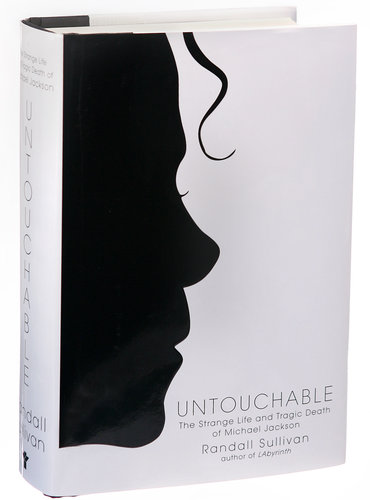
Recently, Mesereau uploaded a video to YouTube in which he describes opposition to this book as evil, nasty, and hateful—responding to the wave of criticism against it on the internet. Mesereau, who has always defended Michael’s innocence, had previously earlier called Michael’s exoneration from his false accusations the best point of the book. Mesereau said that the internet wave of opposition to this book was started by people who do not want the public to know the truth about Michael’s innocence.
On the other hand, die-hard Michael fans—who have spent years studying his life and career—believe they do not need a newly arrived person to show them the directions of Michael Jackson’s life.
Besides, books that focus on the positive aspects of Michael’s life are supported less by publishers, but by adding a pinch of controversy they can guarantee sales.
Fan violence against Sullivan stems from the fact that in his interviews he presented his personal view about Michael’s innocence as neutral. He says he is not one hundred percent sure whether Michael was innocent, and in his own words: "There is a shadow of doubt about this."
Such a statement is not acceptable within the Michael fan community, and they are not willing to buy a book from someone who personally doubts the innocence of their king.
In his book, Sullivan describes Michael Jackson as a brilliant and sharp man who, as a child, was subjected to violence and mistreatment by his father, and exploited by his family. Michael provided them with money through singing, performing on stage, and touring.
Sullivan, a former assistant editor at Rolling Stone and the author of books about Tupac Shakur and Biggie Smalls, says he previously did not feel much enthusiasm for Michael and his music until, after his death, the magazine asked him to write an article about him. That was when he realized he had become far more captivated by the King of Pop than he ever imagined.
"The complexities of his personality and the disturbing dimensions of his life affected me, and his image as an abuser of a child lost its former strength in my eyes."
To examine the accusations against Michael, Sullivan went to Thomas Mesereau, and this lawyer helped him greatly. Mesereau’s statements are included in Sullivan’s book. Today, Sullivan does not consider Michael guilty, although he still has doubts; however, he believes Michael deserves to be cleared of his accusations.
Sullivan is not the first person to go down this path. The documentary Norlend’s Untold Story and/or the book A Conspiracy Against Michael Jackson (Michael Jackson Conspiracy) by Aphrodite Jones, and then the documentary True Crime by Jones, had previously been released with the aim of proving Michael’s innocence—and, of course, they were met with media silence.
It is clear that Michael fans want the whole truth, not just part of it. Most of them believe this book is mixed with lies, and perhaps even heroic words like those of Thomas Mesereau will not convince them to buy it.
Roger Friedman also wrote and published a review of this book. According to him, Randall Sullivan’s Untouchable is a mixture of previously published materials that, although it was trying to appear firsthand, ended up backfiring.
Friedman: "In this book, he quotes me 87 times and puts kind words about me into circulation (for which I’m grateful), but I don’t know Mr. Sullivan and I have never met him."
Friedman wrote that David Jones, the writer of Michael Jackson articles for Daily Mail, would also see his own writings in this book many times over. He described reading this book as a review of memories and said Sullivan’s confused feelings about the 2005 trial were due to his absence from the courtroom. Roger Friedman had been attending court sessions for months.
He writes: "Sullivan wasn’t in court, and that’s why he missed two ridiculous events in his book. First was when Jannet Arvizo, the crazy mother who accused Michael of sexually abusing her son, told Thomas Mesereau that Michael tried to put her children on a balloon and kidnap them. That was one of Thomas Mesereau’s brilliant days, and it’s a shame Sullivan didn’t record this event in his book, because he talked about praising and complimenting Mesereau with him. But even so, Mesereau’s outstanding performance in court is not properly portrayed in this book."
Friedman continues: "I also doubt that Sullivan has watched the home videos Michael released in his battle against Martin Bashir’s documentary Living with MJ. In this documentary, Michael tells Martin Bashir that he wanted to arrange a star-studded party for the chimp Bubbles. Michael says: 'Lacey (the cartoon dog that later became a film, and a dog with the same name played in it) can’t take part in this celebration because she’s probably dead.' Reporters watched this video four times. These were the best moments of the trial... (the prosecutor) wasted our time in this court for four months."
In another article, Friedman points to mistakes in the book. For example, Sullivan wrote that Michael, during a Christmas party he personally arranged in Bahrain, hosted the Cassio family, and when Frank Cassio arrived, he was extremely excited.
"I had told this story that same year. Frank never traveled to Bahrain, and he even mentions this in his book. Michael hadn’t met Frank from 2003 to 2007.
The main problem with Sullivan is that when these events happened, he had no presence in Michael Jackson’s world, and now—after his death—he’s looking for money. Imagine someone writing Batman’s biography and only interviewing the Penguin, the Catwoman, the Riddler, and the Joker, but not going to his allies Robin, Alfred, and Inspector Gordon.
His sources include Teme Teme, Raymond Binn, Brian Oxman, Ray Chandler (Shaky’s uncle in 1993), and a number of others. Oxman, as a disbarred lawyer, is not allowed to practice, but Sullivan does not clearly mention this truth in his book because he needs Oxman to appear as a reliable source. Teme had infiltrated Michael’s life like a parasite, and in the final months of Michael’s life, he was pushed out by people who still cared about him. It seems Teme and Sullivan became close friends because Sullivan wrote: 'I tried to arrange the reconciliation of Teme with the Jackson family and the Michael Jackson Foundation.'"
(The Foundation filed a lawsuit against Teme Teme, accusing him of trying to scam and deceive Michael.)
"This book reveals that Sullivan introduced Michael’s mother, Katherine Jackson, to Perry Sanders, who later became her lawyer. Sanders was a friend of Sullivan. After that, Sullivan showed another face, and Sanders and his assistant, Sandy Ribera, were used as sources in Sullivan’s book. He even says he gave Ribera a copy of the book so she could share her opinion about it.
I have never met Teme, but I once listened to his ambiguous statements over the phone. He finally admitted to me that, contrary to his name, Dr. Teme does not have a medical degree and is a special minister of Senegal. On March 23, 2009, I received an email from the Senegalese embassy in Washington, D.C., saying that Senegal does not have a minister named Teme.
Sullivan has no interest in this kind of information. In his book he wrote: 'I found someone at the embassy who, of course, didn’t know Teme. I saw Teme’s Senegalese passport, which had the title of special minister written on it'... I have the embassy email, and if Sullivan can’t prove his claim, I think something will happen to him.
His book is full of assumptions. At the end of the book he wrote: 'I know that the long chapter about plastic surgery may seem over-described and/or mixed with personal opinions. This is the result of three years of research and many conversations with people who knew MJ. This is my personal opinion, but it is the personal opinion of an informed person.' Excuse me? He wrote a 700-page book that contains no truth at all, and is only the personal opinions of an informed person."
Friedman goes on to say that Sullivan, in collusion with Teme, is trying to defame Michael’s manager, Frank Dileo:
"Dileo was a complicated man, but he loved Michael and Michael loved him too. When he separated from Michael, he was struggling with many financial problems, while others became wealthy from the fruits of his labor. And now Sullivan has sided with Teme and thinks he can make Dileo look low by portraying Teme as a hero. I won’t allow that. Frank could spot a charlatan well. From the beginning he didn’t like Teme, and now Teme wants revenge on a dead man, and Sullivan is willing to help him at the cost of getting his interview."
Another incorrect detail in this book concerns the hospital where Frank Dileo was admitted:
"Frank Dileo underwent open-heart surgery on March 21, 2011 at Cedars-Sinai Hospital, not in a hospital in Pittsburgh. He was in a coma at Cedars for three months, and then he was transferred to Pittsburgh."
The news agency The Mercury News also wrote in its review titled "A book you don’t need":
"Jackson fans and/or book readers who are curious about the wonders of his stagecraft should, instead of reading this useless and insignificant book, take a look at the documentary film made about the This Is It tour, or the videos from the past thirty years that have been uploaded to YouTube."
The New York Times also described the book as boring, satirical, messy, and incoherent.
Source: eMJey.com / NY Times, Mercury News, Showbiz411, oregonlive