The Pepsi and Michael Jackson Alliance (Download Pepsi Commercial Videos)
Michael Jackson was the first international star to advertise Pepsi. The collaboration began in 1983, following the explosive success of the album Thriller. Michael’s brothers accompanied him on this path, and thus a campaign titled “The New Generation” (the new generation) was created, using a modified version of Billy Jean.
 Fire
Fire
On January 27, 1984, the filming of a Pepsi commercial at the Shrine Auditorium in Los Angeles turned into a fire. Due to a miscalculation by the producers, the scene caught fire, and Michael’s hair caught fire right in front of the eyes of three thousand ordinary people.

He was so calm that many thought it was part of a show. Mike Brando, the son of the late Marlon Brando; was the first person who rushed to Michael and put out the fire. Michael was taken to the Brotman Hospital, and doctors there declared that his survival was a miracle. He had second- and third-degree burns.
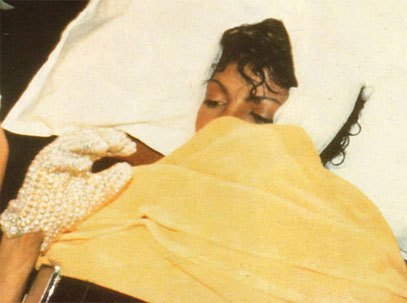
Following this incident, Pepsi paid Michael $1.5 million in damages through an out-of-court settlement. Michael spent all of it on setting up high-pressure oxygen room technology in the hospital for treating patients’ severe burn wounds—an initiative that was named in Michael’s honor “Michael Jackson Burn Center.” But the story didn’t end there. Part of Michael’s scalp hair was lost as a result of the burns, and to hide the wound location, remove extra skin, and enable his hair to regrow, Michael had to undergo surgery on his scalp. Michael never fully recovered from this incident. After Michael’s death, the video related to the fire incident found its way onto the internet. (If you want, download it here.)

The two commercials—“Convention” and “Street”—were the result of Michael and his brothers’ collaboration with Pepsi in the early 1980s. Bob Giraldi directed both videos.
Download Pepsi Street Download Pepsi Convention Dreams (Dreams) — A Dazzling Tour
Dreams was one of the most masterful commercials in the history of the advertising industry. It aired on the televisions of 165 countries worldwide in July 1992. This one-minute ad had an imaginary and unusual atmosphere, ushering Pepsi’s traditional commercials into a new era.
Joe Pytka directed Dreams. Before that, he had directed Michael’s four-part commercial (The Chase).
Dreams was a mix of music, dance, and special effects. In this commercial video, the song “Who Is It,” the fifth single from the album Dangerous, was used. The single was released in Europe and the song “Jam” in the United States.

The commercial was shot like a music video and was highly mysterious and enigmatic. It was made with a 60-person crew over five days in the Culver Studio in Culver City. Today, “Dreams” is recognized as a cornerstone of creative advertising.
Download Pepsi Dreams (with Behind the Scenes)
Joe Pytka said: “Pepsi has always been a pioneer in commercials. They always did things the right way, and Michael Jackson did too.”
Why did Pepsi use Michael? The company didn’t recognize boundaries, and Michael had that same trait. In every city around the world, he had a devoted army of fans—and that was a huge success for Pepsi.
Larry McIntosh, Pepsi’s advertising manager, said: “Pepsi’s job is to create excitement for people’s lives, and to deliver this message, who could be better than Michael Jackson—the undeniable king of pop?”
I’ll Be There was the second commercial from the same period. In this video, Michael is busy playing the piano, while a teenage Michael appears behind him and sings I’ll Be There. The role of the teenage Michael is played by a teen actor, but at the end of the second version of this commercial, images of Michael as a child are used.
Download Pepsi I’ll Be ThereThe second version of this commercial features teenage Michael: Download

Black or White was another commercial that Michael Jackson made for Pepsi during the Dangerous album era. In this ad, he used a modified version of the song “Black or White.”
Download Pepsi Black or WhitePepsi became a sponsor of the Dangerous Tour (1992 to 1993) and also donated more than one million dollars to Michael Jackson’s charity Heal The World. The tour was held to fund the newly established foundation.
Pepsi’s sponsorship deal for Dangerous was the biggest collaboration between a mega-corporation and an artist at that time. The contract also included the release of a special cassette tape. Pepsi said Michael had the song in mind for the album, but since the album’s space was full, Michael didn’t get to finish it. In May 1992, Pepsi released the song in Europe on a limited number of cassette tapes as a promotion for the Dangerous Tour. The song was called “Someone Put Your Hand Out.” Michael recorded the song in April 1992 with the collaboration of Teddy Riley.

Five hundred thousand Pepsi soda cans contained lucky coins that allowed their lucky holders to receive the cassette of this song. The song was also offered as part of Pepsi’s promotional package in June 1992 in Europe and the UK. In addition to the cassette, this package included a Michael poster, a sticker, and a press release about the new Dangerous tour.
The song was supposed to be released on CD in the United States in 1993 as a promotion for Sony Walkmans, but the plan was canceled after the accusations against Michael by Evan Chandler were announced. Special versions of Walkmans with Michael Jackson’s logo and design were supposed to be sold. Buyers of these Walkmans would receive a CD of rare songs, including “Someone Put Your Hand Out,” along with remixes of his famous songs as a prize.

When these accusations were brought against Michael, countless people around the world rose up to support him. One of them was Randy Taraborrelli, Michael’s longtime friend, who had also published a biography book about Michael two years earlier. MTV, Pepsi, and Sony were among his supporters.
Michael continued the tour, but it was announced that due to the use of painkiller pills and threats to his health, several final concerts of the tour would not take place. Michael said that undergoing surgery on his scalp—caused by the Pepsi fire incident—was the reason for taking painkiller pills. Many others believe the other accusations made against him were the reason for this.
Pepsi announced that with the end of the Dangerous Tour, the contract would also end. Many fans who believed the company had distanced itself from Michael and saw this move as their reaction to the accusations and Michael’s dependence on painkiller pills turned their backs on the company and stopped buying Pepsi products. As a result, Pepsi sales dropped worldwide.
When Michael launched his History Tour in 1996, Pepsi was no longer his sponsor.
But in February 2008, a new collaboration between Michael and Pepsi took shape. Pepsi created an advertisement titled Thrillicious, a combination of the words Thriller and delicious, meaning “tasty.” The commercial used Michael’s Thriller song, and supermodel Naomi Campbell played a role in it. (Download it on this page.)
In 2011, the company used Michael Jackson’s presence in a new ad called “Music Icons.” The commercial was shown for the first time during the X Factor talent competition. (Download it on this page.)
This year too, on the occasion of the 25th anniversary of Bad, the Michael Jackson Foundation and Pepsi entered a new collaboration by printing Michael’s photo on soda cans.

Previously, we also made Pepsi’s commercials from the BAD era available for download. Click.
Source: eMJey.com