Q&A with Jermaine Jackson
On February 29, the MJJC website arranged an exclusive interview with Jermaine Jackson, Michael’s older brother, in which he answered questions from fans. The interview was held to clear up misunderstandings and create unity between fans and the Jackson family. Below are Jermaine Jackson’s answers to the fans’ questions:

- When famous people say that Michael was addicted to drugs, you correct them, and we appreciate that. But when members of your family say something like that, you stay silent. What is the truth? Do you disagree with them, and have you ever told them to be quiet or to express their claims in a better way?
Jermaine Jackson: I don’t disagree with them because they’ve all accepted that Michael died as a result of using propofol, and that he used it because he couldn’t sleep—not because he was “addicted.”
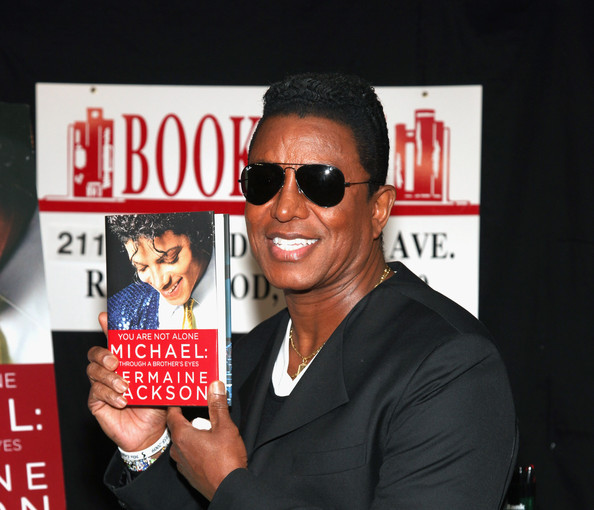
I think it’s important to distinguish this from the addiction he once had to painkiller pills. Murray (the doctor who was found guilty in Michael’s murder case and went to prison) and the media confused these two and attribute his death to addiction. That’s why I wrote a book and explained all this nonsense.
In the years 2001 and 2002, my sisters and brothers privately shared their concerns with Michael about his drug use. They talked about it. But the fact that they spoke to him about it in those years doesn’t mean they considered him an addict in 2009. He wasn’t an addict.
- Why do you and many members of your family justify or downplay the bad behavior that Michael said Joe (his father) had toward him? Of course Michael was deeply hurt by the way Joe treated him. You and your family always say it was a parenting style, but it wasn’t. Don’t you think Michael had the right to express his opinion and say that, from his point of view, this was a new kind of abuse and mistreatment? Whether you agree or not?
Jermaine Jackson: Yes, Michael had that right, and I do too, because I was raised that way by Joseph (his father). I was trained; I wasn’t mistreated. He treated us the same, and I’m not sorry for saying this. In every family, different interpretations can exist of the same incident, and I’ve expressed my point of view.
In many biographies I’ve read, Joseph is described in an exaggerated and fictional way, as if he were a devil. Joseph was never a devil. Michael agreed with what I’m saying.
I don’t deny Michael’s experiences and feelings. Instead, I tried to create balance and do what Michael taught all of us: understand each other more, and be compassionate and kind to one another. That’s why in my book I used excerpts from his speech at Oxford University (2001), because he didn’t have the sense of judgment and anger that some fans have toward Joseph. Michael forgave him. He didn’t judge him. He loved him—and history should know that.
- What convinced you that Tohme Tohme (Tohme R. Tohme, former talent manager) deserved to meet Michael and work with him? What did you think when your brother was saying on the phone that he didn’t like Tohme, and how everything—including Michael’s money—was under his control, and he wouldn’t allow Michael to meet people he didn’t like?
Jermaine Jackson: I explained this in a few pages in my book because I know how worried fans are about this, and I wanted to explain everything to them. The story is fully described in the book. I can’t recount the entire story right now. But the most wrong thing that has been said is that I introduced Tohme to Michael as a partner or as a manager.
At first, I met Tohme as someone who could help with providing the cash flow for the Crystal City project (as described in the book). Michael and I were working on this plan in 2007. I had four meetings with Michael, during which we put the plan on paper.
I met Tohme so that we could raise the 5–6 billion dollars that this plan required. I never told him that Michael was involved in this project—never once.
A little after that, I heard that Norland was in trouble (read). They were talking about “mortgage execution” (early and forced sale of assets). This was the first time (April 13, 2008) that I went to Tohme because of Michael. Because if this man could collect billions of dollars for a leisure project, then he must have been able to find a businessman who could save Norland by giving 4–23 million dollars. That’s what I thought.
In summary, Tohme introduced me to Tom Barrack at Colony Capital. Don’t get it wrong—Tohme saved my brother’s asset. People don’t know how serious things were at that time.
After that, I wasn’t involved in the dealings anymore, and Tohme turned on me. He wasn’t my friend, and I knew he wasn’t friendly with Michael either. But from April 2008 onward, any decision or choice that was made had nothing to do with me. Michael was his own man and made decisions for himself.
- Why was Tohme allowed to be present at the UCLA hospital (after Michael’s death on the afternoon of June 25, 2009) and speak to the media? At that time, Michael had fired him.
Jermaine Jackson: I don’t know why he was there or who allowed him. When I arrived at the hospital, he was in the hallway. But you should pay attention that in that situation, I wasn’t thinking about these things—why he was there and why he was giving a speech. That day, everything was dark.
- What is your opinion of Tohme now?
Jermaine Jackson: My opinion of him? He was like the other people who entered Michael’s life. He didn’t understand the position he was in. I don’t think he had bad intentions, but he became arrogant. In those late days, his behavior toward Michael had become far too harsh and fiery.
- Do you believe that Dr. Murray’s actions on June 25 directly led to Michael’s death? Or do you see it through your sister Latoya’s* perspective? In other words, who is responsible for Michael’s death?
(*Latoya Jackson believes that unknown people issued the order for Michael’s death. She considers Sony and the Michael Foundation among those people.)
Jermaine Jackson: A lawsuit case is ongoing against Conrad Murray (Michael’s parents are suing him), and I don’t want to get into this matter. But I will say this much: Murray was the one who injected my brother with a lethal amount of propofol. However, that doesn’t answer all my questions. In addition, Michael’s death could have been prevented by many people, long before June 25, 2009. He had been dying for a long time before his death, and no one did anything, and no one gave us—his family—any warning. If I had known what I know today, I would have gone there and ended this situation and taken him to the hospital.*
(*This refers to Michael’s insomnia problem and his use of the anesthetic propofol.)
- Why were you surprised that Michael’s will didn’t mention the names of his brothers, sisters, or his father? Did you think that because he took care of all of his family while he was alive, it would be the same after his death? Did Michael ever talk to his family about this?
Jermaine Jackson: Who said I was surprised? We never talked about Michael’s death. Why would we talk about it? All family members pursue their music careers, and we’ve always made our own money.
Michael wrote his will the way a father should. He had to take care of his own children, and of course he also included our mother’s name. Naming her is like naming us. Mother’s milk takes care of her milk children. That’s the philosophy that exists and is understood in our family.
- What do you think about the people appointed by Michael to carry out his will (John Branca and John McClain)? Do you approve of your brother’s choice? Why does it seem that the Jackson family is always against his foundation? Because you lead projects that the foundation doesn’t support, and you talk about the foundation in a hostile way in the media.
Jermaine Jackson: None of the Jacksons need anyone’s approval to carry out a project that is done in memory of their own brother. We weren’t appointed as a family in 2002 (the will was drafted in 2002). From the moment we were born, we were connected by blood.
- Why do you and your family keep saying that you were supposed to work with Michael again and have a joint album and concert, while everyone knows Michael no longer wanted to work with his family? For example, on October 29, 2008, you announced news about a family concert. The next day, Michael released a statement saying he wouldn’t have any joint work with his sisters and brothers. Why did you publish the concert announcement before consulting with Michael?
Jermaine Jackson: Who says everyone knows he didn’t want to work with us? They consider a specific situation and a specific date, and then extend it to all times.
Everyone doesn’t know everything. Michael had agreed to do a final, last performance with his brothers, and that’s why our mother wanted to see all of us on stage together one more time. She never thought Michael would pass away before her.
Michael promised her—not us. And we hadn’t discussed it. A joint concert with his brothers was one of the few plans he had in mind to carry out after the end of the This Is It tour. The concert in China and the performance in the Super Bowl* finale in 2010 (discussed before John Branca returned to Michael’s team) were among these plans.
(*In 1993, during the halftime break of the Super Bowl finale, Michael performed a show that is considered the best Super Bowl halftime show in the history of the event.)
- Your former wife, Margaret Maldonado (Margaret Maldonado), said that you were very jealous of Michael. Suzanne de Passe (Suzanne de Passe—an associate at Motown*) also said something similar in her 1993 interview with Oprah Winfrey, claiming that the brothers were jealous of Michael. Were you ever jealous of Michael during any period of your life? And why do other people have such an opinion about you?
(As children, the Jackson brothers signed with Motown as a group called the Jackson Five.)
Jermaine Jackson: People pay attention to what other people say. I don’t care what they think, and it doesn’t matter whether they know me closely or not—they don’t understand what’s in my heart. No one can claim that I was jealous of Michael. There were differences at times, but there was no jealousy.
I’m proud of Michael now as much as I was proud of him while he was alive. I wrote this book to tell our story and our journey in my own words, not anyone else’s.
- In your book and in interviews you did to promote the book, you talked about the importance of the family foundation and how unity makes you strong. Then you spoke about Michael’s career and said how industry activists tried to separate him from his brothers, and that it didn’t bring good results. But you yourself were the first person in the family to pursue your solo career by staying at Motown, and you separated from the brothers’ group that had a deal with Epic. If you had been as successful in this career as Michael, do you think you would have been as eager to return to the family group as you are now?
Jermaine Jackson: I don’t think I had thought about leaving the Jackson Five to this extent until writing this book. I think my leaving the group could have been an example for Michael, because he saw that when I was able to separate from the group, then he could too. While writing this book, I saw it in a way I had never seen before.
But I use Joseph’s story about the tree and its branches... when we’re together, we have more power. If you read the book, you’ll understand how alone I was and the only thing I wanted was unity with my brothers. Success aside, I always wanted to return to the roots.
But the issue of Michael and the people in Hollywood who tried to make him isolated—that’s something else. I’ve said everything in my book, and when people read it, they decide for themselves how to answer this question: Michael was a huge superstar, but did he also have a better personal life when he separated from his family? Now I’ll tell you. If the family had been present at the forum or at Staples Center (the rehearsal location for the This Is It tour), rehearsals would have been shut down much earlier, and Michael would still be alive.*
(*Many believe that the concern about the tour caused Michael’s chronic insomnia to intensify. For sleep, he used the anesthetic drug propofol that Dr. Murray injected him with. The drug that ultimately took his life.)
- In your book, you wrote that you didn’t write the song Word to the Badd*, but in your 1991 interview—where the film and its text are available—you said you wrote the song. For example, in an interview with Time magazine you said: “I wrote this song and it came from the bottom of my heart. I wanted to help my brother understand the truth.” Now which is the real truth? Do you accept responsibility for this song? And even if you weren’t the songwriter, do you agree that reading and publishing it is as bad as writing it?
(*Read the story of this song here: here.)
Jermaine Jackson: I know how some people are eager to connect me to these kinds of media reports. Regardless of what I said in this interview or that interview, the bottom line is that I didn’t write this song, and whoever had a hand in making it knows that. Why don’t they talk about the interviews where I said I didn’t write this song?
The truth of the story is what I told years ago and what I wrote in my book. I accepted responsibility for this years ago, and my regret is real. I’m sorry that fans can’t move on from this and forget it, unlike Michael. But honestly, what matters to me is that we solved things like two brothers.
- If you have vitiligo (a genetic disease that removes skin color), as you said in your book, what reason made you not take action to support him when everyone doubted Michael’s statements about this disease? Don’t you think that if you had talked about your own illness instead of mocking your brother in the song (Word to the Badd), it would have been better for Michael?
Jermaine Jackson: From our point of view, the media lies about Michael whitening his skin were stupid and meaningless. But I’m saying what Michael said: if we spend all our time clarifying each and every rumor and lie that has been said or written, we can’t get on with our lives.
When I started writing this book, I didn’t intend to say anything about this (vitiligo). Our family is very private. But one day I mentioned something about it, and my writer (the person who wrote this book in Jermaine’s voice) thought it was an important topic. We talked about it, and when I was convinced it mattered, I agreed that it should be included in the book.

- In the book you claim that Michael didn’t have a mobile phone. There are many photos showing Michael talking on a mobile phone, and many guards and friends have confirmed that Michael had and used a mobile phone. Is it possible that Michael simply didn’t want to talk to you?
Jermaine Jackson: The interpretation people make from a photo—where he appears to be talking on a mobile phone—doesn’t mean that Michael had a mobile phone of his own. As far as I know, there was no phone we could talk to him directly with. Unless you were calling from someone else’s phone.
- Why did you think it was right to say that you had planned to help Michael escape* (if he were convicted in the 2005 court case)? Leaving the country or fleeing (before or after the verdict) is a crime. Do you regret writing this?
(*Read the escape plan here: here.)
Jermaine Jackson: Why should I regret it? Again, another example of the media manipulating my words. I didn’t say that “if he were convicted,” I would help him flee. I said that a few days after the trial began, the thought came to my mind. I didn’t say it was wise. Without logic involved, I was thinking about such a thing.
I wasn’t thinking about whether it was right or wrong. My brother was being pursued, arrested, and sent to court for something he hadn’t done. And I was supposed to just sit and trust a system that was putting pressure on him? I had no faith in the judicial system, and I saw the nightmare of an innocent man going behind bars. In the book, I wrote about the thoughts and feelings I experienced during that time. It’s true, and I don’t regret it.
- How much of Michael’s success was due to you and your family? Do you believe Michael’s legacy belongs to him alone and stands in a distinct place separate from the Jackson Five and the Jacksons (after the deal with Epic, the group was renamed the Jacksons)?
Jermaine Jackson: To the same extent that Paul McCartney’s success is due to the Beatles*. The Jackson Five was Michael’s launching pad. Everyone starts from somewhere.
(*Many believe the Jackson Five’s success is due to Michael.)
Michael’s legacy belongs to him, and it stands in its own special and prominent place. As his brothers, we’re proud that we were with him in the early days, because the Jackson Five is part of Michael Jackson’s success story. History can’t separate these two.
- Is it true that the Jackson family is considered an incredible power in the history of American music and the royal family of America? But do the Jackson family know that fans don’t consider the Jackson family legacy and Michael’s legacy as one and the same? Especially across the borders, where the Michael fan community is very large. How do you think you can expand the Jackson family legacy without pushing Michael’s fans away?
Jermaine Jackson: I think I answered this question to some extent in the previous one. We don’t want to push anyone away. Michael had the most amazing fans who, alongside us, are extremely proud of his legacy. Michael’s legacy and the Jackson legacy are intertwined, without being identical. I think that’s the best way to express it. Our legacy began on this platform (Jackson 5), and then Michael separated his path and went another way to create a different legacy above the Jackson Five legacy.
- After all the privacy and protection Michael applied to his children, why has your family put them out into the public and ignored their privacy? Especially since they have public tweets and are being attacked by enemies. Do you understand that, from fans’ point of view, this behavior is completely contrary to the approach Michael had in mind for them? Some fans think Michael’s wishes have been violated. Please help us understand this.
Jermaine Jackson: We don’t ignore their privacy, and Michael’s wishes haven’t been violated. These kids are being well cared for and supported.
Michael entrusted his children to our mother because he knew they would receive the love, care, and attention they needed. As every mother and father knows, there is a clear line between saying “no” and respecting your child’s wishes. As they grow and develop, decisions must be made that match their desires and ambitions.
- Are you aware that the blog attributed to Jordan Chandler (the complainant in Michael’s 1993 case) and in which the 1993 allegations were withdrawn is fake? You and Mrs. Jackson (his mother, Katherine) cite this blog in your interviews defending Michael, and because it’s a fake source, it leads to the opposite result. There is very good evidence that can be used to defend Michael’s innocence. It’s extremely disappointing for fans and extremely damaging to Michael that you’re using the wrong tool to defend him.
Jermaine Jackson: I don’t know which blog you’re talking about.
Thomas (Mizero, the 2005 court lawyer) had a witness. Jordan Chandler told this witness that the 1993 allegations were fake. That boy secretly withdrew his allegations against Michael. Tom (Thomas Mizero) intended to prove exactly this. I think this is good evidence to cite.
- Do you still oppose the Cascio* tracks? If yes, do you and your family plan to take action in the future if Cascio songs are used in another album?
(*Cascio tracks are songs that Michael recorded at the Cascio family home in 2007 and were released on the album Michael after Michael’s death. Some people, including several members of the Jackson family: Jermaine, Latoya, and Taj, believed that the singer of these songs was not Michael. Sony hired audio experts and gave 100% assurance that the voice used is Michael’s. Producers and former collaborators of Michael, including Bruce Swedien, the audio engineer and longtime collaborator, also confirmed this.)
Jermaine Jackson: I’m saying the same thing I’ve always said. When have you ever seen Michael Jackson’s music and songs released with a question mark? I think the truth will be made clear one day. But not all of these albums are only Michael’s voice, and no one can argue with me about recognizing my brother’s voice.
- Has Michael ever shown enthusiasm for Islam or shown interest in becoming a Muslim? After his death, many rumors spread that Michael had become Muslim.
Jermaine Jackson: Michael didn’t become Muslim. He was curious* about it, and I gave him many books to read (Jermaine became Muslim years ago). In my book, I wrote that in 2005 he returned to the Kingdom Hall (Jehovah Witness church) to pray. You could say he had the religion of Jehovah’s Witnesses and he died with that religion.
(*Michael’s curiosity about different religions and his eagerness to learn has been told by many people.)
- What was the worst joke Michael ever played on you?
Jermaine Jackson: He would put buckets full of water by the door! Water! Water! Water! Every joke I can remember is about getting soaked with water.
- What do you miss most about Michael?
Jermaine Jackson: It’s simple—his smile. He had a smile that no one else has.
- If you could tell Michael just one thing, what would you say?
Jermaine Jackson: I wouldn’t say just one thing—I would say many things, many private things. But I’d probably remind him how magnificent his London concerts would have been, because he was doubtful and worried. That is the saddest issue for me: that (according to some) his death confirmed the lie that he wasn’t prepared enough to perform on stage again. But the truth is that he was preparing the most amazing show in the world, and with the best possible comeback (the film This Is It) he proved it to everyone.
- Why do we always see Marlon, Jackie, and Tito together, and you aren’t in the group? Will you ever work with your brothers?
Jermaine Jackson: You didn’t see me with them only last year, because I was busy writing my book, and then the trial (Conrad Murray) happened. My wish is for you to see the brothers together again.
- What plans do you have for Michael and his legacy in the coming years?
Jermaine Jackson: The book was my first step to honor Michael’s memory and fight for the truth—the way he never got the chance to. My goal is to always protect his legacy in the best way I can.
(I wish MJJC had asked Jermaine about saving Michael from drowning in the memory.)
Source: eMJey.com / MJJC