Who Finally Killed Michael Jackson?
As you know, just one week ago—after more than 2 years since the heartbreaking and untimely death of the world’s music legend—Michael Jackson finally found someone who could have all the bowls smashed over his head!
But is that the whole story? 
Conrad Murray was pursued for two years, and in the end, a 12-member panel of 7 men and 5 women from California, in a case titled “The People of the State of California vs. Conrad Murray,” found him responsible for the death of his only patient, Michael Jackson.
After the verdict was announced, Judge Michael Pastor asked each of the 12 jurors whether they confirmed the verdict that had been read. The court heard a “yes” 12 times. In the instructions given to the jury for their decision, it is stated that if the defendant’s guilt is in any way in doubt, they must issue a verdict of not guilty. A guilty verdict announced by 12 ordinary citizens of California means that any other person, after reading the evidence presented in court, could easily determine that Conrad Murray is guilty without even a trace of doubt.
This court had only one defendant. He was the only person the prosecution says was present in Michael’s room at the time of Michael’s death. The injection of propofol used by Murray to put Michael to sleep was, at its core, not medically standard. An overdose of this anesthetic—without the necessary medical equipment such as a heart-rate monitor with an alarm—caused Michael to suffer respiratory arrest while his doctor had left him alone for more than 45 minutes so he could use the phone.
Although the court reached the outcome that Michael’s family and fans had been seeking, it did not answer questions such as: Why did Murray neglect to call emergency services? Why, despite being a heart surgeon himself, couldn’t Murray handle something as simple as artificial respiration and basic CPR? Were there hidden hands at work? Has part of the truth been kept forever out of our reach?
Conrad Murray certainly knows the answers to these questions, but he used his legal right to remain silent in court. He didn’t do what the media did. During the trial, despite the judge’s strict order not to speak with the media, he prepared a documentary that was aired on Friday while ignoring all objections—and once again proved that honor is a missing element in the media of the United States.
In this documentary, Conrad Murray denies everything and blames Michael for his own death. He says there was neither a mistake nor negligence, and that he has no guilt. He even claims that the conversation of Michael Jackson that the police found on his phone was recorded accidentally and spontaneously. In that conversation, Michael talks about his ambitions and dreams, his love for the children of the world, and his eagerness to build a hospital for them. That conversation was played twice in court.
Beyond whatever was revealed in court, the media turned Conrad Murray’s trial into a courtroom for proving that Michael Jackson was addicted to painkillers—and an opportunity to reprimand him again. Murray’s defense lawyers used this strategy to try to clear their client, but in the end, the truth prevailed: Conrad Murray is definitely guilty!
At least for fans, the importance of this trial was that they didn’t want Michael to be labeled guilty in his own death, with the finger of accusation pointing back at him. In many ways, this court was a war between the media and Michael Jackson—and now the guilty verdict against Conrad Murray is equivalent to the acquittal of Michael Jackson from the charge of murdering himself.
As the prosecutor stated in court, there is no evidence that can prove Michael Jackson was addicted to pain medication. But the cause of his insomnia was also not clarified—insomnia that ultimately took his life.
According to testimony from one of Michael’s doctors, he had been living with insomnia for 20 years. The reason for this could have been excessive work pressure, or the excitement of performing on stage and his obsession with reaching perfection. Whatever the reason, he was the number one showman in the world, and no one could be more professional than him. As a child, to hold concerts and tours, he had to rehearse dancing and singing from early morning until late at night—and that was how he spent his entire life. He used his childhood and youth for that.
Some say his insomnia had an emotional root. They believe that, as a result of one or more fatal psychological blows, Michael Jackson reached a point where he could no longer sleep, eat, or drink.
In many ways, he was a money-making machine. The media were willing to pay well for broadcasting a bunch of nonsense in a vulgar, degrading interview with someone who had never even met Michael. Publishers made good money selling fictional books full of lies and slander about Michael.
Thomas Mesereau, who defended Michael well in court in 2005, says he wasn’t a man of the court. During his lifetime, he was called to court several times due to accusations of plagiarism—even though none of them were proven. His many financial cases brought him to court, and twice accusations of sexual abuse by greedy individuals were brought up against him.
The first accusation goes back to 1993. At that time, Michael was busy organizing a dangerous tour. This tour collected the cash needed to establish the Heal The World charity foundation. In the middle of the tour, a man claimed that his son had been sexually abused by Michael Jackson. It was only and only a claim—but not from the media’s point of view! The man changed his story some time later. A financial complaint filed by him, named Evan Chandler, was submitted to the court. The accusation against Michael was: negligence in caring for his son. Michael Jackson was not willing to settle financially, but this was emphasized by the company that insured Michael. Michael and his personal adviser initially opposed the settlement, but in the end they agreed. Evan Chandler could still go to court after the financial settlement and file charges against Michael. That would have meant a trial, and justice would have been carried out based on evidence and documents. But Chandler never sued Michael because his claim was nothing more than a lie. Still, the continuation of these claims in the media harmed Michael’s position. The media had found a good target and were not willing to let him go.
Before this whole affair ended, Michael spent some time under the supervision of a doctor in London due to his addiction to pain pills. He himself said the reason for using pain medication was the need to relieve severe pain caused by surgery on his head. In 1984, while filming a Pepsi commercial, Michael suffered a burn. He used the compensation he received to set up a hyperbaric oxygen section in the hospital to treat the burn. Due to the severe burn, he lost some hair on part of his scalp and for several years he was forced into treatment with very strong painkillers. Some doctors believe that long-term use of these pills started Michael Jackson’s insomnia.
After returning from London, Michael was forced to allow the police to photograph his naked body and private parts so they could compare them with what the complainant described. The result that the media refused to publish was that there was no match between the complainant’s claim and reality. Some time ago, a police officer’s statement was quoted saying that during the photo session, Michael was very nervous and aggressive—and that showed the insult he felt had been done to him. In a film that the police showed live from Neverland a few days after the photo session, Michael spoke about the police photos and expressed his hatred of their actions. Michael’s words, facial expressions, and body language clearly showed his disgust and anger.
But the second accusation against Michael in 2005 was made by people Michael had sheltered in his home. The complainant was a 13-year-old patient with cancer who had been cured of the disease as a result of Michael’s care and help. But when Michael decided they should no longer stay in his Neverland home, the ridiculous claim of sexual abuse against him was brought up. Without even a single witness and any acceptable evidence, the court took months, and Michael was acquitted. He left the United States and withdrew into isolation for a while.
In the years after that, rumors kept circulating about the return of the King of Pop until, in March 2009, he himself announced the London tour for This Is It.
Rehearsals took place, and Michael shone on stage two nights before his death. After his death on the afternoon of June 25, 2009, the world came to a standstill and people were left in shock and disbelief.
Some time later, Evan Chandler—the father of the complainant from 1993—ended his own life in his apartment by shooting himself.
Many believe Michael never truly healed from the wounds of these two accusations (1993 and 2005). Thomas Mesereau says the 2005 court trial wounded Michael’s spirit forever, and after that, Michael never recovered.
But Michael was not only struck by enemies. As a co-owner of half of the Sony/ATV publishing company, he was under pressure to give up his share. This pressure came as a result of financial failures. Some fans blame Sony’s power-hungry attitude for it, and the media blame Michael Jackson’s extravagance. But Thomas Mesereau says a team of leech-like people who worked for Michael siphoned off his assets.
Some fans believe Michael’s death was a hidden conspiracy connected either to music industry giants like Sony, or to politicians and intelligence organizations. The opposing view to this theory says it’s simply an overly imaginative fantasy, and perhaps it would be better to focus on real events for which we have evidence, rather than engaging in such claims and trying to present proof of the unseen—something that only lightens society’s conscience. In other words: lives lost due to fame, names stained by envy and lowliness, and private lives disrupted by interference and defiance.
Michael Jackson was always the target in the media for people who, at one time, they thought they loved him. From his former wife, Lisa Marie Presley, to old companions. Even Quincy Jones—producer of the album Thriller—who, after Michael’s death, said he didn’t have vitiligo and that he was lying. Jones, who is respected in American music society, said Michael definitely didn’t want to be black.
But the results of the autopsy of Michael’s body showed that he had been telling the truth all along, and that he had to deal with the accusation that he was whitening his skin. No one believed him. No one even thought for a moment that he was a human being, and that every human has the right to be respected.
Even the music industry harassed Michael. In his last official interview in 2007, he expressed regret about the bad state of today’s music. He said every album contains one or two good songs, and the rest is worthless. But this worthless music is sold and promoted by the giants of the best-selling music industry. That’s why in 2001 Michael accused this company of sabotaging his new album Invincible. An accusation Sony never accepted. If an album doesn’t match the tastes of society at the time by their standards, it’s not worth taking the risk. Michael believed that companies don’t support their good artists and leave them alone.

Michael Jackson said the music industry is full of leech-like and racist people. He called one of them—Tommy Mottola, the then-president of Sony—“the devil.” Michael Jackson was a respectable man, and according to two Sony employees, when it came to the point of “the knife reaching the bone,” he finally spoke up. There’s no doubt that Michael was hit by both friends and enemies. (Read more)
He was different. To many, he was strange and unknown. But he was more ethical than all these self-proclaimed people because he never retaliated for what others did to him. And when he sometimes became angry and disgusted by such people, he turned to God for refuge. According to his beliefs, he wasn’t allowed to hate anyone, and as his mother said, he prayed to drive hatred out of his heart. In the media, he never uttered insulting words about anyone else. He didn’t insult any of the people who were defaming him and making money off him—even though if he had, no one would have blamed him.
The revelations that came out after Michael’s death—by friends, acquaintances, artists, and ordinary people—painted a picture of a kind and good-hearted human face, not the terrifying and strange monster the media had tricked people with for years. People understood that while they were insulting and mocking Michael in public, he was secretly busy helping others. Perhaps if these helps had been accompanied by good media coverage, Michael could have worked even harder to improve the world. But the newspapers didn’t write anything about his support for injured people—so that after his death, no one knew that he was the same person who, over all those years, had given the most support to an AIDS-fighting charity.
There are many people who, before his death, decided he was evil by reading just one line of newspaper news—and then passed that view on to others. And there are also many people who, after his death, read the truth about him and became captivated. Without having any understandable reason for it, they cried after his death as if they had lost a member of their own family.
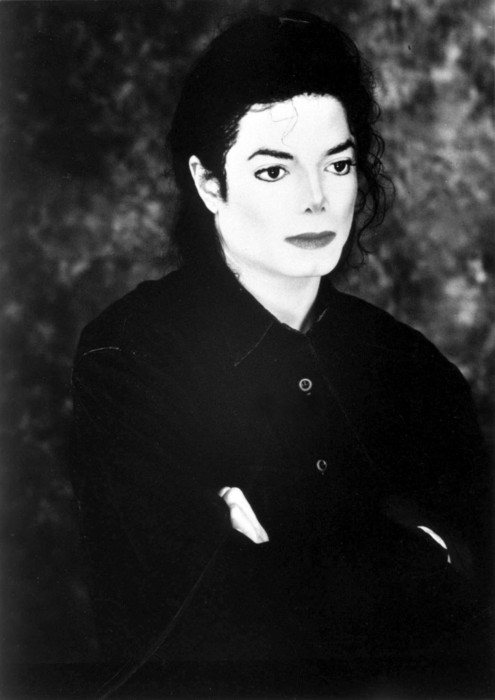
After all these statements, we must now ask ourselves: who is the main culprit behind Michael Jackson’s death? The cause of death is clear. It was respiratory and cardiac arrest caused by anesthesia with propofol. And the person who administered the injection is also known. Dr. Conrad Murray took Michael’s body—but in reality, he only fired the final shot.
So what about those who tormented his spirit throughout his life, labeled him, pushed him into unwanted isolation with their malice and slander, made baseless claims, disrupted his privacy, and tarnished his reputation… them? Perhaps the loss of peace in life, facing enemies, hatred and prejudice—the unavoidable result of fame, popularity, and success for Michael Jackson. But without a doubt, none of us has the right to judge him for even a moment.
Is it really, as the court and the law say, that the only person responsible for Michael Jackson’s death is Conrad Murray? Perhaps legally the answer is yes, and Conrad Murray will be in prison for a while. But the main criminal is still free to go wherever he wants. He can be found in every home and every city. He can take up residence in the heart and mind of every person. The killer of Michael Jackson and geniuses like him is a way of thinking that we don’t expect to fade away in this day and age because of people’s prejudice, ignorance, and lowliness. A mindset that makes a person, without even a moment of pause, reflection, feeling, or compassion, treat everything they hear and read about a fellow human as pure truth—and step beyond the human boundaries that nature has defined for them. In the absence of reason, ethics, and logic, people judge one another, issue verdicts, and sometimes even punish. The killer of Michael Jackson is a vile character among people—one that makes them hate, without reason, a woman or man who is loving and free, someone who is ahead of their time, because they see such people as a threat to their own existence.
Without a doubt, in this circle, the one who is more well-known and more successful than others is the one who suffers the most harm.
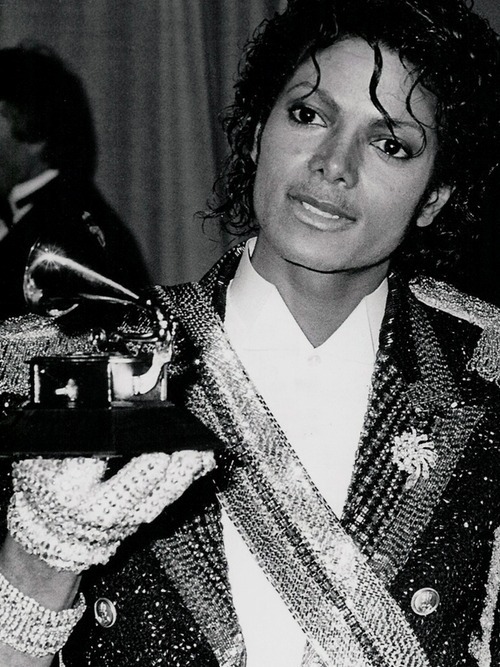
As a Black man, Michael Jackson redefined music. At a time when color and race were a limitation, he simply removed the “Billie Jean” sections from the body of music and made the impossible possible in the minds of children who dreamed of becoming Michael Jackson—through the magic of a Moonwalk or the trick of an anti-gravity lean.
He lived in this world, loved, and created. He was a messenger of love and peace. His followers and fans are countless. He didn’t gain his popularity through insults, promotion, or money. His power lies in love. Love is something he gave to people his whole life—but he never received it in the way he deserved. Perhaps if the love and attention that flowed toward him after his death had been given to him during his lifetime, it could have saved his life.
That is why Michael Jackson’s death must weigh heavily on the heart of every person in every corner of the world who, through their own prejudice, caused him pain—and who, through their bias and ignorance, became a pawn of the media and low people. If we truly want another genius not to meet the same fate, let’s pray that this world is never acquitted of the charge of killing Michael Jackson…
Source: eMJey.com