Day 17 of the Trial: More Details
In Tuesday’s session, nurse Cherilyn Lee said she had spent the night of April 12, 2009 at Michael’s home to monitor the quality of his sleep.
A week later, on April 19, she had an appointment at Michael’s home, during which she injected him with vitamins. That day, Michael asked her to stay overnight and see with her own eyes that he simply couldn’t sleep. After 2–3 hours, Michael woke up and then told Cherilyn that there was only one specific drug that made him sleep: Diprivan (propofol).
Cherilyn didn’t know anything about this drug, but when she visited Michael the following week, she provided him with information she had received from a specialist doctor. She said it was an anesthetic used for surgery in a hospital, not for treating insomnia at home. Lee said propofol isn’t a joke, but Michael insisted that his doctor had assured him that as long as his vital signs were under medical care, the drug would not harm him.
Michael said he was busy rehearsing for his concerts and needed something that would put him to sleep very quickly so he could have enough energy to attend rehearsal sessions. Lee said Michael never disclosed the name of his doctor to her. She refused to give him this medication, and she never returned to his home or saw him again.
Cherilyn Lee then spoke about an incident on June 21, four days before Michael’s death.
On that day, Fahim Mohammed, head of Michael’s security team, called Lee and said his boss wanted to meet her. The nurse was in Florida and the meeting was not arranged. In the background, she could hear Michael telling Fahim:
“Half of my body is cold and the other half is hot!”
Lee told Fahim to take her to the hospital as quickly as possible. After Michael’s death, she told the police she was worried that a problem might have occurred in Michael’s central nervous system, and she was thinking that this could be one of propofol’s side effects.
During the Q&A, Lee told the prosecutor that Michael suffered from two diseases, lupus and vitiligo.
Prosecutor Walgren referred to the medical treatment details that Lee had recorded. Lee had recorded all her actions, and her performance is traceable.
Conrad Murray did not make such records, which is medically outside the standard framework. The prosecutor considers this one of Murray’s failings.
Based on what Lee recorded, her own actions were fully consistent with medical standards.
The most important action Lee took was to warn Michael about propofol and say that he might die during anesthesia. The prosecutor says this is exactly what the accused Murray should have done.
Lee told Michael that if someone truly valued his life and cared about him, they would never give him propofol.
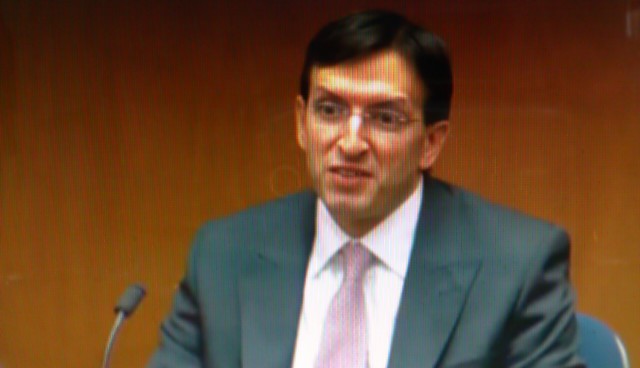
Another witness on this day was Amir Rubin, senior officer of security at the UCLA hospital. He said that on the day Michael died, he was informed that a certain person—whose name was kept confidential—had been transferred to the hospital’s emergency department, and that the security of that location needed to be ensured in the best possible way. Both hospital police and city police were in place.
Rubin said they also monitored the security of the place where Jermain Jackson read his brother Michael’s statement of death during a press conference. Rubin announced that the statement text was prepared by Randy Phillips, CEO of AEG and supervisor of public relations for the UCLA hospital, and then by Jermain Jackson.
Conrad Murray had told the police that Jermain had asked him to help write the text for the statement. Murray’s interrogation video had been shown earlier in court. Rubin said Murray had requested that the cause of death not be included in the statement.
The press conference took place an hour and a half after Michael arrived at the hospital.
This witness continued that Dr. Rachel Kooper, who had also been present in the stand earlier, informed Michael’s mother, Katherine, of his death in the emergency department.
Rubin said he heard the sound of a mother crying and mourning for her child:
“Hearing that didn’t feel good at all.”
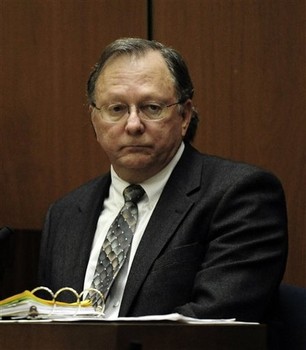
Michael Henson from Pacific Toxicology was another witness at the seventeenth session. He had performed Michael’s body toxicology tests at the request of the defense attorneys.
In response to prosecutor Walgren, he said that while the toxicology was ongoing, Professor Schaeffer—who had testified earlier in court—requested information and the method used for the toxicology, but the company rejected his request.
Once, the prosecutor from Brazil also requested this information, and the company referred her to Murray’s defense attorney, Michael Flanagan. Brazil threatened legal action, and the company was required to provide the information to the prosecutor.
According to the toxicology report, the amount of lorazepam found inside Michael’s stomach was equal to 1/333 of a 2 mg tablet. The defense attorneys had previously said that Michael had consumed eight 2 mg lorazepam tablets while Murray wasn’t aware.
Source: eMJey.com / AP / CNN / Reuters / ABC