Day 1 of court: Conrad Murray’s trial begins
Last night, local time in Tehran, the first official session of the trial of Conrad Murray—accused of involuntary manslaughter in Michael Jackson’s death—was held in the presence of his family at the Los Angeles Superior Court.
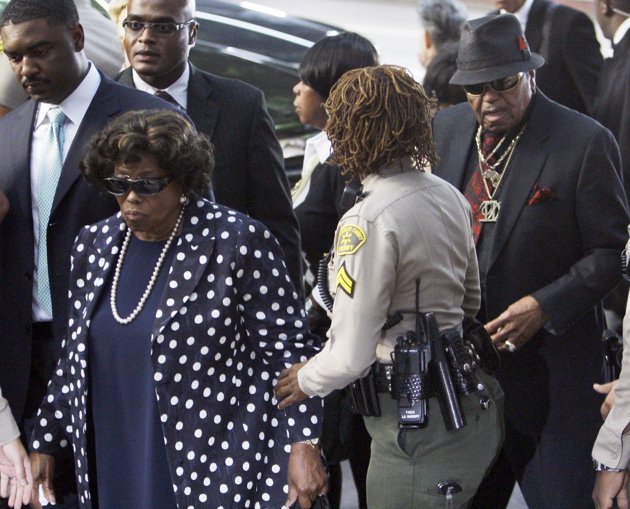
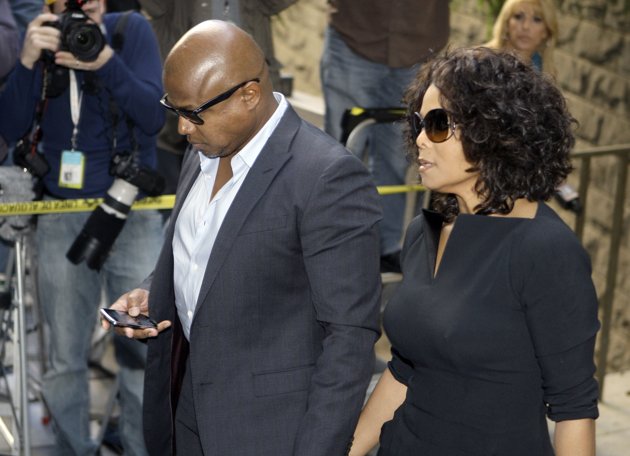
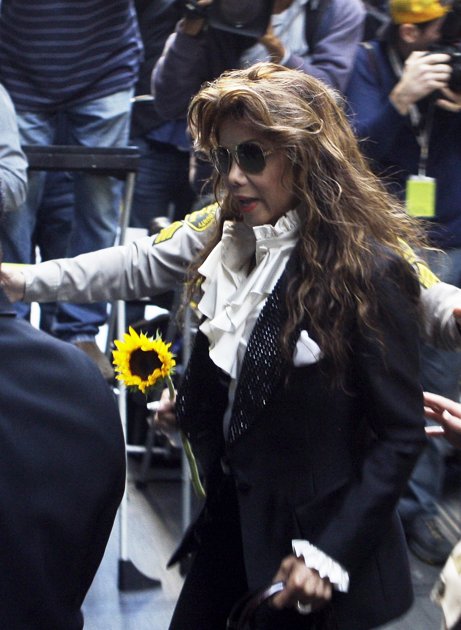
Michael’s mother and father, his sisters Jannet and Latoya, and his brothers Jermaine, Randy, and Tito were present in court. Latoya brought a sunflower bouquet—Michael’s favorite flower. Most of the male members of the family left their seats before the defense attorney began speaking.
Murray also arrived, holding hands with his mother.
Court sessions were broadcast live from inside the courtroom on American TV networks. The courthouse area was packed with reporters and photographers, as well as cargo trucks with satellite antennas mounted on them.
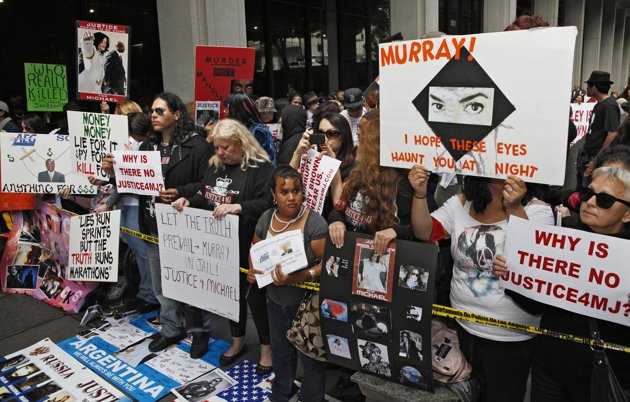
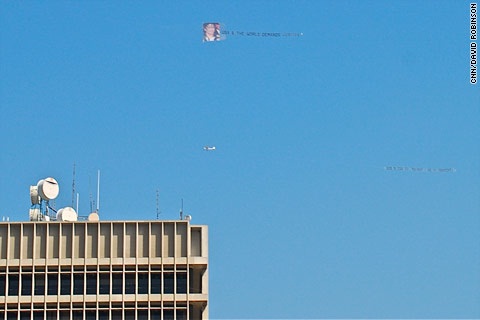
Outside the courthouse, Michael Jackson fans blocked the street alongside supporters of Murray. Two airplanes also circled in the sky carrying messages from both sides.
“God bless Dr. Murray. He is innocent.”
And a placard with a photo of Michael Jackson on it: “The United States and the world want justice for Michael.”
When Conrad Murray was on his way into the courtroom, a woman pushed her way out of the crowd and ran toward him. Police pulled her out of the courthouse before she could get close to Murray. It was not clear whether she was one of Murray’s supporters or whether she intended to harm him, but she herself said she only wanted to talk to him.
Prosecutor’s opening statement
At 12:23 p.m. local time, prosecutor David Walgren delivered his opening statement. He said Michael Jackson’s excessive trust in his doctor ultimately led to his death.
“The gross negligence and carelessness of Dr. Murray caused Michael Jackson’s death. He violated all medical rules and principles regarding Michael Jackson.”
The prosecutor said Murray injected Michael with a large amount of the drug propofol so that he could sleep. The prosecutor said Murray’s motivation was to receive his monthly salary of $150,000.
Walgren said:
“Murray is not an anesthesiologist. Propofol is not a sleeping pill that you can prescribe to someone—it is a general anesthetic.”
The court also heard an audio recording of Michael from May 10, 2009, which was found on Murray’s iPhone. The doctor had recorded Michael’s voice speaking these words. Part of the conversation was not audible due to what was described as confusion caused by Michael being under the influence of the drug.
In this audio recording, Michael speaks in a low, hoarse voice about the This Is It tour:
“We have to be phenomenal. When people leave the concert hall, when people leave my show, I want them to say that they’ve never seen nothing like this in their life. It’s amazing. He’s the greatest entertainer in the world. I’m taking that money and I’m building a hospital for millions of children around the world. The biggest hospital in the world. Michael Jackson’s Children’s Hospital.”
The prosecutor said this recorded conversation clearly shows that Murray was aware of Michael Jackson’s health condition and of what he was doing. Walgren addressed the jury and continued:
“Murray repeatedly acted with gross negligence. It was his constant refusal to provide proper care for his patient—his incompetence, lack of qualification, and lack of skill—that caused Michael Jackson’s death.”
Walgren explained that from April 6, 2009, Dr. Murray had been injecting Michael daily with 1,937 milligrams of propofol. Murray had told police that for two months he had been giving Michael this amount every night so that he could sleep.
Walgren continued that the device Murray used to check Michael’s blood oxygen level during anesthesia was broken and unusable—because the alarm beep that should announce an emergency situation was not working.
The prosecutor said Murray used a non-standard method—an IV drip—for injecting propofol. He also said Murray never told the emergency responders that propofol, the anesthetic, was present in Michael’s blood.
Referring to the timeline of events on the day Michael died, the prosecutor told the jury that Murray delayed contacting emergency services by at least half an hour.
Regarding the events of June 19, the prosecutor told the jury:
“That day Michael came in to practice, but he was not at all feeling well. He was freezing, trembling, and wandering around.”
That evening, without attending practice, he went home due to his physical condition. A meeting was held to discuss his health, and a few days later he was able to practice in a much better condition.
The prosecutor displayed a photo of Michael practicing on stage the night before he died, next to a photo of him lying on a hospital bed, and asked what happened during the 12 hours between the time Michael Jackson left the practice location and when he died on June 25, 2009.
“Based on the evidence and circumstances, it appears that the actions and negligence of his personal doctor led to his death at age 50.”
When Michael’s lifeless body was shown on the hospital bed, Michael’s sisters exchanged tissues among themselves.
The prosecutor then spoke about Conrad Murray’s phone calls on the morning of Michael’s death, saying that from 10:20 a.m. until 11:51 a.m. Murray was busy talking on the phone. The prosecutor said Murray realized around 11:56 that Michael was in a critical condition, but he did not ask anyone to call 911 until 12:20 p.m.
Walgren said that at 11:51 Murray was talking with his girlfriend when he suddenly stopped. The prosecutor said it was at that moment that Murray understood Michael was not breathing.
At 12:12 p.m., Murray left a message for Michael’s personal assistant, Michael William, saying: “Please call me as soon as possible. Please.” William called him immediately, and Murray told him: “Get here quickly. Mr. Jackson has shown a bad reaction.”
The prosecutor said that although Murray knew about this bad reaction, he still did not notify the hospital’s emergency department. Since William’s route home was far, Murray asked the guard, Alberto Alvarez, to handle it.
“When he got into the room, he saw that Murray was on the bed giving Jackson artificial respiration.”
Walgren said Murray asked Alvarez to take the bag, and Murray began placing the drug vials and the IV bag into it.
This bag was later found in Michael’s home.
Walgren also noted that Murray had not told emergency personnel about the injection of propofol, and that after injecting the drug into Michael, he left the room—signs of his gross negligence.
Walgren then played parts of the This Is It film from the June 24 performance: an emotional performance of “Earth Song.”
Defense attorney’s opening statement
After the prosecutor, it was the defense attorney’s turn.
Ed Chernoff said his client had been trying to keep Michael from taking propofol—something Michael referred to as “milk” because of the drug’s milky color. In his opening statement, Chernoff said the 25 milligrams that Conrad Murray had injected into Michael on the day he died would wear off within 10 minutes, and this likely happened when Murray was not in the room.
Chernoff continued:
“When Jackson requested propofol, he knew there were other drugs in his body. Murray injected him with propofol and Michael fell asleep. When Murray left the room, Michael regained consciousness and drank the propofol amount that would be enough to put six people to sleep, causing his own death.”
“Michael Jackson, because of his insomnia and the pressure he felt to perform the concerts, took eight lorazepam pills in the first hours of June 25 and after returning home. Since it didn’t work, when Conrad Murray had left the room, he drank propofol, and the combination of these two drugs immediately caused his death.”
“He died with such speed that Dr. Murray didn’t even have the chance to give him artificial respiration or close his eyes.”
Chernoff quoted what Michael had told Murray in court:
“If I can’t sleep, if I don’t sleep, I can’t practice. If I can’t practice enough, I can’t perform the concerts and I fail and I lose.”
Chernoff said Michael was addicted to demerol, which had been prescribed by another one of his doctors, and part of his insomnia was due to that addiction.”
Chernoff also discussed how Michael and Murray met, saying that when Michael brought his children to him for treatment in 2006, they met and then became friends, and Murray agreed to inject propofol into Michael to treat his insomnia.
The defense attorney said his client had been injecting Michael with propofol for two months, and during those two months:
“Michael stayed alive… he slept… he woke up… he lived his life… he went to work.”
Chernoff said Murray tried to stop using the drug, and Michael agreed. That’s why, on the night of June 22, he injected him with half the usual dose, and on the night of June 23, he gave him other medications besides propofol.
Chernoff stated:
“Michael Jackson didn’t die when Murray gave him propofol. When Dr. Murray stopped doing that, he died.”
When Chernoff was describing how his client had met Michael, Murray wiped his face with a tissue and wiped away his tears.
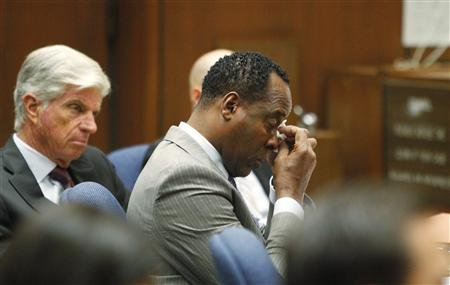
Chernoff said Michael hadn’t been on stage for 10 years, and the This Is It concerts were his last work—so he had to do them.
“These concerts weren’t for us. They were for himself. He wanted to make history.”
Testimony of witnesses
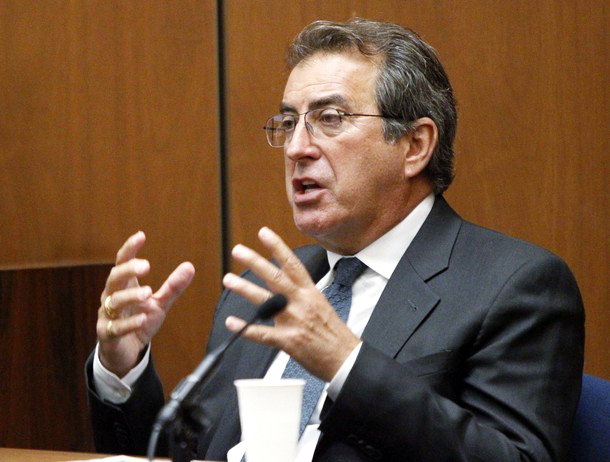
The director of This Is It, Kenny Ortega, was the first witness yesterday.
He said that on June 19, one week before Michael’s death, he had shown up to a rehearsal session while sick.
“My friend wasn’t feeling well. I didn’t know what the issue was, but I was deeply worried.”
Ortega said Michael seemed confused and lost. He rubbed Michael’s frozen feet, and when he realized Michael hadn’t eaten anything, he made him eat.
“My heart broke. He looked like a lost little boy.”
Ortega was so anxious that he wrote a letter to Randy Phillips, the CEO of AEG, the company behind This Is It, saying that “serious psychological problems had arisen and Michael should be examined by a psychiatrist.”
Ortega wrote:
“No one has taken responsibility for what happened in this situation. Nobody is taking care of him. Today I fed him and wrapped him in a blanket and called his doctor.”
“In the end, everyone should know that he really wants these concerts. If we step back, he will be devastated and heartbroken. He is very afraid that everything will fall apart.”
Ortega also said that on June 20, an emergency meeting was held at Michael’s home with Michael and Murray present. Ortega said Murray flew into a rage after hearing Ortega’s concerns about Michael’s health.
“He said I shouldn’t play at being an amateur doctor and a psychologist, and that I should hand over Michael’s care to him.”
But Ortega said that four days later, on June 23, Michael returned to rehearsal “full of energy, full of drive to work, and full of passion and enthusiasm.”
On June 24, after another good day of work, Ortega hugged Michael and said goodbye. A few hours later, someone called him and told him, “We lost him.”
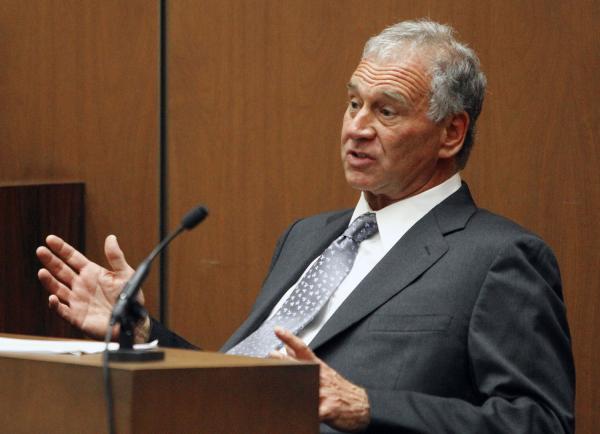
Paul Gongaware, another AEG executive, was also called to testify.
He talked about meeting Michael in the early days of rehearsals:
“He was a bit impatient. He spoke in fragments, and his movements were slower than what I had seen from him.”
Gongaware said Michael had come from the doctor’s office, but he couldn’t remember whether he was returning from Murray or from the skin doctor, Arnold Klein.
It was Gongaware who hired Murray as Michael’s specialist doctor. He said Michael insisted on it, although Gongaware believed that since the concerts were being held in London, it would be better to hire an English doctor for the job.
Gongaware said Michael would point to his body and say:
“This is a machine. We have to take care of this machine. This is what I want. I want Dr. Murray.”
At first, Murray had asked for a salary of $5 million for one year.
“I told Murray that we definitely wouldn’t pay him that much, and he said Michael couldn’t afford that money.”
Negotiations ultimately ended with a fixed monthly salary of $150,000. Murray initially refused to accept it until Gongaware told him that the offer came from Michael himself.
The prosecutor used Gongaware’s and Ortega’s testimony to show Murray’s negligence and carelessness. He said this money-hungry doctor was fully aware of all the consequences that his prescribed drugs would bring to Michael.
Source: eMJey.com / AP / CNN / CBS News / ABC News