An Unknown Side of Michael Jackson
Chris Apostle, an executive in the music industry, began working in 1993 as the main consultant to Tommy Mottola, head of Sony’s music division. He has worked with a wide range of artists. Over the past 20 years, he has been friends with Cory Rooney, a songwriter and music producer. During the time Cory worked at Epic, he developed a friendly relationship with Michael Jackson. While collaborating with Michael, Cory had the opportunity to see an aspect of Michael’s personality that fewer people have seen. For example, Cory says that in 2001 Michael told him that if he ever held a tour again, it would cause his death.
He says that, contrary to what the media has been spinning, working with Michael was easy. He describes one time when Michael was late arriving at the studio; Michael apologized by sending him a gift package containing more than 100 DVDs. On the message inside the box it said: “I’m sorry I didn’t respect your time.”
Cory says that when, in 2002, Michael rose up against Tommy Mottola, he wasn’t surprised. He explains: “Michael felt like nobody was on his side. He wasn’t receiving the love and respect he deserved.”
Apostle explains that stars at this level are always under extraordinary pressure and may end up speaking out. He says he hopes people understand Michael’s musical temperament.
This long text won’t tire you out. Maybe reading some lines will be difficult for some fans, and maybe it will even make some people cry. But it’s definitely worth it, because in the lines ahead you will read about Michael’s genius and hard work, his unique kindness and rare human qualities, his mercies and his pains—and also his innocence. This interview may be another attempt to introduce what many still don’t know about Michael Jackson…
Interview by Chris Yendek with Cory Rooney and Chris Apostle (prominent figures in the music industry) — July 8, 2009
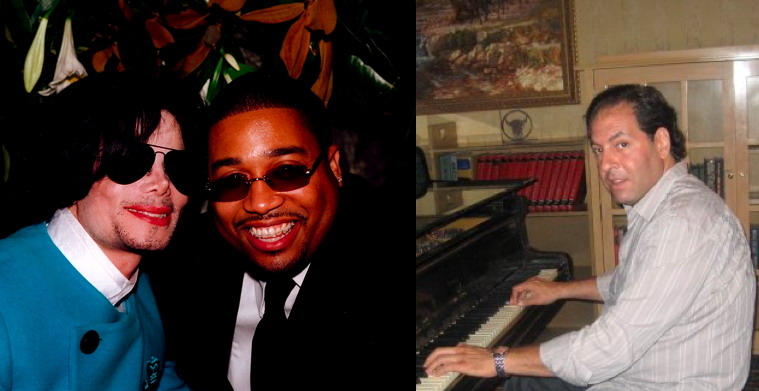
Chris Yendek: Cory, you got the chance to work with Michael. You wrote and produced a few songs. What was your relationship with him like?
Cory Rooney: I spent my whole life waiting for the chance to work with him—so that my talent would be recognized by him. When we finally entered the studio, we spent almost a month just talking to each other, and he was teaching me different things. During that time we didn’t make much music. The experience was completely different from what I had imagined. In the end, I became his friend and ally because he felt that inside the company (Sony) nobody was on his side.
Chris Yendek: And then what did you learn about him? That he sometimes didn’t seem to control his own life, and that other people told him to do this or that—was that true?
Cory Rooney: Yes. The first thing I learned about him was that he really wanted to please others and thought carefully about many things. For example, he had finished an album, and I listened to all the music. I would say, “Michael, this is amazing!” And Michael would say, “Yeah, but I don’t think it’s ready yet.” Because the million voices in his head were telling him different things. He was being guided by the people around him.
Chris Yendek: Chris, when he was at Sony, what was your relationship with him like?
Chris Apostle: Well, unlike Cory, I had a limited relationship with him. I only spent a few days with him. He was working on a mix for a song with Jay-Z. Before Michael came, I met Jay-Z in the studio. I had never seen him so humble. He was a bit excited and anxious about working with Michael Jackson. That stayed with me.
I’m older than Cory, and since the time Michael started his career, I grew up with him. What’s forgotten about him is that he was constantly working on music. In the interview with Martin Bashir you hear him tell Michael, “It’s good that you’ve started working on music again.” And Michael’s answer is very sharp: “I’ve always been working on music.” What do you think, Cory? Probably he has a few hundred secret songs somewhere.
Chris Yendek: A few days ago I read in an article that he has 200 unreleased songs left for his children so they can benefit from them, and that it’s worth about $50 million.
Cory Rooney: That’s true. Michael was always busy creating music. As I said, he was never satisfied with his work.
Chris Yendek: In 2002 he said he wasn’t satisfied with the album (Invincible) he had released. They spent $30 million on the album. He said straightforward things about Tommy Mottola and attached labels to him. Did that surprise you?
Cory Rooney: It didn’t surprise me. He really felt like nobody was on his side in the company. I don’t think he was receiving the love and respect he deserved inside the company. Yes, they spent $30 million, but at the same time the commercial deals around the album were such that Michael had no chance of winning. They financed the costs in installments and told him, “We want you to sell the album and go on tour.” And they thought they had trapped the rabbit. They thought he would chase their carrots to cover his expenses.
Chris Yendek: What do you think, Chris?
Chris Apostle: A powerful artist like Michael isn’t the first artist who, when things don’t go his way, doesn’t stay silent and doesn’t say something. When artists at this level aren’t satisfied with something and don’t feel comfortable, they speak up. Someone like him, who throughout his life only dealt with top-tier things, when he reached a level of frustration, came out and said what he had to say. There were many things that pushed him to this point.
There’s something that really, violently bothers me, and it’s only to the level of a rumor, but I truly believe it. I think they forced him to do something he didn’t want to do. This man spent millions and millions on humanitarian work and nobody ever said anything about it. I think his reaction was natural, and I’m sure he was under pressure.
If you look at the quality of his work, Chris—for example Off the Wall, which is my favorite—or any other song you want, like Dangerous, every single one of these songs is complete and flawless. Reference tracks and standards. Pure excellence.
Cory and I once sat in Sony’s office and watched a concert on DVD. A colleague called us and said, “Do you two want to watch something?” It was an unedited two-and-a-half-hour program of a performance in Brazil. We said, “Okay, we’ll watch it for 5 to 10 minutes at noon.” Michael never would have paused his work for a two-and-a-half-hour film. What I want to say is that he wasn’t given enough recognition for the work he did in music for the world. With reason and logic, he was the greatest musician we’ve ever seen in our lives. You’ll never see anything like him again. This should be discussed and talked about.
Chris Yendek: How will the music industry be affected from now on?
Cory Rooney: I really don’t think the music industry has given Michael a proper, fair look at the value he had for all of us—every artist, producer, actor, and the whole entertainment world. Because everyone is busy with their own things. When Michael was in court, nobody—nobody—waited for him to go there and support him.
Chris Apostle: Yeah.
Cory Rooney: This man was acquitted of ten counts. Nobody said, “I’m sorry, Michael.” Nobody said, “Michael, we knew you were innocent.” Nobody arranged tributes for him. Nobody played his music, and nobody put on the hard work of concerts. Why would Michael have to hold a tour to make money? Why didn’t all these stars get together and say, “Okay, let’s do a tour and collect some money”? Nobody did that.
To be honest, Tookie Williams was the leader of the Crips gang. They tried to get him pardoned from the death sentence, and half of Hollywood showed up to support him. What I don’t understand is this: when Michael had problems, nobody wanted to stand by him.
Chris Yendek: But they stood up in support of a killer.
Cory Rooney: But they showed up to support a man who killed families. A little girl begged him not to take her life, but that man killed her. Because he wrote storybooks for children in prison, he was nominated for the Nobel Peace Prize. So what about all those millions of children Michael Jackson helped over all these years? Out of all of them, two children came forward and accused him—and those two kids ruined his life. It’s insane. It makes me say that the entertainment and programming industry is surrounded by a bunch of hypocrites.
When you ask me how his death affects them, I tell you they don’t even understand what happened. Everyone now wants to put on programs praising him. But if you pay attention, you’ll see they’re only doing it because it makes them famous. They want the spotlight on them. Now suddenly everyone wants to talk in his praise.
Chris Yendek: Everyone wants to connect themselves to him.
Cory Rooney: Everyone wants to connect themselves to him, and it makes me sick.
Chris Yendek: After the 1993 accusations, did it become necessary for the documentary Martin Bashir: Living with Michael Jackson (2003) to state that there’s nothing wrong with sleeping in the same bed with children? Don’t you think most people would say it was his own fault for creating problems for himself by saying such a thing?
Cory Rooney: Let me quote you directly what Michael told me. Michael and I talked about this. He said “Cory, when I was a child, I wasn’t deprived only of being a child, but also of love. When I went to my father to hug him, he didn’t hold me. When I was scared on the airplane, he didn’t wrap his hands around me and say, Michael, don’t worry, everything will be okay. When I was afraid to go on stage, he told me, get lost—go away—on stage.” … Not only his father, but all the adults around him behaved like that.
He told me, “Cory, I will never reject any child’s love. And if I have to be dragged to the authorities or go to prison for that, then it’s better that they do it to me.”
When the first accusations happened, his advisors told him, “Michael, this isn’t good. Pay the money and get yourself out of it.” But the second time he said, “Do you know what? That made me look guilty, like I paid money to hide something. So this time there won’t be any money involved. I want to fight this in court. You’ll see. I’m innocent.”
The same day the final court verdict was going to be read, I spoke with his family. I remember hearing on the news that Michael had 45 minutes to get to court. So I spoke with some members of his family who were at home with him. I asked, “Okay, what is he doing right now?” The upstairs floor was being prepared. He came down the stairs, said a short prayer with his family, and told everyone, “I want you not to worry about me, because I’ll be fine.” Then they went to court by car. Maybe he was a bit anxious. On the way, inside the car, he sang, and he arrived there with his brother and sister. But he wasn’t worried. Let me tell you something: if I were in his place, I would’ve messed everything up. I don’t know if I could even stand up.
Chris Yendek: Do you have an opinion about these things?
Chris Apostle: Last night when I watched Bashir’s interview, I just wanted to see what all the commotion was about—when Bashir asked about the first accusation and the payment to the accuser, Michael’s answer seemed unbelievably honest and sincere to me. He said, “I just decided that I wanted to end this.” And he made the accuser go away. Michael wasn’t the first person in entertainment history to do something like that. He wanted the issue to be settled. But the second time, he fought it.
But what Cory had been saying goes back to his childhood. That when he was a teenager, his face broke out in acne. And we all have been stuck with this problem in childhood. And his father used to mock him for his acne and his skin.
You’re talking about a child who never had a chance at a normal life. These kids grow up with far more difficulty than others. I will go to my grave believing in his innocence with complete conviction. He was extorted by that nobleman (Ivan Chandler—the father of the first accuser) who wanted to be a playwright, or print a book, or make a film, or anything else.
Cory Rooney: About that Bashir film, I don’t think people remember that a week or a few weeks after it, Michael aired his own recorded videos from that interview.
Chris Yendek: And he was smart enough to record everything himself.
Cory Rooney: He was smart enough to film everything and clearly show that the gentleman had reversed and twisted everything. (Bashir) He either said everything wrong or made lies out of it. He asked Michael one question: “Are you gay?” And Michael said, “I don’t want to answer that question.” Then in the Bashir documentary he says, “He definitely didn’t agree to answer the question for obvious reasons.”
But then, after Michael aired his own videos, it shows that Michael later says, “But if you turn off your camera, I’ll answer your question.” Then Bashir’s camera is turned off, and Michael says, “No. Of course not. I’m not gay. But among my fans, millions of them are gay. And if they believe that I’m gay, then they can believe that I’m gay. I don’t care. I don’t want to insult anyone.”
Chris Apostle: I want to say something here. I can’t believe these are topics for discussion.
Cory Rooney: Yeah, in my opinion it’s stupid.
Chris Apostle: One of Cory’s friends—someone Cory doesn’t know—who collaborated with Michael in his new concert says that he looked better than ever. He was struggling because the concert was long and hard, but he kept going. He canceled a few concerts—no problem. He had 50 concerts to perform. They were taking their shows forward at the Staples Center. We’re talking about a multi-million-dollar show. Everything is going well. He goes home at night and says he doesn’t feel well, and the next day he’s dead. This is the most devastating thing I’ve had to deal with in my life. I feel like the flawless piece that was mine was taken away from me. People should pay attention to what he did for the world and let go of the nonsense.
Cory Rooney: But they don’t do that because they like the (bullshit) more.
Chris Apostle: This has destroyed me. I’m sad. I’ve become very emotional. This weekend I’m going back to my house in the countryside, and I have Michael’s albums on my gramophone records—I’ll take them all out and listen. Someone has to talk about this man’s achievements and throw away the nonsense.
Chris Yendek: Many say that after the 2005 trial he wasn’t the same as before, and that rumors about his health spread in recent years. What do you know about this?
Cory Rooney: I know he was dealing with issues that had never been discussed. For example, a disease affecting dancers’ feet. Over the years of dancing, the skin on the feet becomes dry and cracks like paper. Because dancers have to wrap their feet with bands, and that prevents their skin from getting enough oxygen and causes it to split. And Michael suffered greatly from this disease. The pain was unbearable. Because of this, he used painkillers. Yes, I’m sure he did. I never saw him take medication, but I talked to him about this. No matter what the autopsy report says, his death was the result of what this industry did to him. That’s it. The result of what the industry did to him.
Chris Yendek: He said he wanted to do 10 concerts, and then the number reached 50. Did he have to do that because of financial issues?
Chris Apostle: Listen, I’m sure he decided to do a comeback tour and make some money—which, honestly, he deserved. I also believe, like Cory, that he was pushed to the sidelines by people who were extremely influential, and he wasn’t treated well. At one time, someone we both know well told us that you can’t do anything in this industry without an artist. Even if you think artists are the worst things in the world, you still need them. In my opinion, they are the most important thing in this industry.
Cory Rooney: That goes back years. Almost eight years ago Michael told me, “Cory, I can’t do tours anymore. I don’t want to do concert tours anymore.” I said, “Why, Mike?” He said, “Because it will kill me.” That’s what he told me. I said, “Why do you think that?” He said, “Well, do you remember when I was preparing for a concert and I suddenly fainted inside the Sony studio? That’s because when I’m preparing for a tour, I lose my body’s fluids. I don’t eat. I don’t drink. I don’t sleep. I put so much of myself into preparing for the tour. I don’t do it on purpose—I just can’t think about those things anymore. You understand? I work so hard that I can’t think about eating and sleeping and those things. The last time they hooked me up to machines, I was going back and forth with that. So I decided that my doctors decided maybe I shouldn’t have tours anymore.”
He said he wanted to make the album Invincible in a way that there would be no more talk in it. He had finished his work with the tour and wanted to work on the album. He wanted to continue releasing albums. He said, “As long as I can work on the albums. But I really can’t do tours.”
Chris Yendek: Is it fair to say that the people around him were greedy for money and that’s what led to his death?
Cory Rooney: I don’t call it greed. I just think he didn’t have a choice. I think all of us sometimes do things because of financial issues that we’re forced to do. But I’m not saying Michael was broke.
Chris Yendek: But he had $400 million in debt.
Cory Rooney: He definitely had debt, and there were people telling him, “Okay Michael, another tour and then all these debts will be cleared.” And he was a hard worker and he would say, “Okay, let’s start now.”
My heart’s prayer is that his legacy will remain forever, beyond all this nonsense. But there’s always a problem—just like all this ridiculous talk that people say about Elvis Presley.
Chris Yendek: How did he die?
Cory Rooney: How did he die? How did Lee—how did Lee die? How did Marilyn Monroe die? Michael can’t be compared to any of these people. In my opinion, Elvis Presley is the closest. I don’t want to question Elvis Presley. But he and Michael are two different people. Michael, as far as I know, left behind Elvis and everything he was and had achieved years ago, and created something different.
No one talks about the time he completed the Victory tour. I remember when I was a kid and Michael was busy with the Victory tour. And every night on TV they reported that Michael donated the concert earnings from a city to charity. Every time he would donate to a new charity. He gave the earnings from the Victory tour to charitable institutions. I thought it was amazing. I told myself, “Wow! This man donates millions of dollars to a new charity every night.” Then in every city where he performed, he would go to children’s hospitals and visit kids who were burned or sick. He made time for that.
Chris Yendek: Chris, tell me your opinion.
Chris Apostle: There are two points. The comparison between Michael and Elvis is made in terms of the importance they had for music culture in America and the world. After Elvis died, he generated more income than during his lifetime. All artists rise and fall. Most of these declines are due to lack of creativity, flaws in skill, physical deterioration, and things like that. Michael conquered the highest peaks. And if you remember what the highest peaks are, then such a conquest won’t happen in our lives again.
His albums were incredible, his performances were incredible. He himself was incredible. He was a god. Probably the most famous person in the world. His decline wasn’t due to a decrease in creativity. I think that decline was forced upon him. And he was locked away in a cave by the people who forced that on him. That is truly upsetting to me.
I consider him a music scholar. This man knew all the songs and all the studios. He knew everything. He knew musicians and musical instruments. Nobody talks about these things, and that’s unbelievable. And unlike Elvis, he continued his work for 43 years. 43 years, Chris. My God. (Elvis died at 42.)
Cory Rooney: It has happened that I’ve been sitting in the studio and thought to myself, “I can’t believe I’m working with someone with such behavioral traits.”
And in contrast, you work with Michael Jackson, where when he’s late… he should have been there at 12 noon, a quarter to one. He felt really bad about being late and apologized. The next day he sent a huge package. We had been talking about a movie, and I told him how much I loved films. And he sent me a big package. Maybe it had 100 DVDs in it, plus popcorn, candy, a few books, and things like that. And yet, he had written on the card, “I’m very sorry I didn’t respect your time.”
Chris Yendek: For a small issue, that’s a big, gentlemanly gesture. Definitely!
Cory Rooney: That’s right. I would say, “Mike, what time do you want to start tomorrow?” He would say, “Cory, you’re the boss. You tell me what time. If you want me here at 7 a.m., I’ll be here at 7 a.m.” He told me, “You’re the boss. Whatever you say.”
Chris Yendek: What seems to me here is that the media always portrayed him as someone who had to have everything go his way.
Cory Rooney: Not at all. Not at all.
Chris Apostle: Did anyone even bother to talk about Michael’s foot pain? Did anyone notice how this kid dances? Who do you think considered him his idol? A giant like Fred Astaire.
Cory Rooney: There are many stories. There are many things. He loved to sit and talk. He loved talking. Talk… talk… talk… about anything. Every time he went to a city, he wanted to stop by bookstores. They would shut the stores down for him. He read books. He taught me about Africa and how beautiful it is. He would say, “You know, they don’t want you to know how beautiful Africa is because they’re stripping Africa of everything it has. That’s the most beautiful place I’ve ever traveled to in my entire life.” He brought me pictures from there. It was really amazing.
Do you remember when David Blaine (the magician) buried himself alive? I told Michael about it, and he said, “Are you kidding?” He didn’t even know who David Blaine was. I sent him a few videos of it because at that time YouTube hadn’t been launched yet. He was fascinated by his work. We got in the car late at night and went to see David Blaine’s show. Michael was in disguise, and nobody knew he was there. We sat and watched the show, and Michael was fascinated.
Chris Yendek: Did you ever talk about plastic surgery?
Cory Rooney: Yeah. He said, “What’s the difference between me and Sylvester Stallone and the rest of Hollywood? Well, what of it? It’s a skin problem. I don’t want to be white. I’m not trying to be white. But I can’t stop this disease. I didn’t have surgery to make a black man with light skin. I hated my nose—exactly like Sylvester Stallone hated his nose. Why is this only discussed about me?”
I don’t want anyone compared to Jesus. Michael, to me, was a Jesus-like person, and I’m sure I can find hundreds of thousands of people who think like that. This man, over the last 15 years, was torn apart, crucified, slandered, and talked about in vulgar ways. At one time, everyone said he wanted to buy the bones of a dead man, and they said it was a terrible thing. So what? I want to buy them myself.
Chris Apostle: I want to buy them too.
Cory Rooney: I think it’s interesting. But because he was Michael Jackson, they always attached negative things to him. My heart is completely broken. My inspiration—the inspiring light I once got from a child—has become completely dark for me now. I wasn’t among the fans who followed Jesus and witnessed his crucifixion. But I’m sure their hearts were broken like mine. I’m glad that at this point in time I don’t have to have a relationship with hypocritical people in the music industry, but we’ve been surrounded by people like that. It’s a tragedy. I always wondered how it would be if something bad happened to Michael. I never wanted anything bad to happen—I just thought, “Oh my God, what would happen?” Well, it happened. And since then, almost everything that has happened is exactly what I thought would happen.
Chris Apostle: When this happened (Michael’s death), I emailed Cory and spoke with his wife on the phone. But for three days there was no news from Cory. He wasn’t responding to my emails or calls. I knew he was grieving, and I was also upset.
Cory: Because I cried for three days straight.
Chris Apostle: He called me on Monday (four days after Michael’s death) and said, “We have to go back to work because Michael would do the same.”
Cory Rooney: And that’s the truth. He was going back to work too. He was enduring the blows, enduring the bruises. He was one of the toughest men I’ve ever seen in my life, and that’s the truth. He was a strong, resilient man. He wasn’t afraid.
Chris Yendek: What you’re saying is that the media doesn’t care about the importance of this man.
Cory Rooney: No, they don’t.
Chris Apostle: No, they haven’t even come close.
Cory Rooney: They haven’t even cracked the shell.
Source: eMJey / CYInterview.com