Dancers and Ortega say they’re seeing Michael (with fresh images)
One more week and the film This Is It will begin showing worldwide. But before that, the dancers and the director of the This Is It concerts—who were once set to perform in London—share their experience of working with Michael with the Los Angeles Times.
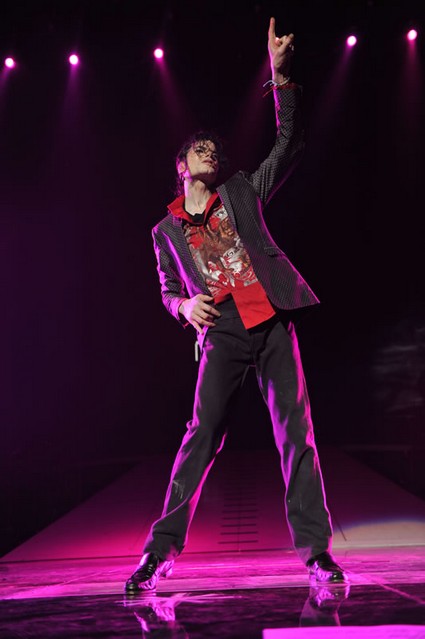
Makia Cox, one of the eleven dancers on the team who worked with Michael from April to June, says:
“He had an amazing scent.”
Daniel Selber, another dancer, refers to that special scent as “a sip of love” and remembers how that fragrance could stimulate and energize the people who crossed his path.
“No matter what you’re doing, the moment that scent hits your nose—bam! You have to focus more.”
Unfortunately, until someone creates this “insightful scent” and it reaches everyone else, people around the world can only imagine it.
This Is It would have been a magnificent show—not only could it have brought Michael a huge amount of money, but it would also have spread his message of peace and love across the world.
In this show, aerial dance, the world’s largest LCD 3D screens, fireworks, 12 short films, and even a bulldozer and a children’s choir were used. And the film This Is It is a real example—close to Michael’s ideas and dreams—for this show.
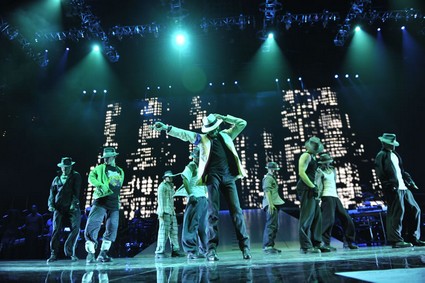
People who worked with Michael over these past months say the film is a window into Michael Jackson’s private world—one that only a few have been able to enter.
Selber continues: “He was a real dancer. He was always moving, always buzzing. He couldn’t stand still in one place.”
Timor Stephens, another dancer, adds:
“If you stood next to Michael, you’d get flustered. The energy that came from him was very powerful and strong.”
Kenny Ortega, director of the concerts and the film This Is It, states that Michael:
“Was a new Michael. He was a father, a businessman, and a scene-setter for the scene-makers. That incredible, innocent piece of Michael’s personality was always there—but this new Michael Jackson had more global concerns. He had deeper reasons to do this than at any other time in the past. ”
“He was on a completely new level. When you saw Michael, he was a different Michael. He walked with pride and confidence.” says Dreiz Reed, one of the dancers.
Ortega directed Michael’s tours Dangerous and History in the 1990s.
He had been talking with Michael for more than two years about putting together a concert, but Michael was looking for a solid reason to return to the stage. In March, Michael told Ortega that he had signed a contract with AEG to perform a series of concerts.
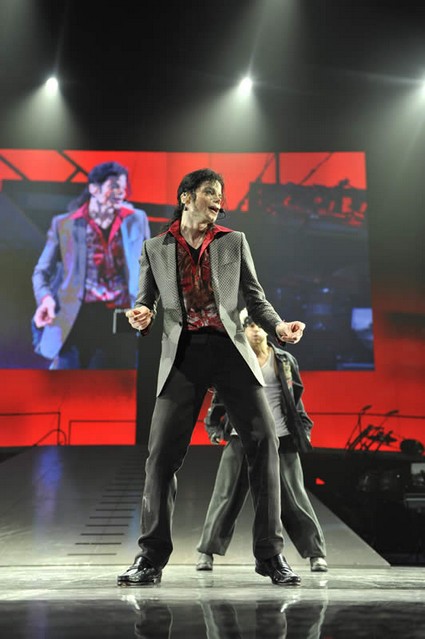
Ortega recalls:
“He said, ‘Kenny, my children are absolutely fascinated with the work I’ve done my whole life. They’re like super-fans. That’s why, now that they’re old enough to appreciate what I do, I want to share it with them. And I’m still young enough to do it.’”
Ortega says Michael wanted these concerts to be a way of giving back to his fans—and also a platform to share his concerns and worries with the world.
He quotes Michael:
“The message that’s in my songs—the ones I wrote 10 years ago—has more meaning today.”
Travis Payne, a choreographer who has worked with Michael since the early 1990s on tours and videos—and who was also involved in preparing the recent tour—says these concerts were the biggest possible platform for him to deliver again the message that has always been present in his music and films.
“Michael wanted to remind us of the responsibility we have to make up for the harm we’ve done to the world.”
Ortega emphasizes that their discussions about the tour never turned into talk about Michael’s financial situation. And despite his long absence from the stage, the word “return” was never mentioned.
“I once told Michael, ‘You’ll take back your crown. I can’t wait for that.’ Michael laughed and said, ‘God bless you, Kenny—you’re so funny.’ He really wasn’t thinking about things like that.”
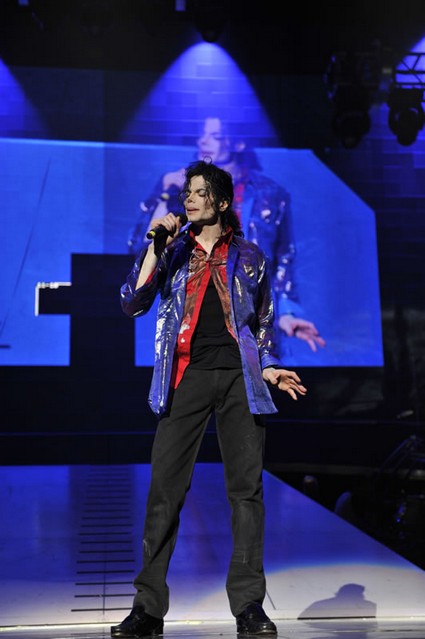
The film This Is It also portrays Michael as a manager, a perfectionist, and a creative dreamer who was personally involved in every detail—even the smallest ones. Ortega explains:
“If he was dancing and something wasn’t working right, he would say, ‘Hold it.’ And everything would stop. Then he would say, ‘Don’t do that! Wait for me. Watch me.’ And he reminded everyone that this wasn’t an automatic production process that starts by pressing a button. You had to watch Michael.”
Cox continues: “He was the commander.”
Ortega says:
“He was the leader. He was the man for the job. He wasn’t just showing up for the show. He worked differently with every single person in the audience. And the music group, the dancers, the lighting people, and the technical crew all had to pay attention to what he was doing. He wanted to make sure everyone could feel what he was doing—and understand it.”
Shannon Hatzfeld, one of the dancers, says: “While he was pouring out the ideas in his mind, he had a calm and gentle demeanor. But he spoke very directly and clearly. And we would say, with admiration and amazement, ‘Wow!’”
So far, two clips from the film This Is It have been released. In one of them, Michael is on stage, busy performing “Human Nature” and explaining his moves. He looks powerful, though lean. Without effort, he demonstrates several of his dance moves. His voice is strong and clear, and his movements are powerful and precise.
In the other clip, he is performing “The Way You Make Me Feel.” In the middle of the rehearsal, he issues a stop command to point out something to the dance group. With unexpected force, he says:
“I have to guide you, so you have to look at me.”
After the performance ends, he can barely control his excitement and, with passion, shouts:
“I’m feeling completely, completely alive!”
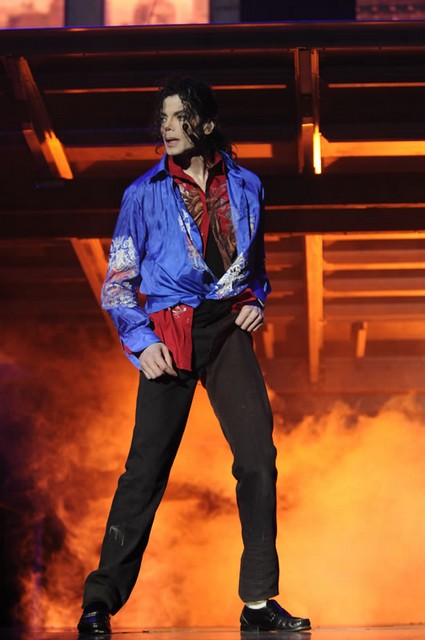
Based on what people close to him say, Michael’s strict nature brought physical consequences for him, which can be seen in the film. Ortega says Michael was losing weight and, as the opening date of the tour approached, he was exhausted and worn out from missing the chance to sleep. Both Pin and Ortega confirm Michael’s interest in continuing rehearsals until 1:00 a.m. And even then, he would call at 4:00 a.m. to share his fresh, sudden new ideas with them.
“He didn’t sleep much.” Ortega, like everyone else interviewed since Michael’s death, had no knowledge of Michael using sleeping pills.
Ortega says he was losing weight and didn’t want to eat while he was busy working.
“Right now I’m dancing. I don’t want to eat anything.”
Ortega continues: “I discussed this with him, his doctor, and his team. My real concern was that he get enough sleep and rest and consume the right food. We were told—and Michael reassured me—that he was in good health.”
Pin, who had learned Michael’s doctors’ methods during the Dangerous and History tours, made sure Michael was recharged with replacement meals and nutritious juices.
Pin says: “He worked for hours without sleep or food because he was deeply immersed in what we were doing.”
However, Ortega remains firm that This Is It was an energizing experience for Michael—not something that would cause his death.
And for fans, or anyone curious about his final days, this film is a meaningful bridge between them and the King of Pop.
The film is dedicated to Michael’s fans and children.
Ortega says: “He is very alive and present in this film. When we were in the editing room, it would happen that I would forget that he isn’t among us anymore. He is so big, so entertaining, and so captivating. He pulls you into this film. And I think there’s a sense of obsession and fascination in this film that goes beyond the circle of fans.”
Source: eMJey / LA Times