A Complete Report on Michael Jackson’s Memorial Service
On the morning of Tuesday, July 7, more than 20 helicopters were circling in the skies over Los Angeles, and more than three thousand reporters and photographers from media outlets around the world had gathered outside the Staples Center to cover the grand memorial for Michael Jackson. From the moment Michael Jackson died at noon on Thursday, June 25, the world’s media had been under his spell. It seemed as if there would never be an end to the roundtables and analyses about Michael Jackson’s life, career, and death.
It was even said that U.S. President Barack Obama—who at that time was in Russia—was watching the ceremony live. In an interview with the American network CBS about Michael, he said: "Certain people exist within the core of our popular culture who captivate people’s minds. And after death, they become even bigger than before. This has had 24-hour news coverage, and I have to admit that the media’s thirst is insatiable."
The Los Angeles Police Department estimated that Michael’s memorial could cost between $1.5 million and $4 million.
It was after 8 a.m. when the doors of the Jackson family home—known as the Encino House—opened. Helicopters broadcast images of several black cars heading toward the vast Forest Lawn Park in Los Angeles. The night before, the family and relatives had said goodbye to one of their own at the same location. The night before, the coffin was opened, and according to one of the family members, Michael lay in a deep sleep with a calm face. Police motorcyclists escorted the cars. The media were not allowed to enter Forest Lawn, but images of many cars lined up one after another in front of the Hall Of Liberty hall at Forest Lawn—while family members and relatives exited and entered the hall—were captured by helicopters and broadcast everywhere around the world.
The host of CNN was present in the indoor hall of the Staples Center, where the memorial ceremony was to welcome Michael in just a few minutes. He showed the camera a booklet filled with beautiful photos of Michael and statements from his family members mourning him.
Outside the Staples Center, fans were writing tributes for Michael on large walls. The atmosphere outside was full of both joy and sorrow, evoking a contradictory feeling: joy out of respect for a celebration of a lifetime of Michael’s love and effort, and a heavy grief for the legendary pop star’s flight.
After a short ceremony, a beautiful coffin was seen coming out through the hall doors. The coffin was decorated with red flowers. Michael’s brothers placed the coffin containing his body into a car.
The network host said that seeing Michael’s coffin made him believe, just now, that Michael had really gone.
While television showed the Jackson family leaving the Forest Lawn hall, the CNN host said it was fair to call Michael Jackson the greatest showman and entertainer in history.
One of the showbiz writers agreed and said: "We haven’t heard many of the songs Michael made yet. There are many of his works that we still haven’t seen. After his death, the legacy he leaves behind will go even further than what it has been so far. He recorded countless songs. His rehearsals for the London concerts were recorded precisely. He is someone who influenced not only people and his own generation, but also artists of the generations after him. There is no artist in the world of music who hasn’t been influenced by him. After his death, Michael will create even more wealth than during his lifetime."
They spoke about the grandeur of the memorial and the world media’s eagerness for extensive coverage:
"The magnitude of the ceremony shows that the Jackson family is well aware of Michael’s legacy and is fully prepared to care for it. They want Michael to be remembered as a star, a father, a son, and a brother. Michael’s fans are in Ghana, Moscow, London, Japan, Mexico, Israel, China... They are everywhere. Michael is not just a person. He is a global symbol. No other individual will ever reach such a position. Because the face of the world has changed. People around the world—from Japan to his hometown Gary—love him."
At 12:21, the cars gradually set off toward the Staples Center. Police escorted them. Of course, along the route there was also a military-style salute. Many people had come out of their homes to watch the passage of these black cars. Police had closed the streets to allow Michael and his companions to pass without creating traffic, so they could arrive on time for the ceremony.
Before this day, the last time the family had gathered together was May 14. Marlon said that his brother Michael had been happy and full of energy.
Meanwhile, the Staples Center doors had opened, and people—each with signs of Michael; whether it was a T-shirt with his photo, or his black hat he wore while dancing, or white gloves, or a mask on their face—entered slowly. To prevent a black market for tickets, a golden wristband was given to each person who had received a ticket. 1.6 million people had registered to get tickets, and among them 8,750 were selected by lottery, and each received two tickets.
Police estimated that about 250,000 people would gather outside the Staples Center during the memorial. But because of the police request for people to stay home and thereby help keep the ceremony organized and prevent traffic, a crowd of only about a thousand gathered around.
One of the people showing his wristband—who had the ticket for entry in his pocket—told the TV camera that he was barely trying to hold back his tears. He said he knew that Michael was now in heaven, teaching the angels to dance.
They estimated that due to global interest in this ceremony, hundreds of millions would be watching through television, the internet, movie theaters, and large display halls around the world. It was said that this ceremony would likely be the biggest media event in the world, because Michael was worshipped and loved everywhere. It was also said that fans around the world would hold large memorial celebrations for Michael at the same time as the Staples Center ceremony. From the day news of Michael’s death was announced, fans had flooded his Neverland ranch and the Encino House of his parents with flower arrangements, balloons, various gifts, and beautiful dolls.
As Michael, his family, and relatives were moving toward the Staples Center, CNN analyst Ronald Martin was talking about the honors of the King of Pop:
"Michael’s music destroyed racial boundaries. He is even bigger than Elvis and the Beatles. He reached the peak at last. He did with his death what he wanted to do with his concerts. Look at these two weeks of news coverage and the rise in album sales!"
Brian Monroe, who had conducted Michael’s last interview in December 2007, spoke about his memories:
"Little Blanket, Michael’s youngest child, came into the room holding a chocolate package with him. He was very well-behaved. He told me, ‘Hello, sir. How are you? Do you want some chocolate?’ And Michael told him to go sit in the corner and watch cartoons. He spent the rest of the interview watching TV. Michael’s children gave his life another meaning."
There were countless police officers.
CNN reporter who had shown the Michael memorial booklet a few minutes earlier inside the Staples Center said he wasn’t surprised if this booklet were put up for sale on eBay today or tomorrow. He said he had received many emails from people who wanted to have the booklet.
Analysts and hosts kept discussing. They said the sale of Michael’s new album and the increase in sales of other Michael albums after his death—something that set a record—was a huge fortune for Michael’s children and for his mother, Katherine, who, according to the will, would be responsible for the guardianship of her grandchildren. According to the same will, 20% of this profit should be given to charitable institutions.
Brian Monroe said about rumors and problems: "Michael’s talent overshadowed all of them."
Michael had told Brian that he was a Black man. Michael wasn’t unhappy with his skin color. Michael was proud of his race. He created pride for Black people.
TV networks talked about the messages people had posted on their websites. Many of them hadn’t gone to school or work so they could witness the ceremony.
CNN showed a heart made of smoke in the sky. The cameras also showed another symbol of Michael, ‘MJ,’ appearing in the sky.
As people entered the Staples Center, Michael’s music was playing.
Brian Monroe said that anyone who had met Michael up close would admit that he was a kind, noble, polite, and spiritual man.
At 10:33, the memorial ceremony for the music legend began, with a half-hour delay, with letters read by Diana Ross and Nelson Mandela, by Smokey Robinson.
Diana Ross wrote in her letter: "I’m trying to find peace. I want you to know that if I’m not with you tonight, I’m with you in my heart. I’ve decided to pause and be silent. Michael was a personal love for me—a treasure in my world, a part of my life that doesn’t seem to have words to describe it. Michael wanted me to support his children, and whenever they need me, I will be there for them. I hope that all those who loved him so dearly will find peace today. Thank you, Katherine and Joe, for sharing your son with the world and with me. I offer my love and sympathy to the Jackson family."
The text of Nelson Mandela’s letter was also:
"The untimely death of Michael Jackson has caused us great sadness and sorrow. After Michael came to South Africa and performed here, he drew close to us. We grew attached to him, and he became a close member of our family. We admired his talent and ability to overcome the hardships that came upon him in different situations. Michael was a giant and a legend in music. We mourn the loss of our dear friend together with millions of fans around the world, and our hearts ache for him. His memory will be cherished for a very long time. I, my wife, our family, and our friends offer you our condolences in this time of mourning. Be strong."
After reading these letters, Smokey Robinson left the stage, and a long silence settled over the scene.
Inside the hall, an image of Michael next to the words on a large TV screen above the stage shone brightly:
“Remembering Michael Jackson — King of Pop — 1958 — 2009”
Some time later, amid the beautiful singing of the choir, Michael’s brothers carried him into the hall in his coffin. People stood in respect.
Inside the hall, there were more than 20,000 people, and over 17,000 of them were members of the public who had won free entry tickets in a lottery. The brothers kissed Michael’s coffin and sat in their front-row seats, next to other family members, with all three of Michael’s children seated in front of the coffin. All of them held Michael’s symbol—a white glove—and wore black glasses. The sound of people saying “We love you, Michael” could be heard.
Michael Jackson was a phenomenon with extraordinary achievements that, according to prominent critics, was beyond the power of a mere earthly human. Michael destroyed boundaries and shattered obstacles for the generations that came after him forever. He was a man unlike anyone else. He was simply himself. Critics and people with ordinary lives who believe that Michael Jackson was not one person but several are not few. Because his various traits, abilities, and talents went beyond the dimensions of his time, as if several people with different abilities and different feelings had been contained within one individual. It isn’t an exaggeration to say that Michael couldn’t fit inside himself. With this introduction, admitting that no writing or tribute can do him justice is not difficult. Perhaps that is why the celebration focused more on showing pieces of his life that had not been revealed before. Some people who had known him closely opened windows to his unknown world for the whole world. As if it were an endless new beginning in understanding one of the greatest icons in history. The human being shown to the world in this tribute was as worthy and great as his greatness in his art—and even his absence was more liberating.
The first speaker was Rev. Louish Smith. He said:
"[...] I’m honored to call the Jackson family my friends. To the people of the world, Michael was a fan idol, a hero, and even a king. But for us, he was first of all a brother, a son, a father, and a friend. With our honoring of him, we remember him. Our hearts are heavy because he left us so soon, but as long as we remember him, he is truly not gone and will always be here with us. In his beautiful and human heart, he wanted nothing more than to give his love and talent to the world—and in return, he wanted to be loved. Through his work and songs, he tried to heal our world. May this memorial bring peace to his family."
After that, Mariah Carey came on stage to sing I'll be There, one of the Jackson Five’s songs. With her voice strained by grief, Mariah endured difficult moments on stage. Another singer, Trey Lorenz, joined her.
As the two sang, images of the Jackson Five were displayed on the large TV screen above the stage.
Black actress Queen Latifah, as the second speaker behind the microphone, said that Michael helped her, as an African-American, understand that a world also exists beyond borders: "I’m here on behalf of millions of fans around the world who grew up with Michael’s music and loved him. When Michael sang and danced, we felt like he was present with us. He made us believe in ourselves."
She read a poem by Maya Angelou written for Michael. One line of the poem said, “He gave us everything God gave him.”
Next, Lionel Richie sang one of his old songs, "Jesus is Love," and then Berry Gordy, the founder of Motown, came on stage and talked about his memories and Michael’s genius as a child.
He said: "When he performed the iconic moonwalk dance, I was shocked. [That dance] was magic. Michael Jackson went into the constellation and never came down. Michael’s life, though it ended very soon, was beautiful."
He said he considered Michael his son, and at the end of his remarks he pointed out: "The title King of Pop is not enough for Michael. We must call him the greatest showman and entertainer in history." The people present in the hall stood and applauded in approval and gratitude.
He also spoke about Michael’s insatiable passion for learning: "He wanted to be better than himself. The best. To be a student of perfected excellence. He learned the best—and became even better than what he learned. He lifted obstacles from their place and then crushed them."
After a video montage of Michael’s clips was played on the TV above the stage, the blind Black singer Stevie Wonder came on stage to dedicate the song "Never Dreamed You’d Leave in Summer" to Michael.
Behind his piano, he said he had told Michael many times how much he loved him, and that this made him feel at ease. He added:
"These are moments I never wanted to witness in my life. But I know God is good, and as all of us feel, we needed Michael to be here with us. But maybe God needed him more than we did."
Stevie Wonder began playing the piano and singing the song. He changed a part of the song in Michael’s honor, singing instead of "They Won’t Go When I Go": "Michael, they won’t go where you’ve gone."
Kobe Bryant and Magic Johnson were the next speakers.
Kobe Bryant said: "We know that no one has worked on stage as much as Michael. But Michael was a real human being who served people just as much when he wasn’t on stage as when he was. Michael cared about the underprivileged. His name is recorded in the Guinness World Records book as the most charitable pop star."
Magic Johnson, who had appeared in Michael’s video "Remember The Time" from the album "Dangerous" in the early 1990s, said that the first time—30 years ago—he met the Jackson family through Jackie Jackson, Michael’s brother. After joining them on their tour, he was amazed by Michael’s wonders and tried to become a better basketball player as well. He described a memory of how he and Michael had enjoyed sitting on the floor and eating fried chicken.
Johnson said: "I want to thank Michael for opening many doors for African Americans. He made [Black people] appear on television shows. He made it possible for me and Kobe to have our sports jerseys hung on people’s walls around the world, because he was there before us."
He also said that God had given the best grandmother in the world to Michael’s children, and after a blessing prayer with Bryant, he left the stage.
Jennifer Hudson came on stage to sing "Will You Be There," and shortly after, a group joined her to perform simple dance moves. At the end of this performance, Michael’s voice reciting the final lines of the song was played in the hall.
"In my longing and my pain, in my joys and my sorrows, with hope for another tomorrow, I will never leave you alone, because you are always in my heart."
At the end of the song, Hudson said: "We love you, Michael."
Al Sharpton climbed the stage steps to deliver a strong and impactful speech and said:
"[...] The Jackson family rose from a working-class neighborhood in Gary and had nothing but a dream. And no one thought they would ever reach their dream. But they believed. Michael didn’t allow himself to be suppressed. He never stopped dreaming. And it was that dream that changed the whole world. And because Michael didn’t bow to limits and obstacles, he was able to unite the entire world. It was this Michael Jackson who told us, ‘We Are The World’—every time they knocked him down, he got back up and never stopped. We thank the Jackson family for giving Michael to us."
He referred to Michael as someone who broke down racial barriers and united white people, Black people, Asians, and Latinos, and said he was the one who made us help hungry people in Africa by singing "We Are The World."
Sharpton said: "He created a comforting space for that part of the community that felt separated, and they connected with his music. Those kids who had been fans of Michael since their teens were able, in their adulthood, to easily vote for a person of color to become President of the United States. Michael did that. Michael Jackson taught us to love one another and stand together."
Al Sharpton looked at Michael’s children and addressed them: "There was nothing strange about your father. The things he had to deal with were strange."
Sharpton’s remarks were met with standing applause that kept getting louder from the audience, from Michael’s family, and also from his three children.
He also told Michael’s fans to focus not on the controversies surrounding him, but on the path he walked throughout his life.
John Mayer performed the song "Human Nature" beautifully with a guitar, and then it was time for Brooke Shields, the 44-year-old actress. She said:
"Maybe to the world, Michael and I didn’t seem to fit together, but for us, our relationship was the most normal and simplest kind of friendship. I was 13 when I met him. Michael always knew he could count on me—to support him or go out with him. There was a strong connection between us. Maybe because we both entered the world of fame at a young age. I always teased him. I told him, ‘I started when I was 11 months old. You were under the table. You started when you were 5.’ Both of us had to grow up very quickly. When we were together, we were like two kids having fun. Michael loved laughing. We competed to see who could laugh more. His laughter was the sweetest and purest laughter in the world. Seeing him laugh gave you the feeling that everything would be okay.
She continued by recalling the unsuccessful moments when Michael tried to teach her the moonwalk: "To the world, he was a fan idol, but for the people who were lucky enough to know him up close, he was kind, fun, honest, pure, full of energy, and in love with life. He cared a great deal about his family and his fans, and his fans cared about him. The world calls him ‘the King,’ but he reminds me more of ‘The Little Prince,’ and I want to read a part of this book.
‘What deeply affects me about the Little Prince is his loyalty to a flower. He is the image of a red rose that shines within him like a lamp flame, even when he is asleep. And then I saw him as even more fragile.’
Michael’s sensitivity was even more astonishing than his talent.
‘The eyes are blind. You must see with your heart. What matters most is invisible.’
Michael saw everything with his heart.
Michael’s favorite song is not any of these countless masterpieces he created himself. His favorite song is one that Charlie Chaplin wrote for the film "Modern Times," titled "Smile." In one part of the song it says, ‘Smile though your heart is aching.’ Today, even though our hearts are full of sorrow, (her voice breaks softly) we must look up—somewhere Michael is surely sitting—and we must smile."
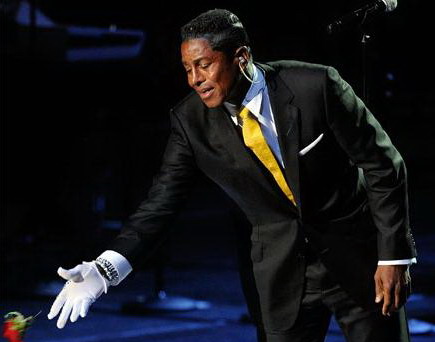
After that, Jermaine Jackson sang "Smile," and at the end he threw the red flower he had pinned to his jacket onto Michael’s coffin.
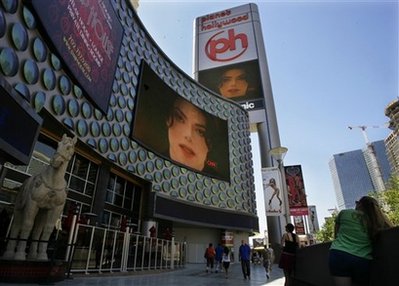
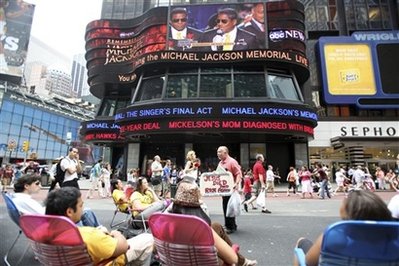
 Television showed images of fans around the world who were all watching the ceremony in public halls in front of large televisions in Harlem, Carolina, Toronto, London, Gary, and other places.
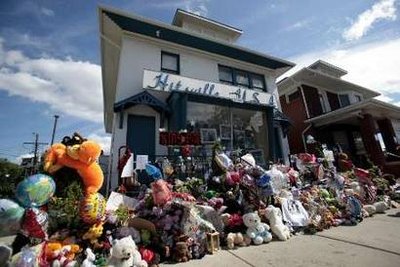
 Even the walkway in front of Motown’s headquarters in Hitsville, Michigan, was covered with flowers and toys.
 The daughter and son of the late Dr. Martin Luther King Jr., Bernice and Martin Luther King III, came on stage.
Martin Luther King III said: "The sentence my father always said was that every human being in life must understand why they came. When they do something, they should do it in the best possible way, so that none of the living, the dead, or those not yet born can do it better than them. If you can’t be a pine tree on top of a hill, be a shrub in a valley. But be the best shrub in the valley. If you can’t be a highway, be a road. Be the best road. If you can’t be the sun, be a star. The amount or size is not the measure of victory or defeat. You only have to be the best of what you are. And Michael Jackson was the best of what he could be. Each of us is born with God-given gifts and talents. The world waits to receive the blessing that comes from our best work. On June 25, 2009, heaven and earth stood still to say that he was an outstanding showman and did his job well."
The daughter and son of the late Dr. Martin Luther King Jr., Bernice and Martin Luther King III, came on stage.
Martin Luther King III said: "The sentence my father always said was that every human being in life must understand why they came. When they do something, they should do it in the best possible way, so that none of the living, the dead, or those not yet born can do it better than them. If you can’t be a pine tree on top of a hill, be a shrub in a valley. But be the best shrub in the valley. If you can’t be a highway, be a road. Be the best road. If you can’t be the sun, be a star. The amount or size is not the measure of victory or defeat. You only have to be the best of what you are. And Michael Jackson was the best of what he could be. Each of us is born with God-given gifts and talents. The world waits to receive the blessing that comes from our best work. On June 25, 2009, heaven and earth stood still to say that he was an outstanding showman and did his job well."
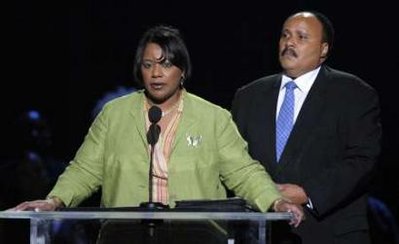 Bernice King also said: "[...] Michael’s life and career were influenced by God. Only a few people in the world are chosen to use what God has given them to unite human beings, and Michael was one of those people. Problems did not distract Michael from caring about humanity. When my mother was sick in 2005, Michael would call her and say that every night he knelt and prayed for her. I wish Michael had been there and seen my mother’s smile at a time when she was very ill. Michael was a shining light. He was free of self-worship. May all of us go and leave behind a shining light."
After that, Sheila Jackson Lee, a member of the U.S. Congress, entered the stage. She said:
"We know the Constitution. Under the Constitution, people are innocent until proven otherwise." Her words were met with applause.
She continued: "Many people don’t know the hearts of artists. Michael sang for the healing of the world. He told us to fight against violence and to look at the woman or man inside the mirror to change anything, and to begin change there. He came to Congress. He came to my office and listened to the members of Congress, and the members of Congress listened to him. He spoke about the necessity of protecting people against AIDS. In the midst of the Iraq war, he visited hospitals for soldiers and thanked those who sacrifice themselves. He was someone who understood that God guides us. And you must know his story—a story that has never been told anywhere. Michael Jackson was the one who, if he suffered burns, established a burn treatment center. If a hospital needed a bed, he provided it. If developing countries needed money, he donated that money. He went to orphanages. He never stopped giving and giving. And he affected lives that could have been repaired, because the King, the King, yes the King stood up and said that he cared about them. That’s why, on June 25, 2009, the U.S. Congress stood up, stood up, stood up, and paused in silence for this incredible icon and idol for a moment. America thanks you, Michael, (the Jackson family)."
Bernice King also said: "[...] Michael’s life and career were influenced by God. Only a few people in the world are chosen to use what God has given them to unite human beings, and Michael was one of those people. Problems did not distract Michael from caring about humanity. When my mother was sick in 2005, Michael would call her and say that every night he knelt and prayed for her. I wish Michael had been there and seen my mother’s smile at a time when she was very ill. Michael was a shining light. He was free of self-worship. May all of us go and leave behind a shining light."
After that, Sheila Jackson Lee, a member of the U.S. Congress, entered the stage. She said:
"We know the Constitution. Under the Constitution, people are innocent until proven otherwise." Her words were met with applause.
She continued: "Many people don’t know the hearts of artists. Michael sang for the healing of the world. He told us to fight against violence and to look at the woman or man inside the mirror to change anything, and to begin change there. He came to Congress. He came to my office and listened to the members of Congress, and the members of Congress listened to him. He spoke about the necessity of protecting people against AIDS. In the midst of the Iraq war, he visited hospitals for soldiers and thanked those who sacrifice themselves. He was someone who understood that God guides us. And you must know his story—a story that has never been told anywhere. Michael Jackson was the one who, if he suffered burns, established a burn treatment center. If a hospital needed a bed, he provided it. If developing countries needed money, he donated that money. He went to orphanages. He never stopped giving and giving. And he affected lives that could have been repaired, because the King, the King, yes the King stood up and said that he cared about them. That’s why, on June 25, 2009, the U.S. Congress stood up, stood up, stood up, and paused in silence for this incredible icon and idol for a moment. America thanks you, Michael, (the Jackson family)."
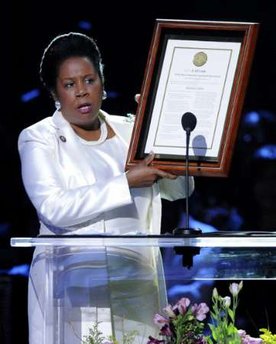 At the same time, she showed a frame and said:
"That’s why we want to present Michael with an honor award, so that he will be remembered forever—forever, forever, forever—as an American icon, a music idol, and a human being."
The audience stood and applauded intensely. Jackson Lee continued:
"We are the world. And we are better human beings because Michael Joseph Jackson lived in this world. On my behalf and on behalf of everyone who spoke, Michael Jackson, I salute you." (a military salute)
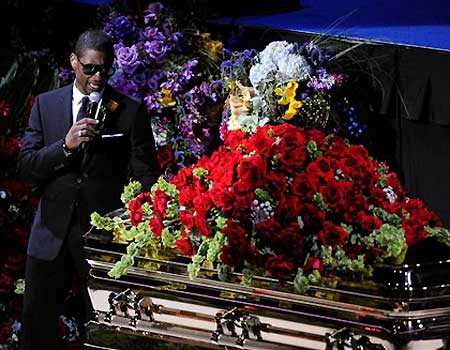
Next, the Black male singer Usher performed another Michael song, titled "Gone Too Soon." At the end of the song, he walked down the steps, placed his hand on Michael’s coffin, and began to cry. Michael’s family embraced him. Usher knelt at the feet of Michael’s mother and kissed her hands.
At the same time, she showed a frame and said:
"That’s why we want to present Michael with an honor award, so that he will be remembered forever—forever, forever, forever—as an American icon, a music idol, and a human being."
The audience stood and applauded intensely. Jackson Lee continued:
"We are the world. And we are better human beings because Michael Joseph Jackson lived in this world. On my behalf and on behalf of everyone who spoke, Michael Jackson, I salute you." (a military salute)
Next, the Black male singer Usher performed another Michael song, titled "Gone Too Soon." At the end of the song, he walked down the steps, placed his hand on Michael’s coffin, and began to cry. Michael’s family embraced him. Usher knelt at the feet of Michael’s mother and kissed her hands.
 On the hall’s television screens, footage of little Michael singing "Who’s Loving You" was shown.
Smokey Robinson then said behind the microphone: "I wrote this song and thought I could sing it. (laughter from the audience) A few years later, Michael sang it. But I didn’t believe that a 10-year-old boy had sung it. I said, how could he have understood the feeling of the song? How could he know that feeling? I couldn’t believe that someone at such a young age had all that knowledge and feeling. Because you have to know the feeling of the song in order to sing it."
On the hall’s television screens, footage of little Michael singing "Who’s Loving You" was shown.
Smokey Robinson then said behind the microphone: "I wrote this song and thought I could sing it. (laughter from the audience) A few years later, Michael sang it. But I didn’t believe that a 10-year-old boy had sung it. I said, how could he have understood the feeling of the song? How could he know that feeling? I couldn’t believe that someone at such a young age had all that knowledge and feeling. Because you have to know the feeling of the song in order to sing it."
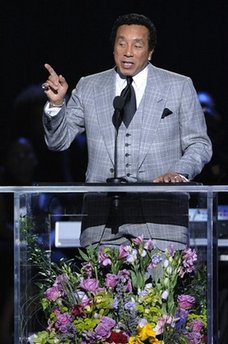 "I never thought I’d be here tonight. (pointing to Michael’s coffin) He is my little brother, and I never thought I would see him go. But he hasn’t gone. He will live forever and forever and forever. He made a huge impact on us and on the world. Every time I sing this song at my concerts, kids come up to me and say, ‘You sang Michael Jackson’s song, right?’ (laughter) I’ve had many blessings in my life. One of the biggest blessings in my life was meeting the Jackson family and living in the era of the greatest showman in history. After this life, we will have another life. Michael will live forever twice—both in the next world and in this one—because forever the world will remember him."
Shaheen Jafar Guli, the 13-year-old boy of Iranian origin who had recently won the number two spot in Britain’s Got Talent, sang "Who’s Loving You" and then thanked Michael.
"I never thought I’d be here tonight. (pointing to Michael’s coffin) He is my little brother, and I never thought I would see him go. But he hasn’t gone. He will live forever and forever and forever. He made a huge impact on us and on the world. Every time I sing this song at my concerts, kids come up to me and say, ‘You sang Michael Jackson’s song, right?’ (laughter) I’ve had many blessings in my life. One of the biggest blessings in my life was meeting the Jackson family and living in the era of the greatest showman in history. After this life, we will have another life. Michael will live forever twice—both in the next world and in this one—because forever the world will remember him."
Shaheen Jafar Guli, the 13-year-old boy of Iranian origin who had recently won the number two spot in Britain’s Got Talent, sang "Who’s Loving You" and then thanked Michael.
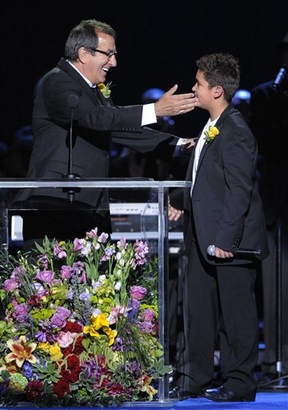 Connie Ortega, the director of the concerts that were supposed to be performed by Michael in London for 50 nights, said: "We were right here (referring to Michael’s last appearance on stage on June 23 for rehearsals for the London concerts), and we rehearsed together. And we were a family, and this was our home. So when we wanted to set up a memorial for him, we knew we had to do it right here."
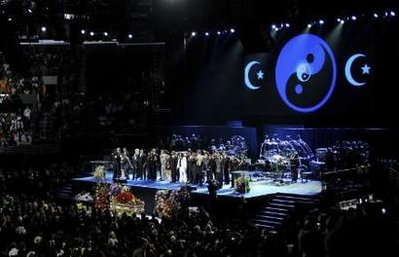 Then he invited everyone to come on stage to sing "We Are The World" and "Heal The World" in the same style Michael liked. At the same time as "We Are The World" was performed by the team members who were supposed to be Michael’s companions in London, symbols of peace and unity around the world—ideas of Michael himself—were displayed on the television.
Michael’s sisters and brothers, along with his three children, also went on stage.
Then he invited everyone to come on stage to sing "We Are The World" and "Heal The World" in the same style Michael liked. At the same time as "We Are The World" was performed by the team members who were supposed to be Michael’s companions in London, symbols of peace and unity around the world—ideas of Michael himself—were displayed on the television.
Michael’s sisters and brothers, along with his three children, also went on stage.
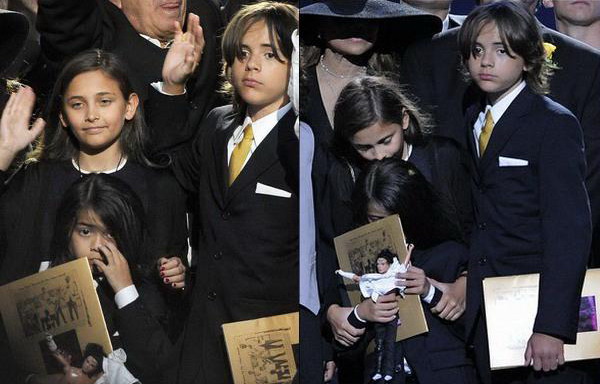
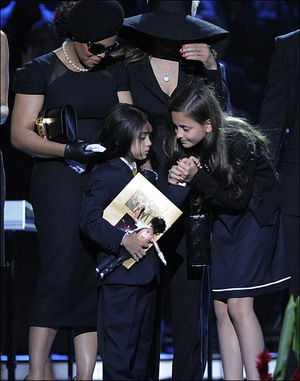 Jermaine thanked everyone who had come, and then Marlon took the microphone. At the beginning of his remarks, he broke down crying and was calmed by his family members. He continued: "I’m trying to understand why God had to take Michael from us. When you left, part of me went with you, and part of you will remain with us forever. Michael, I cherish the happy times we spent together."
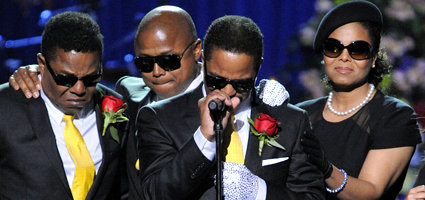 He spoke about memories: how they would come home from school and watch the Three Stooges cartoon, and then immediately have to get ready to go to the studio. He told:
"One day I saw a man in disguise shopping for a lot of music records. I got close and told him, ‘Michael, what are you doing here?’ Michael turned around and said, ‘Marlon, how did you know it was me?’ I told him, ‘You’re my brother. I know you in every situation. Even if you wear a disguise. I know your walk and your moves.’ And even his shoes gave him away. He always wore the same shoes wherever he went. And I think that was his way of showing something we didn’t appreciate enough. We never understand what he endured—how he couldn’t go anywhere without a lot of people chasing him. He was judged. He was mocked. How much can someone endure? Michael, maybe now they can finally let you rest. (applause) Michael, I love you. I miss you. Every time I said I love you, you would say, ‘I love you more.’ God has a reason for everything he does. Maybe we’ll never understand until we go to him, and you are there now. You did your work on earth, and God wanted you to return home to him. Thank you, Michael, for all the smiles you created for us and for the things you did in God’s name all over the world. I only have one request from you. From me, from our brother—my twin brother (who died in infancy)—hold him. I love you, and I miss you."
The Jackson family hugged one another. And something no one expected happened at once. Paris, Michael’s 11-year-old daughter, asked to say something. Family members hurriedly lowered the microphone stand for her.
He spoke about memories: how they would come home from school and watch the Three Stooges cartoon, and then immediately have to get ready to go to the studio. He told:
"One day I saw a man in disguise shopping for a lot of music records. I got close and told him, ‘Michael, what are you doing here?’ Michael turned around and said, ‘Marlon, how did you know it was me?’ I told him, ‘You’re my brother. I know you in every situation. Even if you wear a disguise. I know your walk and your moves.’ And even his shoes gave him away. He always wore the same shoes wherever he went. And I think that was his way of showing something we didn’t appreciate enough. We never understand what he endured—how he couldn’t go anywhere without a lot of people chasing him. He was judged. He was mocked. How much can someone endure? Michael, maybe now they can finally let you rest. (applause) Michael, I love you. I miss you. Every time I said I love you, you would say, ‘I love you more.’ God has a reason for everything he does. Maybe we’ll never understand until we go to him, and you are there now. You did your work on earth, and God wanted you to return home to him. Thank you, Michael, for all the smiles you created for us and for the things you did in God’s name all over the world. I only have one request from you. From me, from our brother—my twin brother (who died in infancy)—hold him. I love you, and I miss you."
The Jackson family hugged one another. And something no one expected happened at once. Paris, Michael’s 11-year-old daughter, asked to say something. Family members hurriedly lowered the microphone stand for her.
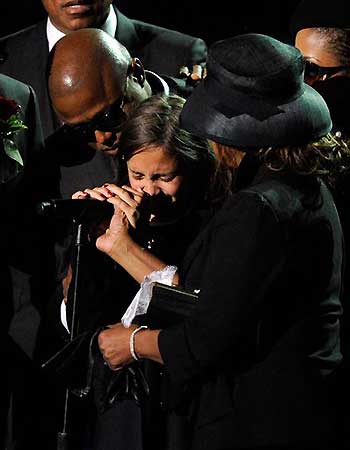 Paris began with a trembling voice. Her aunts and uncles tightened the circle around her to comfort her. Paris put her hand on her neck and tried to speak despite the deep grief she felt: "Since the day I was born, Dad has been the best father anyone could imagine." Tears cut her voice off.
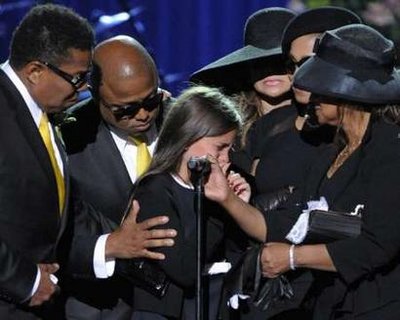 "I just wanted to say that I love him so much." And then she broke down crying in a hug. Paris’s tearful farewell to her father broke the hearts of millions of people around the world. After Marlon thanked the audience, the Jackson family left the hall, and Michael’s brothers carried the coffin out with them.
A light was turned on over a microphone with no one behind it, as a sign of respect for Michael, and Rev. Louish Smith returned to the stage to read the final prayer. While a large image of Michael was shown on the television, he said that there would never be another Michael Jackson.
"His music brought together people of different nationalities and races. And from now on, it is up to us to look at the woman or man inside the mirror and change something. Respect each other’s differences and allow that change to begin."
He asked that each person, wherever they were, take the hand of the person next to them, and then he prayed: "We thank you for Michael, who was so valuable to us. We are grateful for who he was and what he did."
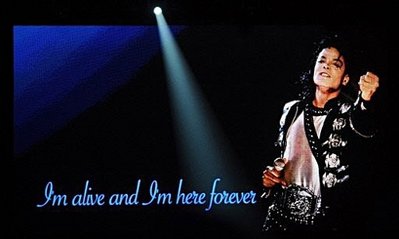
As people left the Staples Center slowly with tear-filled eyes, this line was etched along with the image of Michael Jackson on the large television:
"I am alive, and I will stay here forever."
"I just wanted to say that I love him so much." And then she broke down crying in a hug. Paris’s tearful farewell to her father broke the hearts of millions of people around the world. After Marlon thanked the audience, the Jackson family left the hall, and Michael’s brothers carried the coffin out with them.
A light was turned on over a microphone with no one behind it, as a sign of respect for Michael, and Rev. Louish Smith returned to the stage to read the final prayer. While a large image of Michael was shown on the television, he said that there would never be another Michael Jackson.
"His music brought together people of different nationalities and races. And from now on, it is up to us to look at the woman or man inside the mirror and change something. Respect each other’s differences and allow that change to begin."
He asked that each person, wherever they were, take the hand of the person next to them, and then he prayed: "We thank you for Michael, who was so valuable to us. We are grateful for who he was and what he did."
As people left the Staples Center slowly with tear-filled eyes, this line was etched along with the image of Michael Jackson on the large television:
"I am alive, and I will stay here forever."
 Source: eMJey.com / MTV, NBC, BBC, LA Times, CNN, AP
Television showed images of fans around the world who were all watching the ceremony in public halls in front of large televisions in Harlem, Carolina, Toronto, London, Gary, and other places.
Even the walkway in front of Motown’s headquarters in Hitsville, Michigan, was covered with flowers and toys.
The daughter and son of the late Dr. Martin Luther King Jr., Bernice and Martin Luther King III, came on stage.
Martin Luther King III said: "The sentence my father always said was that every human being in life must understand why they came. When they do something, they should do it in the best possible way, so that none of the living, the dead, or those not yet born can do it better than them. If you can’t be a pine tree on top of a hill, be a shrub in a valley. But be the best shrub in the valley. If you can’t be a highway, be a road. Be the best road. If you can’t be the sun, be a star. The amount or size is not the measure of victory or defeat. You only have to be the best of what you are. And Michael Jackson was the best of what he could be. Each of us is born with God-given gifts and talents. The world waits to receive the blessing that comes from our best work. On June 25, 2009, heaven and earth stood still to say that he was an outstanding showman and did his job well."
Bernice King also said: "[...] Michael’s life and career were influenced by God. Only a few people in the world are chosen to use what God has given them to unite human beings, and Michael was one of those people. Problems did not distract Michael from caring about humanity. When my mother was sick in 2005, Michael would call her and say that every night he knelt and prayed for her. I wish Michael had been there and seen my mother’s smile at a time when she was very ill. Michael was a shining light. He was free of self-worship. May all of us go and leave behind a shining light."
After that, Sheila Jackson Lee, a member of the U.S. Congress, entered the stage. She said:
"We know the Constitution. Under the Constitution, people are innocent until proven otherwise." Her words were met with applause.
She continued: "Many people don’t know the hearts of artists. Michael sang for the healing of the world. He told us to fight against violence and to look at the woman or man inside the mirror to change anything, and to begin change there. He came to Congress. He came to my office and listened to the members of Congress, and the members of Congress listened to him. He spoke about the necessity of protecting people against AIDS. In the midst of the Iraq war, he visited hospitals for soldiers and thanked those who sacrifice themselves. He was someone who understood that God guides us. And you must know his story—a story that has never been told anywhere. Michael Jackson was the one who, if he suffered burns, established a burn treatment center. If a hospital needed a bed, he provided it. If developing countries needed money, he donated that money. He went to orphanages. He never stopped giving and giving. And he affected lives that could have been repaired, because the King, the King, yes the King stood up and said that he cared about them. That’s why, on June 25, 2009, the U.S. Congress stood up, stood up, stood up, and paused in silence for this incredible icon and idol for a moment. America thanks you, Michael, (the Jackson family)."
At the same time, she showed a frame and said:
"That’s why we want to present Michael with an honor award, so that he will be remembered forever—forever, forever, forever—as an American icon, a music idol, and a human being."
The audience stood and applauded intensely. Jackson Lee continued:
"We are the world. And we are better human beings because Michael Joseph Jackson lived in this world. On my behalf and on behalf of everyone who spoke, Michael Jackson, I salute you." (a military salute)
Next, the Black male singer Usher performed another Michael song, titled "Gone Too Soon." At the end of the song, he walked down the steps, placed his hand on Michael’s coffin, and began to cry. Michael’s family embraced him. Usher knelt at the feet of Michael’s mother and kissed her hands.
On the hall’s television screens, footage of little Michael singing "Who’s Loving You" was shown.
Smokey Robinson then said behind the microphone: "I wrote this song and thought I could sing it. (laughter from the audience) A few years later, Michael sang it. But I didn’t believe that a 10-year-old boy had sung it. I said, how could he have understood the feeling of the song? How could he know that feeling? I couldn’t believe that someone at such a young age had all that knowledge and feeling. Because you have to know the feeling of the song in order to sing it."
"I never thought I’d be here tonight. (pointing to Michael’s coffin) He is my little brother, and I never thought I would see him go. But he hasn’t gone. He will live forever and forever and forever. He made a huge impact on us and on the world. Every time I sing this song at my concerts, kids come up to me and say, ‘You sang Michael Jackson’s song, right?’ (laughter) I’ve had many blessings in my life. One of the biggest blessings in my life was meeting the Jackson family and living in the era of the greatest showman in history. After this life, we will have another life. Michael will live forever twice—both in the next world and in this one—because forever the world will remember him."
Shaheen Jafar Guli, the 13-year-old boy of Iranian origin who had recently won the number two spot in Britain’s Got Talent, sang "Who’s Loving You" and then thanked Michael.
Connie Ortega, the director of the concerts that were supposed to be performed by Michael in London for 50 nights, said: "We were right here (referring to Michael’s last appearance on stage on June 23 for rehearsals for the London concerts), and we rehearsed together. And we were a family, and this was our home. So when we wanted to set up a memorial for him, we knew we had to do it right here."
Then he invited everyone to come on stage to sing "We Are The World" and "Heal The World" in the same style Michael liked. At the same time as "We Are The World" was performed by the team members who were supposed to be Michael’s companions in London, symbols of peace and unity around the world—ideas of Michael himself—were displayed on the television.
Michael’s sisters and brothers, along with his three children, also went on stage.
Jermaine thanked everyone who had come, and then Marlon took the microphone. At the beginning of his remarks, he broke down crying and was calmed by his family members. He continued: "I’m trying to understand why God had to take Michael from us. When you left, part of me went with you, and part of you will remain with us forever. Michael, I cherish the happy times we spent together."
He spoke about memories: how they would come home from school and watch the Three Stooges cartoon, and then immediately have to get ready to go to the studio. He told:
"One day I saw a man in disguise shopping for a lot of music records. I got close and told him, ‘Michael, what are you doing here?’ Michael turned around and said, ‘Marlon, how did you know it was me?’ I told him, ‘You’re my brother. I know you in every situation. Even if you wear a disguise. I know your walk and your moves.’ And even his shoes gave him away. He always wore the same shoes wherever he went. And I think that was his way of showing something we didn’t appreciate enough. We never understand what he endured—how he couldn’t go anywhere without a lot of people chasing him. He was judged. He was mocked. How much can someone endure? Michael, maybe now they can finally let you rest. (applause) Michael, I love you. I miss you. Every time I said I love you, you would say, ‘I love you more.’ God has a reason for everything he does. Maybe we’ll never understand until we go to him, and you are there now. You did your work on earth, and God wanted you to return home to him. Thank you, Michael, for all the smiles you created for us and for the things you did in God’s name all over the world. I only have one request from you. From me, from our brother—my twin brother (who died in infancy)—hold him. I love you, and I miss you."
The Jackson family hugged one another. And something no one expected happened at once. Paris, Michael’s 11-year-old daughter, asked to say something. Family members hurriedly lowered the microphone stand for her.
Paris began with a trembling voice. Her aunts and uncles tightened the circle around her to comfort her. Paris put her hand on her neck and tried to speak despite the deep grief she felt: "Since the day I was born, Dad has been the best father anyone could imagine." Tears cut her voice off.
"I just wanted to say that I love him so much." And then she broke down crying in a hug. Paris’s tearful farewell to her father broke the hearts of millions of people around the world. After Marlon thanked the audience, the Jackson family left the hall, and Michael’s brothers carried the coffin out with them.
A light was turned on over a microphone with no one behind it, as a sign of respect for Michael, and Rev. Louish Smith returned to the stage to read the final prayer. While a large image of Michael was shown on the television, he said that there would never be another Michael Jackson.
"His music brought together people of different nationalities and races. And from now on, it is up to us to look at the woman or man inside the mirror and change something. Respect each other’s differences and allow that change to begin."
He asked that each person, wherever they were, take the hand of the person next to them, and then he prayed: "We thank you for Michael, who was so valuable to us. We are grateful for who he was and what he did."
As people left the Staples Center slowly with tear-filled eyes, this line was etched along with the image of Michael Jackson on the large television:
"I am alive, and I will stay here forever."
Source: eMJey.com / MTV, NBC, BBC, LA Times, CNN, AP